

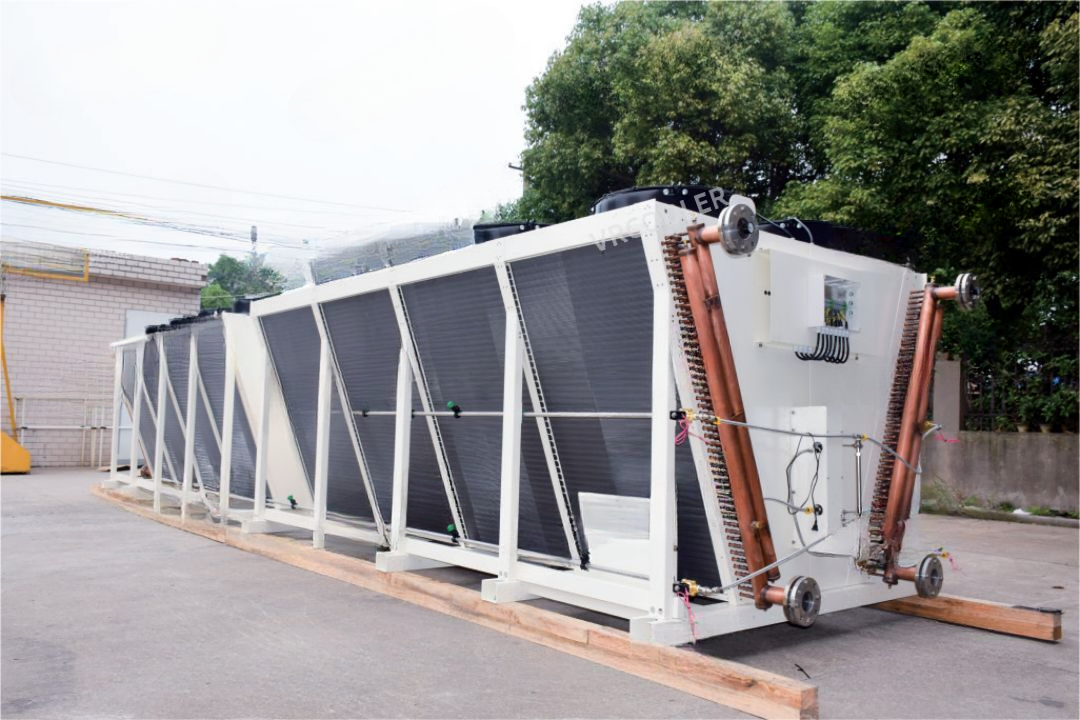
Advantages of Forced Draft Dry Fluid Cooler
- Protected Fan Motor & Components: This is the biggest advantage. The fan and its motor operate in the cool, ambient incoming air. This protects them from the high temperatures of the exhaust stream, generally leading to a longer lifespan for bearings, belts, and the motor itself. The cooler air is also denser, which can allow the fan to operate more efficiently.
- Easier Maintenance: Since the fan and motor are located on the easily accessible intake side (often at ground level on horizontal units), routine maintenance—such as cleaning, lubrication, belt tensioning, and motor replacement—is simpler and safer to perform.
- Cleaner Operation: The positive pressure at the coil inlet helps prevent dust and debris from being drawn in through unfiltered gaps in the casing, as any leakage is outward. However, the main coil still requires regular cleaning.
- Effective in Dirty Environments: The ability to easily add a filter rack in front of the fan (since it’s on the intake) makes forced draft coolers well-suited for environments with high dust, lint, or debris.
Applications of Forced Draft Dry Fluid Cooler
Forced draft coolers are extremely common and are an excellent choice where reliability and ease of maintenance are top priorities:
- General Industrial Applications: Cooling hydraulic oil, laser tubes, stamping machines, and plastic injection molding machines.
- Applications in Dirty Environments: Manufacturing plants with high airborne particulates where filtering the intake air is beneficial.
- HVAC Systems: For condenser cooling or free-cooling circuits in commercial buildings.
Situations with Easy Access: Facilities where maintenance staff prioritize easy and safe
access for routine servicing without needing to work around hot components or climb to the top of units.