

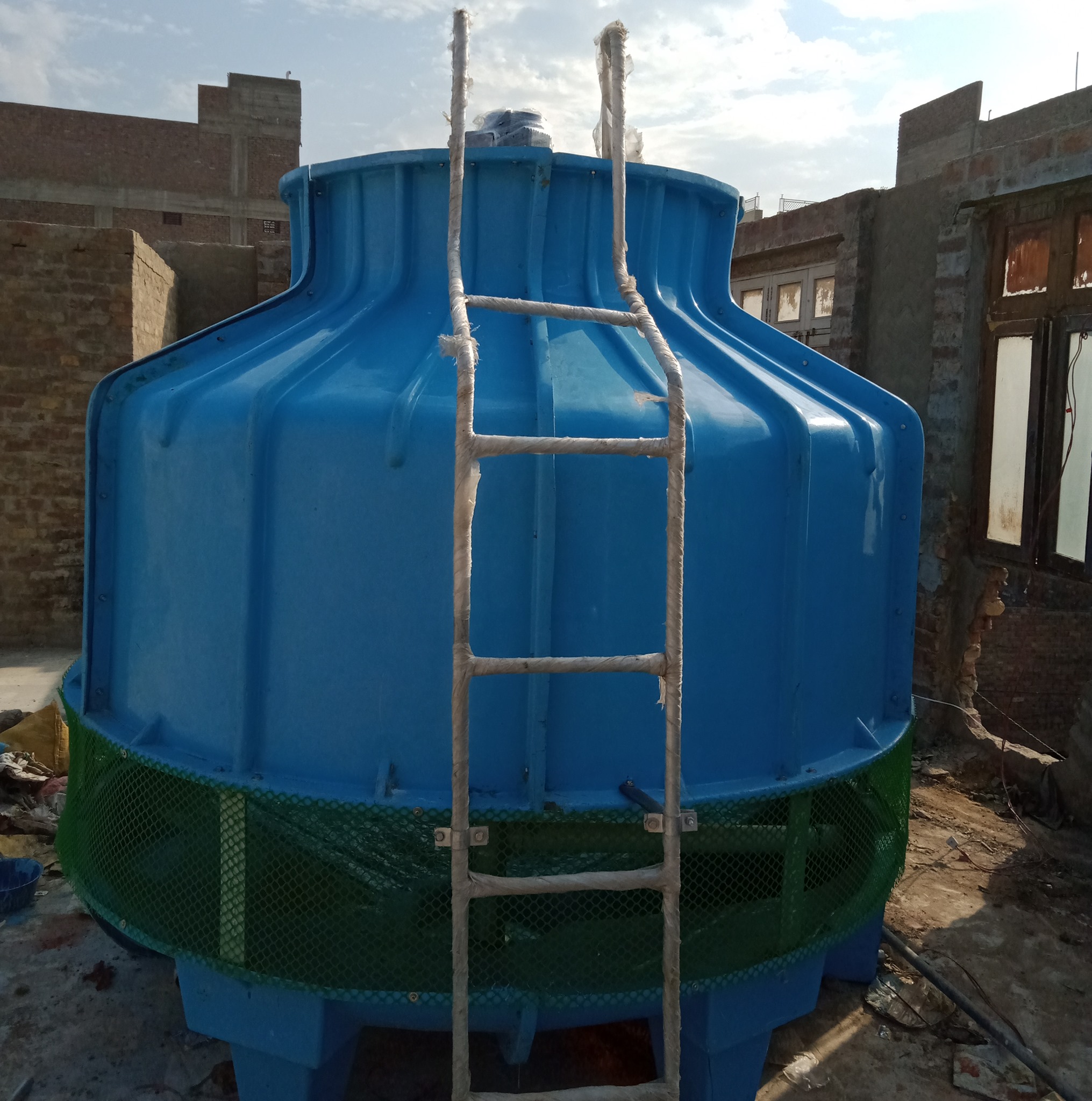
The Two Main Types of Cooling Towers
| Type | How It Works | Best For | Visual Clue |
| Mechanical Draft (Forced/Induced) | Uses large, motor-driven fans to force or pull air through the tower. – Induced Draft: Fan is at the top, pulling air upward. (Most common). – Forced Draft: Fan is at the bottom, pushing air upward. | Industrial plants, large commercial HVAC, and power plants where consistent, controllable cooling is needed. | The huge, hourglass-shaped hyperbolic towers at nuclear plants are actually natural draft, but the boxy, squat units with giant fans on top are mechanical draft. |
| Natural Draft | Uses no fans. It relies on the natural buoyancy of hot, moist air. The humid air inside the tower is less dense than the cooler outside air, so it naturally rises and is pulled through the tower via a massive, hyperbolic chimney shape. | Ultra-large-scale cooling, like nuclear and very large coal power plants, where you need to reject gigawatts of heat and don’t want the parasitic power load of running massive fans. | The iconic hyperbolic hourglass-shaped towers that you associate with nuclear power plants. |