

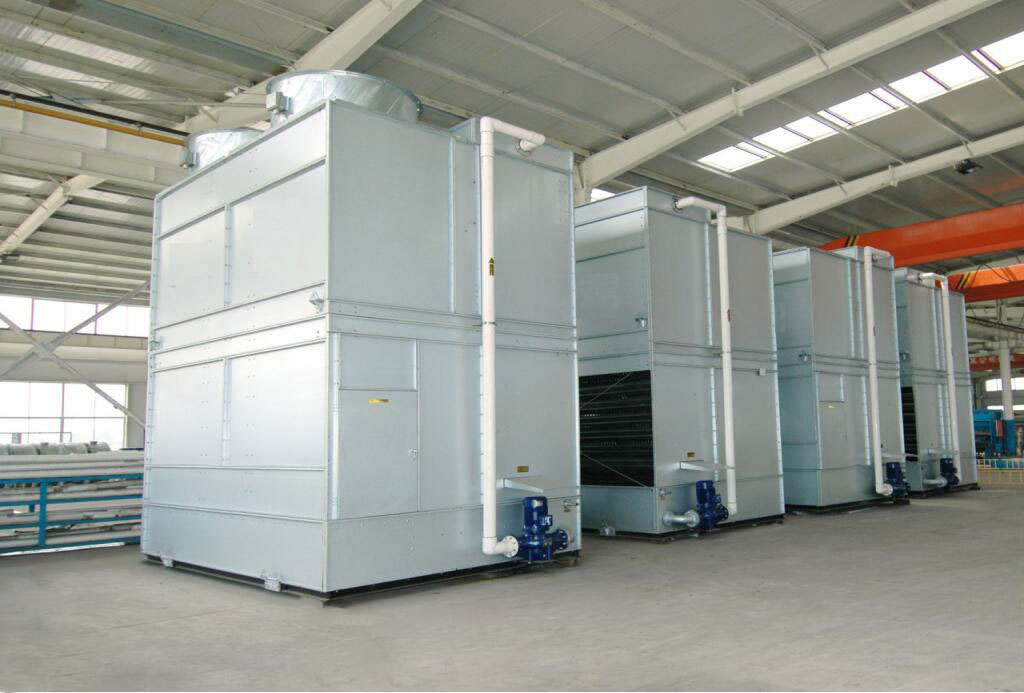
Role of Closed-Circuit Cooling Tower in Steel industry
In the steel industry, the role of a closed-circuit cooling tower is to provide reliable, high-purity cooling for critical equipment and processes while protecting the cooling system from contamination, saving water, and ensuring smooth operations in a harsh, high-temperature environment.
Why Steel Plants Prefer Closed-Circuit Cooling
Unlike traditional open cooling towers, closed-circuit systems circulate the cooling fluid (often treated water) inside a sealed coil. This offers several crucial advantages for steel making:
- Protection from Contamination: Steel mills are full of dust, scale, and airborne particles. An open tower would expose the water to these, leading to fouling, scaling, and corrosion. A closed circuit keeps the critical cooling fluid clean and pure.
- Significant Water Savings: By using the same water in a closed loop, these towers dramatically reduce the amount of fresh water needed for cooling. This is a major benefit in a water-intensive industry. A closed system can save up to 95% of cooling water compared to a once-through system.
- Enhanced Durability: Built to withstand tough conditions, these towers often use corrosion-resistant materials like stainless steel or heavy-gauge galvanized steel, ensuring a long service life with less maintenance.
Key Applications in Steel Production
Closed-circuit cooling towers are vital for keeping critical, high-heat processes running safely and efficiently:
- Furnace and Machinery Cooling: They provide essential cooling for the massive furnaces used in smelting and casting, as well as for rolling mills, preventing overheating of expensive equipment.
- Precision Cooling for Heat Treatment: In processes like quenching and annealing, where precise and rapid cooling is required to achieve specific metallurgical properties, closed-circuit coolers provide a stable, contaminant-free cooling source.
- Supporting the “Heart” of the Mill: They help cool critical auxiliary systems, such as air compressors and hydraulic power units, which are the backbone of any steel plant’s operations.
A Strategic Tool for Water Conservation
The steel industry is a massive water consumer, with cooling accounting for as much as 97% of a plant’s total water use. Closed-circuit cooling towers are therefore a strategic tool for sustainability. Companies like JSW Steel, for instance, are actively upgrading their cooling systems to optimize water use and reduce their overall water footprint. Advanced optimization models for steel plants even look at how to best manage and reuse water from cooling tower blowdown across a complex to minimize freshwater intake