

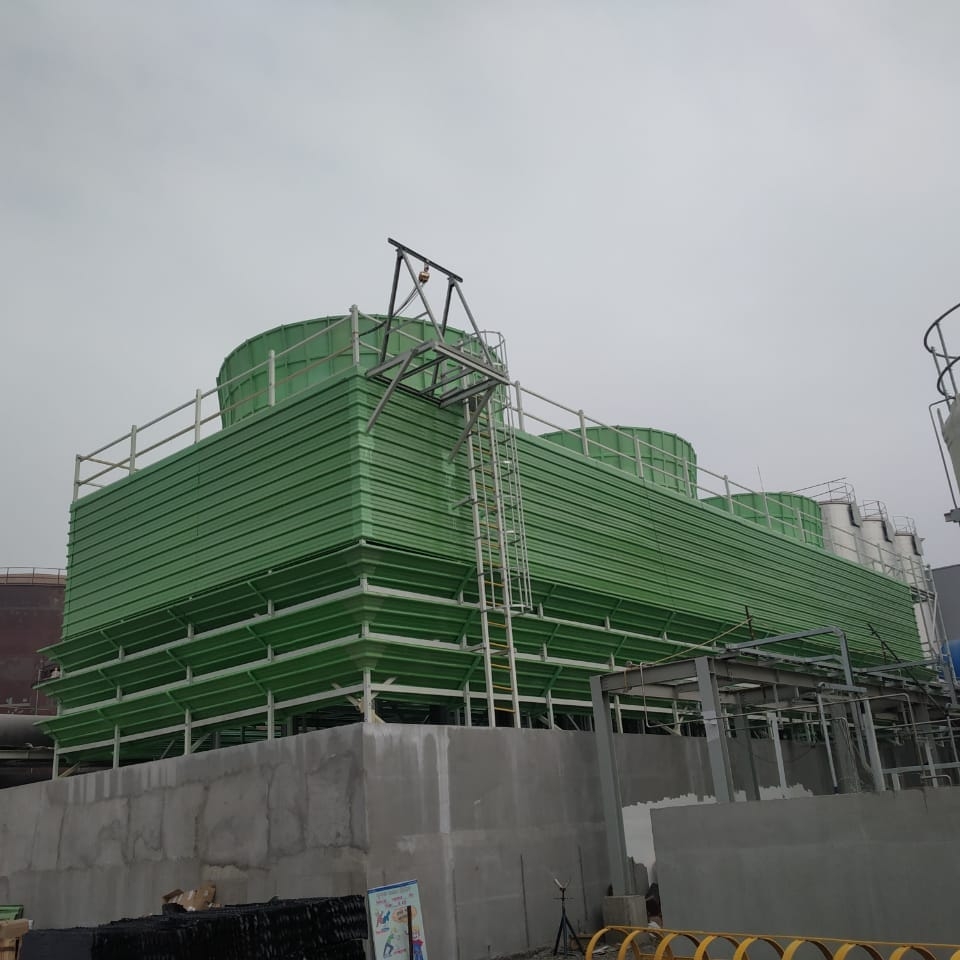
1. Classification by Airflow Method (The Draft System)
This is the most common way to categorize them, as it dictates the tower’s shape, cost, and energy consumption.
| Type | How It Works | Pros | Cons | Typical Application |
| Natural Draft | Uses a massive hyperbolic chimney. Hot, moist air inside the tower is lighter than cooler outside air, so it naturally rises and pulls fresh air in through the bottom. No fans at all. | Zero parasitic electrical load; extremely durable (no moving parts); handles massive water flow rates. | Immensely tall and expensive to build; cannot be used for small loads; performance relies on outside air temperature. | Nuclear and very large coal power plants (the iconic hourglass shape). |
| Mechanical Draft (Forced) | A fan is located at the bottom (air inlet) and pushes air up through the tower. | Lower profile than induced draft; good for when static pressure is low. | The fan motor is exposed to hot, humid air, which causes maintenance issues and motor failures. Less common. | Small, packaged industrial coolers. |
| Mechanical Draft (Induced) | A large fan is located at the top of the tower and pulls air up through the falling water. | This is the industry standard (most common). The fan handles the air after it has been cooled by the water, so the motor runs in cooler, drier air, extending its life. Better airflow distribution. | Higher initial cost than forced draft; the fan and stack must be structurally sturdy. | HVAC for large buildings, refineries, chemical plants, and medium-sized power plants. |
2. Classification by Air-to-Water Flow Direction
This describes the path the air takes relative to the falling water.
| Type | How It Works | Efficiency |
| Counterflow | Air moves vertically UP, while water falls vertically DOWN. (They flow in opposite directions). | Most efficient thermodynamically. The coldest water at the bottom meets the driest, coldest air at the bottom, creating the maximum temperature driving force. |
| Crossflow | Air moves horizontally across the tower, while water falls vertically DOWN. (They flow at a 90-degree angle). | Slightly less efficient than counterflow, but offers advantages: lower pumping head (water falls by gravity), and easier access for maintenance. |
3. The Big Distinction: Wet vs. Dry vs. Hybrid
This is the most critical distinction for water conservation.
| Type | Heat Rejection Method | Water Consumption | Pros & Cons |
| Wet Cooling Tower (Open Circuit) | Direct contact between water and air. Heat is rejected via evaporation. | Very High (loses 1-2% of the water flow to evaporation and drift). | Cools water below the ambient air temperature (to the wet-bulb temperature). This is the most efficient cooling, but requires constant makeup water. |
| Dry Cooling Tower (Air-Cooled Condenser) | No contact with air. Hot water flows through finned metal tubes, and fans blow air over the tubes. Heat is rejected via convection (like a giant car radiator). | Zero water consumption. | Massive and expensive. Much less efficient—cannot cool water below the ambient dry-bulb temperature. Used exclusively in water-scarce deserts (Middle East, parts of US). |
| Hybrid (Wet-Dry) Tower | Has two operating modes. In summer, it uses evaporation (wet). In winter, it shuts off the water spray and runs as a dry cooler. | Low to Moderate. | Best of both worlds. Saves water in the winter (when it’s cold enough to run dry) and provides peak cooling capacity in the summer. Highly popular for data centers. |
Classification by Construction / Arrangement
How the tower is physically built and installed:
| Type | Description | Use Case |
| Field-Erected | Built on-site, piece-by-piece, usually out of concrete or heavy steel. Can be massive (size of a city block). | Large power plants, major refineries. |
| Package (Factory-Built) | Completely assembled at the factory and shipped as a single, ready-to-use unit. Made of galvanized steel or fiberglass. Small and modular. | HVAC for office buildings, small factories, and hospitals. You can place multiple package towers side-by-side to increase capacity. |
. The “Specialist” Types (Advanced)
- Closed-Circuit (Fluid Cooler): This is a hybrid design. The process fluid (like glycol or expensive treated water) flows through a sealed coil. Outside that coil, the tower sprays plain water over the coil and pulls air through it. The process fluid never touches the air, keeping it absolutely clean, while still getting the benefits of evaporative cooling. Used for welding robots, induction furnaces, and sensitive chemical reactors.
- Plume Abatement Towers: In cold climates, the visible white vapor plume (steam) from a tower can cause dangerous fog on highways or airport runways. These towers have specialized heat exchangers built into the top that reheat the exhaust air, evaporating the mist and eliminating the visible plume.
Summary Cheat Sheet: Which one should you pick?
| Your Constraint | Choose This Type |
| You have unlimited land and need massive cooling for a nuclear plant | Natural Draft (Wet) |
| You have limited space, standard cooling needs, and cheap water | Induced Draft, Counterflow (Wet) |
| You want easy maintenance and low pumping cost | Induced Draft, Crossflow (Wet) |
| You are in a desert with zero water to spare | Dry Cooling Tower (Air-Cooled) |
| You have seasonal water restrictions but need maximum summer efficiency | Hybrid (Wet-Dry) |
| Your process fluid is ultra-pure and cannot be contaminated | Closed-Circuit Fluid Cooler |