

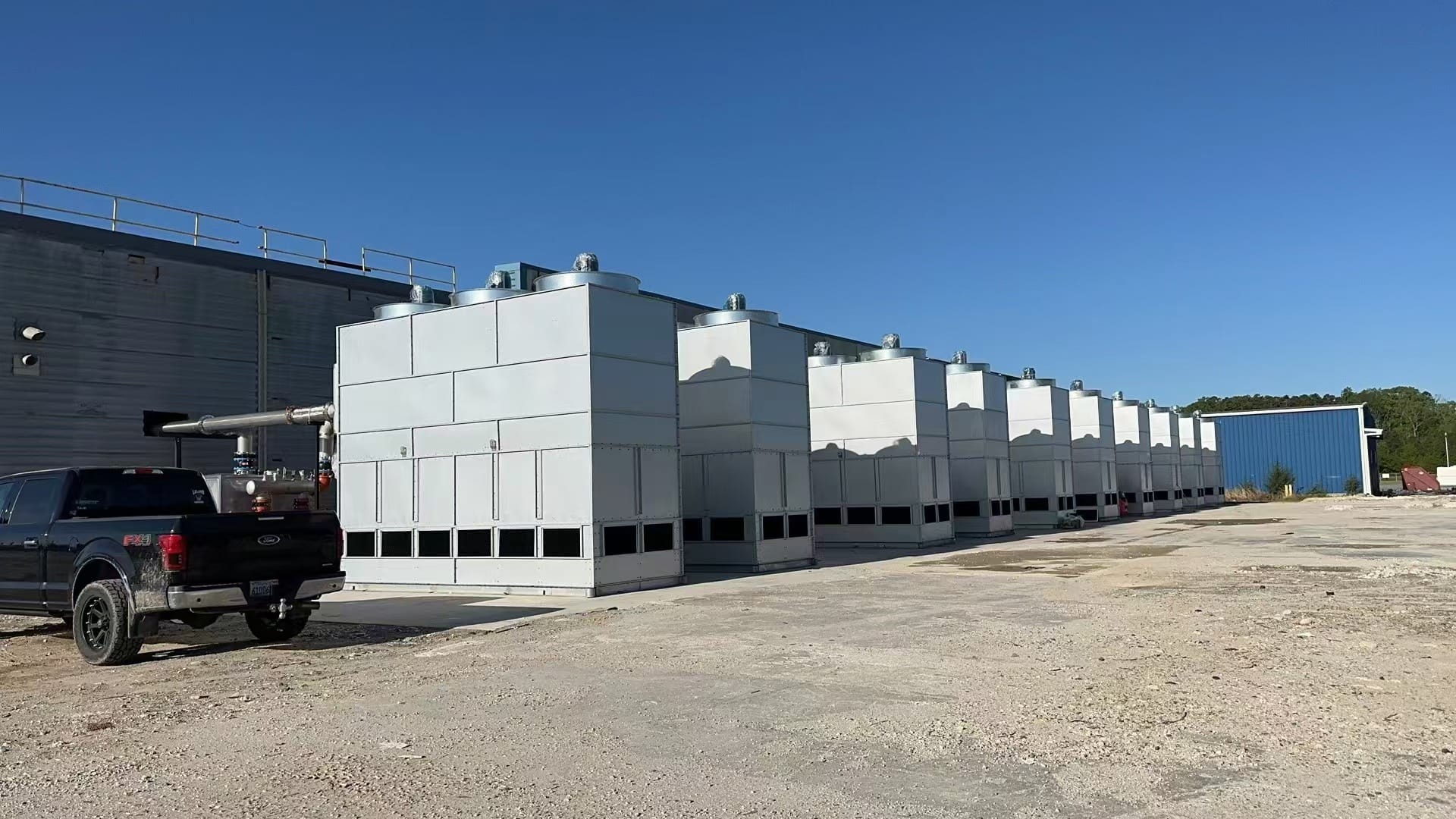
Since you’re asking for a deeper dive on this specific comparison, let’s go beyond the basic trade-offs. When selecting between stainless steel and copper tubes for a closed-circuit cooling tower, the decision often comes down to three critical factors that aren’t always obvious: water chemistry, long-term operating costs, and system design implications.
Here is an advanced, side-by-side technical comparison:
Technical Deep Dive
| Factor | Copper Tube | Stainless Steel Tube |
| Heat Transfer Coefficient (k) | ~401 W/m·K (Excellent) | ~16 W/m·K (Poor — about 25x lower) |
| Required Surface Area | Smaller coil footprint | Needs ~30-40% more surface area to match copper’s capacity |
| Water Velocity Tolerance | Susceptible to erosion at high velocities (>2.5 m/s) | Handles high velocities (>4 m/s) without erosion |
| Corrosion Vulnerability | Galvanic corrosion (if connected to dissimilar metals); pitting from ammonia, sulfides, or pH < 6.5 | Chloride pitting (especially grade 304 above 200 ppm Cl⁻); grade 316 resists up to 1000 ppm Cl⁻ |
| Biofouling Resistance | Copper ions have natural biocidal properties — reduces algae/slime growth on tube surfaces | No biocidal effect; more prone to biofilm formation, requiring better water treatment |
| Freeze Damage Risk | Softer metal — can expand slightly without cracking | More brittle — at risk of rupture if ice forms inside tubes |
| Welding & Repairs | Can be soldered/brazed with standard tools | Requires TIG welding and purge gas; repairs are costly and need skilled labor |
| Fluid Compatibility | Incompatible with ammonia, seawater, or acidic glycol | Compatible with most industrial fluids, including ammonia and seawater |
Total Cost of Ownership (TCO) — Not Just Upfront
| Cost Factor | Copper | Stainless Steel |
| Initial Coil Cost | Lower (per kW of cooling) | 1.5–2.5x higher |
| Water Treatment Cost | Moderate — requires pH and inhibitor control to prevent corrosion | Lower — less chemical treatment needed, especially with 316L |
| Downtime/Replacement | May need replacement sooner in aggressive environments (10–15 years) | Can last 25–30+ years in same environment |
| Energy Cost | Lower pumping/fan energy due to smaller coil and better heat transfer | Higher energy consumption due to larger coil = more air/water flow needed |
| Insurance/Risk | Higher risk of pinhole leaks in industrial settings | Lower risk; better for critical processes (data centers, pharma) |
When to Choose Which (Decision Matrix)
| Your Priority | Recommended Material | Why |
| Maximize energy efficiency in a clean indoor environment | Copper | Best heat transfer; lower operating energy |
| Operating near coast or using seawater | Stainless Steel (316L) | Chloride resistance is non-negotiable |
| System uses ammonia as refrigerant or process fluid | Stainless Steel | Copper and ammonia react catastrophically |
| Budget-constrained project with treated city water | Copper | Lower upfront cost; good lifespan with proper treatment |
| Critical application (hospitals, semiconductor fabs) | Stainless Steel | Reliability and zero contamination risk outweigh efficiency loss |
| System runs on untreated well water or questionable quality | Stainless Steel | Tolerates impurities better; less treatment overhead |
| Cold climate with freeze risk | Copper | More forgiving if freezing occurs accidentally |
| High water velocity / high-pressure system | Stainless Steel | Handles erosion-corrosion much better |
Critical Warning: The “Hybrid” Mistake
Some manufacturers offer copper tubes with aluminum fins or stainless steel tubes with copper fins. This creates a galvanic couple in the presence of water, leading to rapid corrosion of the less noble metal (aluminum or copper). If you choose a hybrid design, ensure the metals are electrically isolated or use a protective coating.
Final Recommendation
- For 80% of commercial HVAC applications with treated water, a copper heat exchanger is the most cost-effective and energy-efficient choice.
- For industrial, coastal, or critical-process applications, the higher upfront cost of stainless steel (preferably 316L) pays off through reduced maintenance, longer life, and peace of mind.
If you can tell me more about your:
- Location (coastal or inland),
- Water source (city, well, seawater, or treated),
- Process fluid (water, glycol, ammonia, or chemical),
- Criticality (can you afford unplanned downtime?),
I can give you a tailored recommendation with estimated lifespan and payback period for your specific case.