

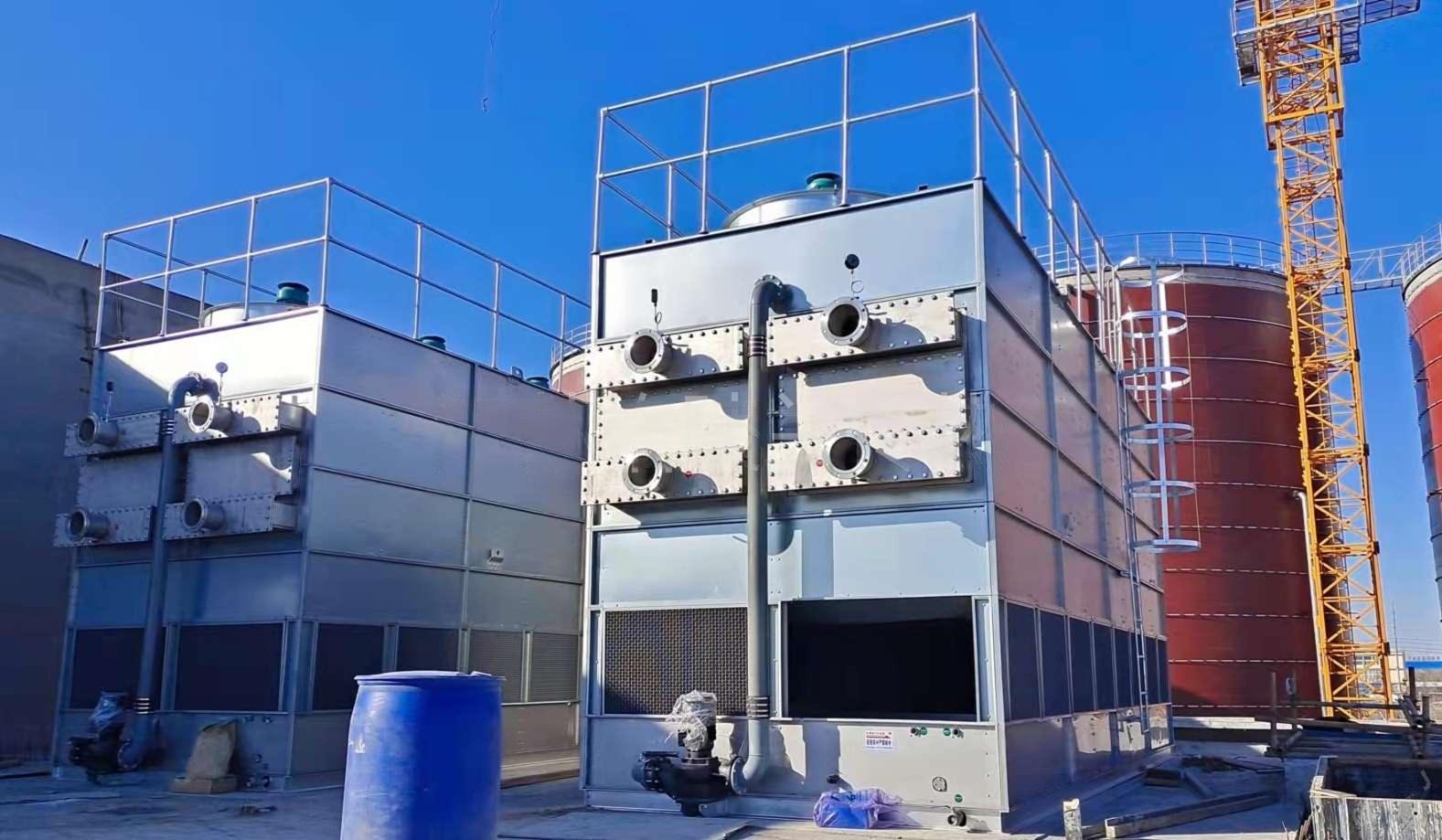
Best Tube material for Heat exchanger for High fouling Liquid
Based on the search results, there isn’t one single “best” tube material. Instead, the optimal choice is a strategic decision that balances the specific type of fouling, the fluid’s chemistry, and economic factors.
Here is a breakdown of the primary material options, ranked from most to least recommended for high-fouling, corrosive liquids.
Top Tier Options: Maximum Corrosion and Fouling Resistance
These materials offer the best long-term performance in the most aggressive environments.
- 1. Silicon Carbide (SiC) Ceramic: SiC is the premier choice for extreme chemical resistance. It is essentially inert to strong acids, bases, and organic solvents, and its smooth, hard surface inherently resists fouling . It also boasts excellent thermal conductivity, often comparable to metals . However, its high initial cost and brittle nature, which makes it difficult to process and repair, are significant drawbacks .
- 2. Titanium: This metal is exceptionally resistant to corrosion, particularly from seawater and a wide range of aggressive chemicals . Its high strength-to-weight ratio is another advantage . Some designs also incorporate rifling to enhance heat transfer and create a “self-cleaning” effect that mitigates scale and corrosion . The main limitations are its high initial cost and potential biofouling issues, as biofilms can form on its surface .
3. High-Nickel Alloys (e.g., Hastelloy, Inconel): These are premium materials with outstanding resistance to pitting, crevice corrosion, and stress cracking across a broad spectrum of chemicals, including strong acids
- and oxidizing agents . Their inherent corrosion resistance makes them less prone to scaling and fouling, which reduces maintenance needs . The primary barrier to their use is their very high cost .
Practical & Balanced Options: Good All-Around Performance
These materials provide a strong balance of performance, cost, and availability, making them common in many industrial applications.
- 4. Stainless Steel (especially 316L): This is a very popular and reliable choice due to its general corrosion resistance, high mechanical strength, and ability to withstand elevated temperatures . Studies and industrial experience show that stainless steel offers less fouling resistance and better performance than carbon steel or copper in many applications . However, it is vulnerable to chloride-induced pitting and crevice corrosion, and it is susceptible to both scaling from hard water minerals and biofouling . In one study, switching from carbon steel to stainless steel tubes significantly improved performance and reduced cleaning frequency .
- 5. Advanced Polymer Composites: These are emerging as a cost-effective alternative in corrosive environments . Materials like polypropylene or polyphenylene sulfide filled with graphite can be engineered to have surprisingly high thermal conductivity (comparable to metals) while being naturally corrosion-resistant . Crucially, research indicates that surface treatments (like flame treatment) can give polymer composite tubes a lower fouling propensity than common metal tubes like 316L stainless steel and aluminum brass . Their lower material cost is another benefit, though their use is limited by lower maximum operating temperatures and pressure capabilities compared to metals .
Material to Consider with Caution
- Copper and Copper Alloys (e.g., Admiralty Brass): While copper alloys have excellent thermal conductivity and inherent antimicrobial properties that can inhibit biofouling, they are highly susceptible to corrosion in specific water chemistries, particularly those with low pH or high chloride content . They can suffer from rapid degradation and are generally reserved for closed-loop or well-treated water systems .
Why Surface Finish Matters as Much as Material
A critical insight from the search results is that surface smoothness is as important as the material itself for fighting fouling. A smooth surface gives foulants fewer places to attach.
- The Synergy Factor: A rough, corrosion-resistant surface will still foul over time. Conversely, a smooth surface will become rough as it corrodes. Therefore, the ideal solution is a smooth, corrosion-resistant surface.
- Recommended Surface Finish: For high-fouling applications, surfaces should have a roughness (Ra) of less than 40 microinches (1.1 μm), with less than 20 microinches (0.5 μm) being more effective .
- How to Achieve It: This smooth finish can be achieved through methods like electropolishing, honing, or precision grinding . Polished stainless steel tubes, for example, have been shown to reduce deposits and allow for easier cleaning .
A Game-Changing Design for Severe Fouling
Beyond material selection, the mechanical design of the heat exchanger can be the most effective way to manage severe fouling.
- Removable Tube Bundles: In a double tube heat exchanger with a removable inner tube, the tube bundle can be easily extracted for inspection and cleaning on both the tube and shell side . This design minimizes operational downtime, as the exchanger can be cleaned quickly, making it an ideal solution for very high-fouling products like sludge and liquids containing particles . These designs often use materials like stainless steel (316L) and incorporate corrugated tubes to reduce fouling and improve heat transfer .
Summary & Recommendation
To choose the best solution for your high-fouling liquid, follow this decision-making framework:
- Identify the primary foulant and corrosive agents (e.g., chloride concentration, pH, biological content, particulates).
- Set performance and budget priorities (e.g., maximum uptime vs. initial capital cost).
- Select a material:
- For ultimate chemical resistance and fouling mitigation, choose Silicon Carbide (SiC), Titanium, or a High-Nickel Alloy.
- For a balanced, high-performance choice, choose Stainless Steel 316L, ensuring the interior surface is highly polished.
- For a novel, cost-effective solution in lower-temperature applications, investigate Advanced Polymer Composites.
- Implement a “smooth surface” requirement: Specify a surface roughness (Ra) of less than 20 microinches (0.5 μm) for the tube interior.
Consider the design: If you anticipate needing frequent cleaning, invest in a removable tube bundle design