

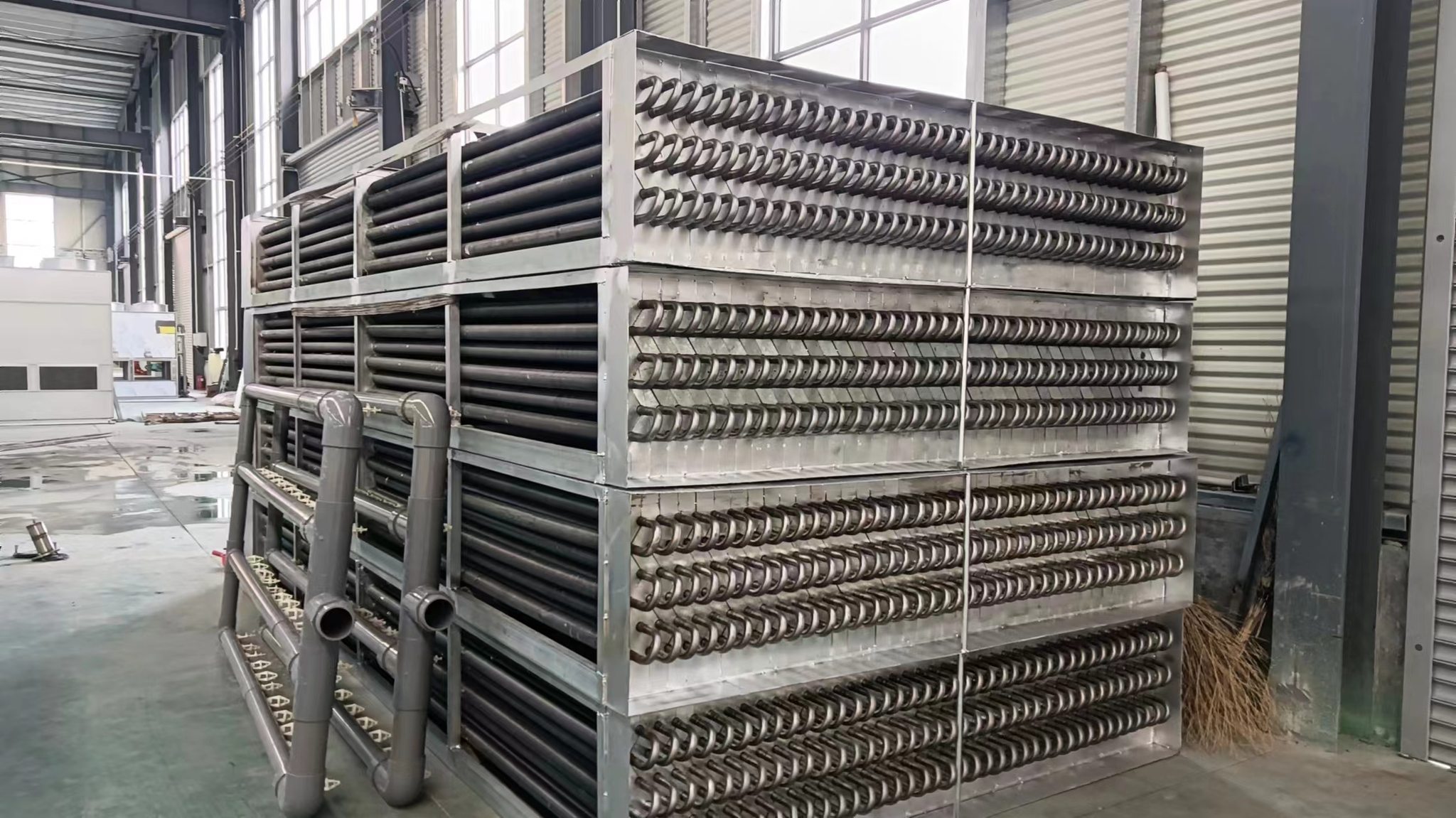
Role of Closed-Circuit Cooling Tower in Chemical industry
In the chemical industry, the role of a closed-circuit cooling tower is to provide critical process cooling while protecting the integrity of the process fluid, significantly reducing water consumption, and lowering overall operational costs compared to traditional open systems. These systems are vital for applications where contamination, fluid purity, and water conservation are major concerns.
Core Benefits for Chemical Processing
Closed-circuit cooling towers offer distinct advantages in the demanding chemical environment:
- Zero Fluid Contamination: The process fluid (water, glycol, chemicals, or other liquids) circulates within a sealed coil and never contacts the air. This prevents contamination from dust, debris, and biological matter like algae, ensuring the fluid’s chemical and physical properties remain stable. This is critical for protecting sensitive downstream equipment and ensuring product quality.
- Substantial Water Savings: In a closed system, the water used for evaporative cooling is separate from the process fluid. This can reduce overall water consumption by up to 80% compared to open towers, where the process water itself is lost to evaporation and blowdown. This aligns with the industry’s push for more sustainable water management.
- Simplified System Design: A closed-circuit tower integrates an intermediate heat exchanger, secondary pump, and cooling tower into a single unit. This replaces the more complex setup of an open tower paired with a separate plate-and-frame heat exchanger and associated piping. The result is a simpler plant layout, a smaller footprint, and higher thermal efficiency.
- Reduced Maintenance and Chemical Treatment: Because the critical process loop is sealed, the need for chemical treatments to control scale, corrosion, and biological growth is dramatically reduced. This cuts down on operating costs and maintenance time. However, the secondary water loop (used for spray cooling) may still require some treatment.
- Reliability and Uptime: Features like multi-cell configurations provide redundancy, allowing for maintenance or repairs without shutting down the entire process. Heavy-duty construction and corrosion-resistant materials are often available to maximize service life in harsh industrial environments.
When are They the Preferred Choice?
A closed-circuit cooling tower is typically selected over an open tower in chemical plants for specific reasons:
- Protecting Process Fluid Quality: When the cooling fluid must remain pure and uncontaminated for the process or for reuse.
- High Contamination Risk: In environments with high levels of airborne particulates, dust, or other contaminants that could foul an open system.
- Glycol is Required: When the process requires a glycol solution to prevent freezing, which can be safely circulated within the closed loop.
- Minimizing Maintenance and Scaling: When the goal is to isolate the primary cooling loop from the environment to reduce fouling and scaling issues.
In essence, the closed-circuit cooling tower provides chemical plants with a reliable, efficient, and water-conscious solution for critical cooling needs, ensuring both process stability and operational savings.