

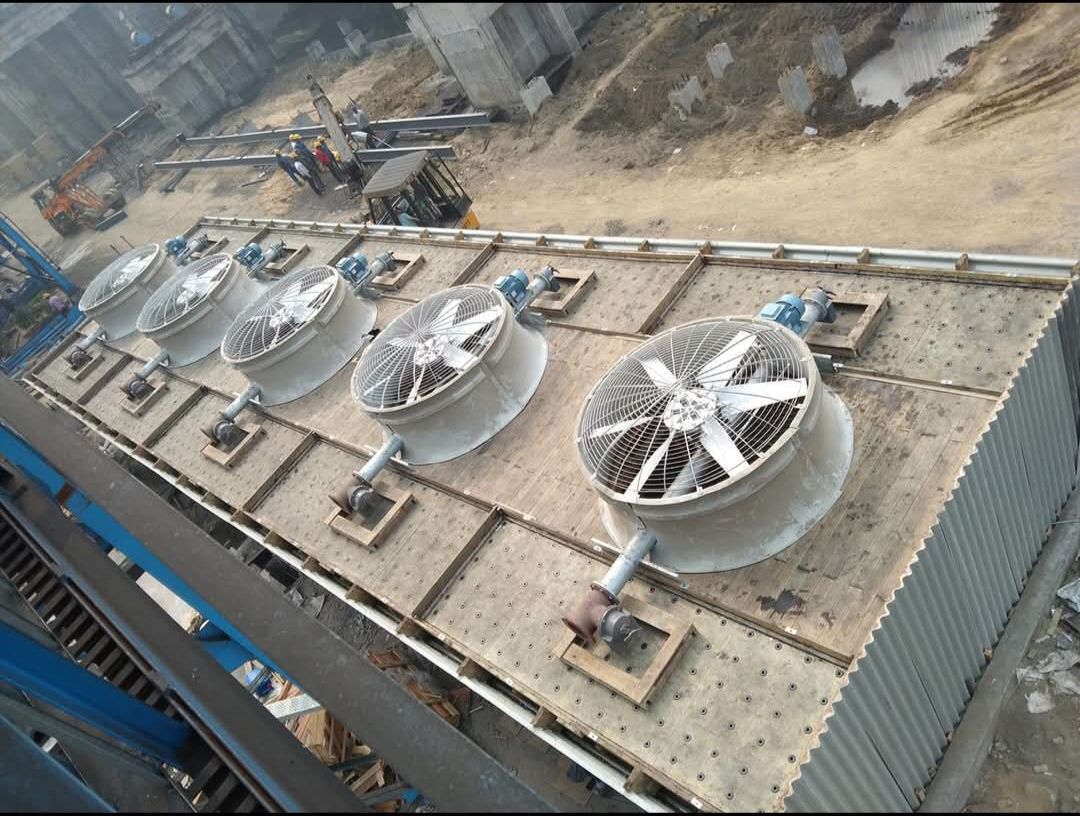
Types of Cooling Towers Used
- Mechanical Draft Towers (Forced or Induced): Most common. Use large fans to force or pull air through the falling water. They offer precise temperature control, which is vital for processes like continuous casting.
- Natural Draft Hyperbolic Towers: The iconic large hyperbolic concrete structures. Used for the largest heat loads, like a captive power plant for an entire steel complex. They rely on the natural chimney effect and have no fans, resulting in very low operating power costs.
4. Key Operational Considerations & Challenges
- Water Treatment & Scaling: The evaporative process concentrates dissolved minerals (calcium, silica). Without rigorous chemical water treatment, scaling and fouling can occur in the cooling tower and, more critically, in the sensitive process heat exchangers (e.g., caster molds), reducing efficiency and causing downtime.
- Corrosion Control: The warm, oxygenated water is corrosive to steel pipes and heat exchangers. Corrosion inhibitors are a critical part of the water treatment program.
- Biofouling Control: Warm water is an ideal breeding ground for bacteria, algae, and pathogens like Legionella. Biocides must be carefully managed for system health and to prevent public health risks from aerosolized droplets (drift).
- Winter Operation: In cold climates, ice formation on towers must be managed to prevent structural damage.
- Drift Management: Minimizing the loss of water droplets (containing treatment chemicals) to the atmosphere is an environmental and efficiency concern.
Summary: The Vital Supporting Role
Think of the cooling tower as the “heart” of the plant’s non-contact cooling circulatory system. It doesn’t directly touch the metal, but it is absolutely essential for:
- Process Stability & Safety: Preventing equipment overheating and failure.
- Product Quality: Ensuring consistent cooling rates in casting and rolling.
- Economic Viability: Enabling water and energy efficiency on a massive scale.
- Environmental Compliance: Reducing freshwater withdrawal and thermal discharge to natural water bodies.