

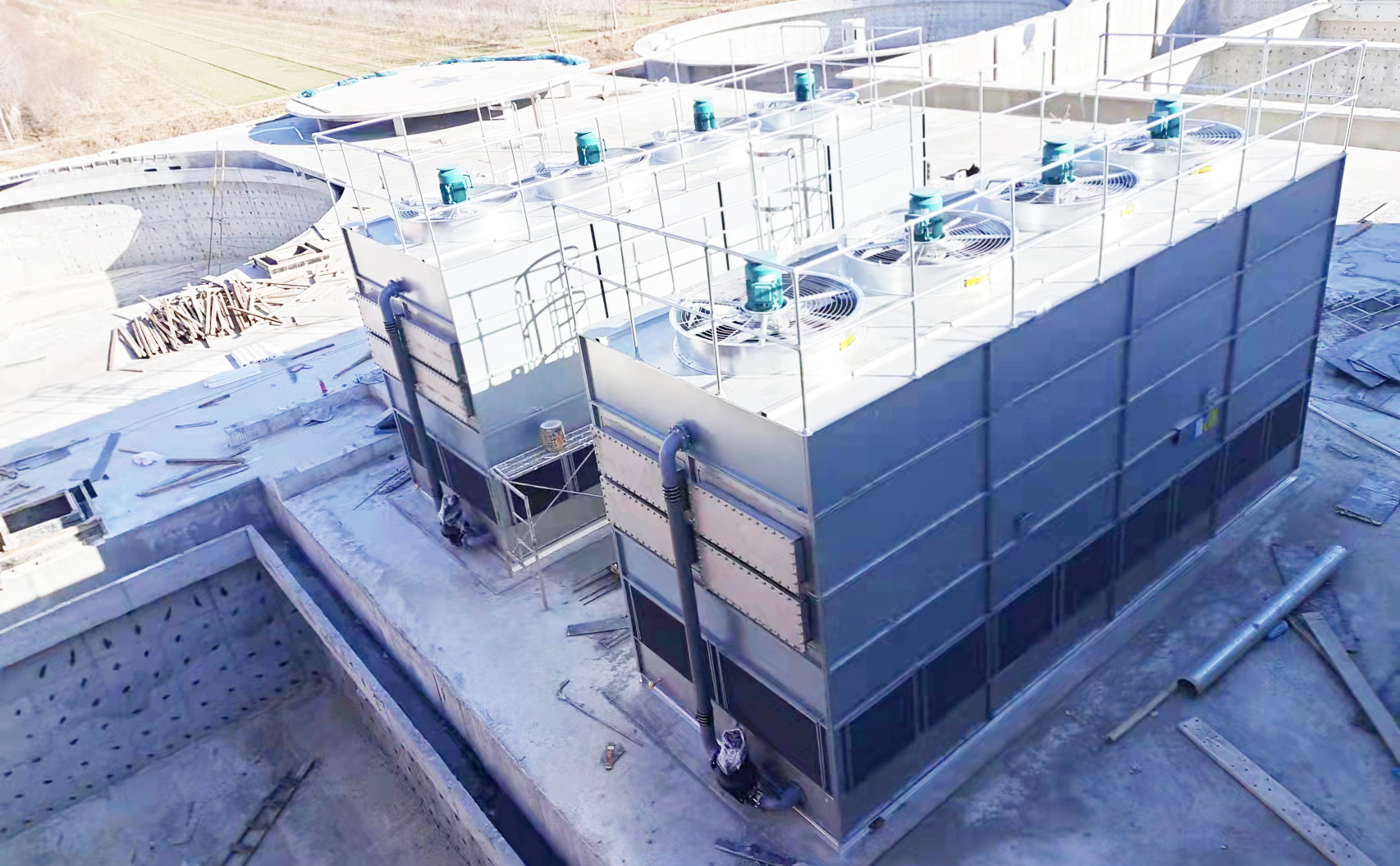
Material of construction of Cooling Coil / Heat Exchanger in Closed Circuit cooling tower
The cooling coil or heat exchanger is the core component of a closed-circuit cooling tower, and its material directly impacts the system’s efficiency, cost, and longevity. The choice is generally driven by factors like budget, required thermal performance, the corrosiveness of the environment, and the specific process fluid.
Here are the most common materials used for the cooling coil, along with their typical applications:
Common Materials for Cooling Coils
| Material | Key Features | Typical Applications |
| Copper | Excellent heat transfer efficiency; good thermal conductivity . | Smaller cooling towers where space is limited; systems that need maximum thermal performance in a compact footprint . |
| Stainless Steel | Excellent corrosion resistance; high durability. Available in grades like 304 and 316 for increasingly harsh environments . | Coastal areas, industrial environments with corrosive elements, or when the process fluid is aggressive . |
| Hot-Dip Galvanized Steel | Cost-effective; good durability. Often features an internal corrosion protection layer to maintain water quality . | Large industrial towers in general environments where a lower initial cost is a primary factor . |
| Plastic (e.g., PE, PP) | Excellent corrosion resistance; prevents freezing damage; lightweight . | Systems using highly corrosive or expensive specialty fluids (like some chemicals) where leakage is a major concern . |
| Copper Tubes with Aluminum Fins | Increased surface area for better heat dissipation in dry operation modes . | Hybrid or “dry” cooling sections that operate without spray water, often in cold climates to save water . |
How to Choose the Right Material
The selection process can be understood as a trade-off analysis:
- Copper is often the standard choice for maximum thermal efficiency, but it is susceptible to corrosion in aggressive environments and carries a higher cost.
- Stainless Steel provides superior corrosion resistance, making it ideal for harsh conditions or where system purity is critical. However, it has slightly lower thermal conductivity than copper, which may require a larger coil design for the same cooling capacity .
- Hot-Dip Galvanized Steel is an economical workhorse for many standard industrial applications where the environment is not highly corrosive and the fluid is compatible with steel .
- Plastic is a specialized choice for niche applications where chemical compatibility or freeze protection is the paramount concern, and the lower heat transfer efficiency is an acceptable trade-off .
If you can share more about your specific application—like the type of process fluid, the operating environment, and your main priorities—I can offer more targeted guidance on the most suitable material choice.