

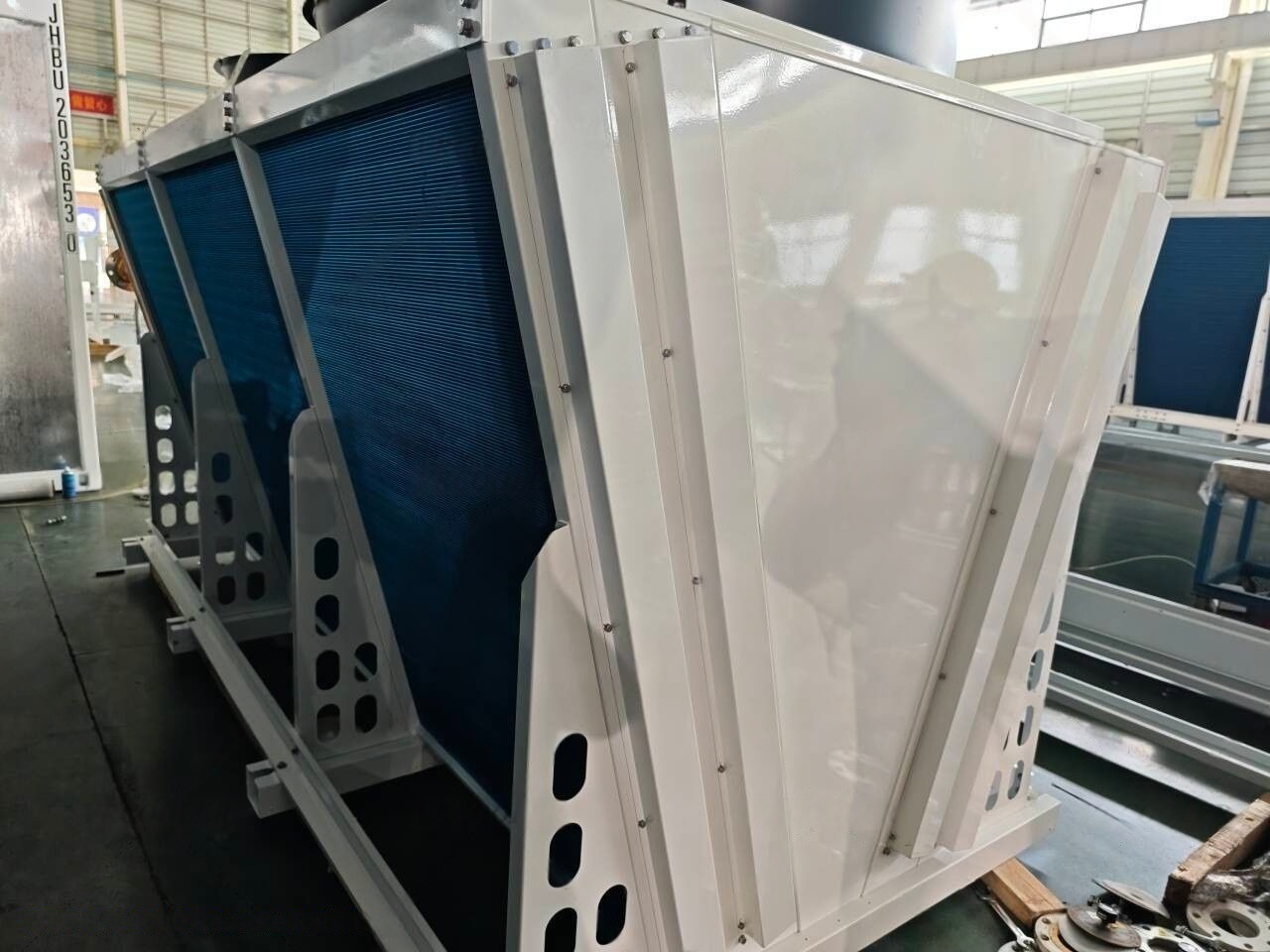
A Direct Dry Cooling Tower is a system where the primary process fluid (e.g., the steam from a power plant turbine) is sent directly to the large air-cooled heat exchangers (the finned tubes) in the tower. There is no intermediate heat exchanger or water loop.
Think of it as connecting your car’s engine directly to the radiator, with no other steps in between. In a power plant context, this means the turbine exhaust steam is piped directly to the cooling tower to be condensed.
How It Works: The Step-by-Step Process
This process is most common in steam-based power generation. Here’s how it works:
- Steam Inlet: After the steam has passed through the turbines and done its work, the low-pressure, low-temperature exhaust steam is routed through large-diameter pipes to the bank of heat exchangers located in the cooling tower. This steam is now ready to be condensed back into water.
- Heat Exchange: The heat exchangers are massive bundles of finned tubes, often arranged in an A-frame structure to maximize exposure to airflow. The exhaust steam flows through the inside of these tubes.
- Airflow: Simultaneously, powerful, mechanical-draft fans force a large volume of ambient air over the outside of the finned tubes.