

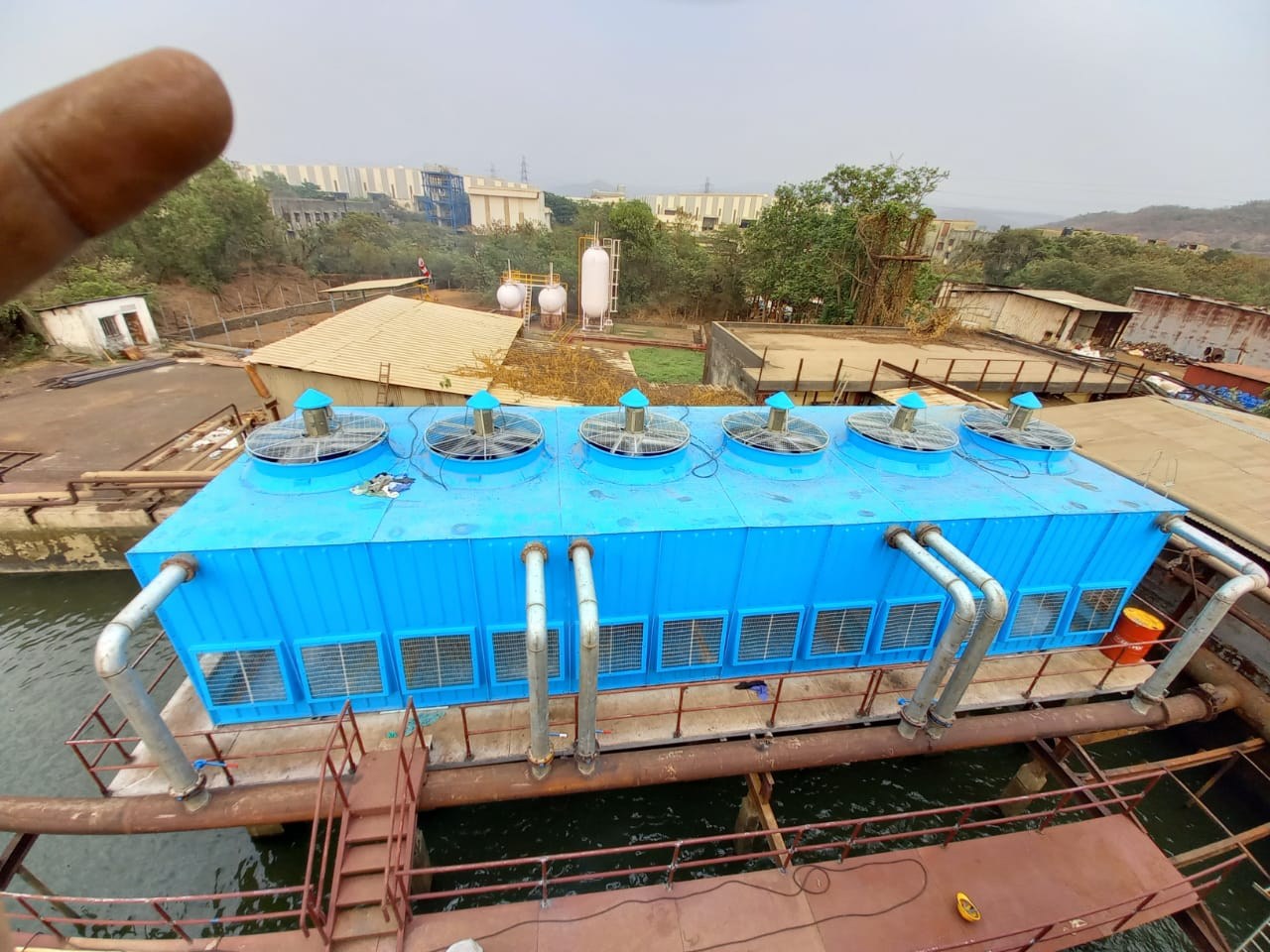
a cooling tower is the heart of the heat rejection process for large Commercial & Institutional HVAC systems. Its primary use is to efficiently dispose of massive amounts of unwanted heat from inside a building to the outside atmosphere.
Here’s a detailed breakdown of its use, why it’s essential, and how it fits into the larger system:
Primary Function: Heat Rejection
A cooling tower’s job is to cool down water that has been heated up by absorbing heat from the building. It does this by evaporating a small portion of that water, which releases the heat into the atmosphere. This cooled water is then reused.
How It Fits into the HVAC System (The Big Picture)
- Heat is Collected Inside: Inside the building, warm air passes over chilled coils containing cold water (called chilled water). The heat from the air transfers to this water, warming it up.
- Heat is Transferred: The now-warm chilled water goes to a device called a chiller (the machine that actually makes the cold water). The chiller transfers the heat from the chilled water loop to a separate condenser water loop.
- Heat is Rejected: This hot condenser water (typically around 95°F / 35°C) is pumped to the cooling tower on the roof or outside.
- Cooling Tower Works: The tower sprays this hot water over a fill material (“packing”) while large fans pull air through it. Evaporation cools the remaining water significantly (to about 85°F / 29°C).
- Cycle Repeats: This cooled condenser water is sent back to the chiller to pick up more heat, and the cycle continues.