

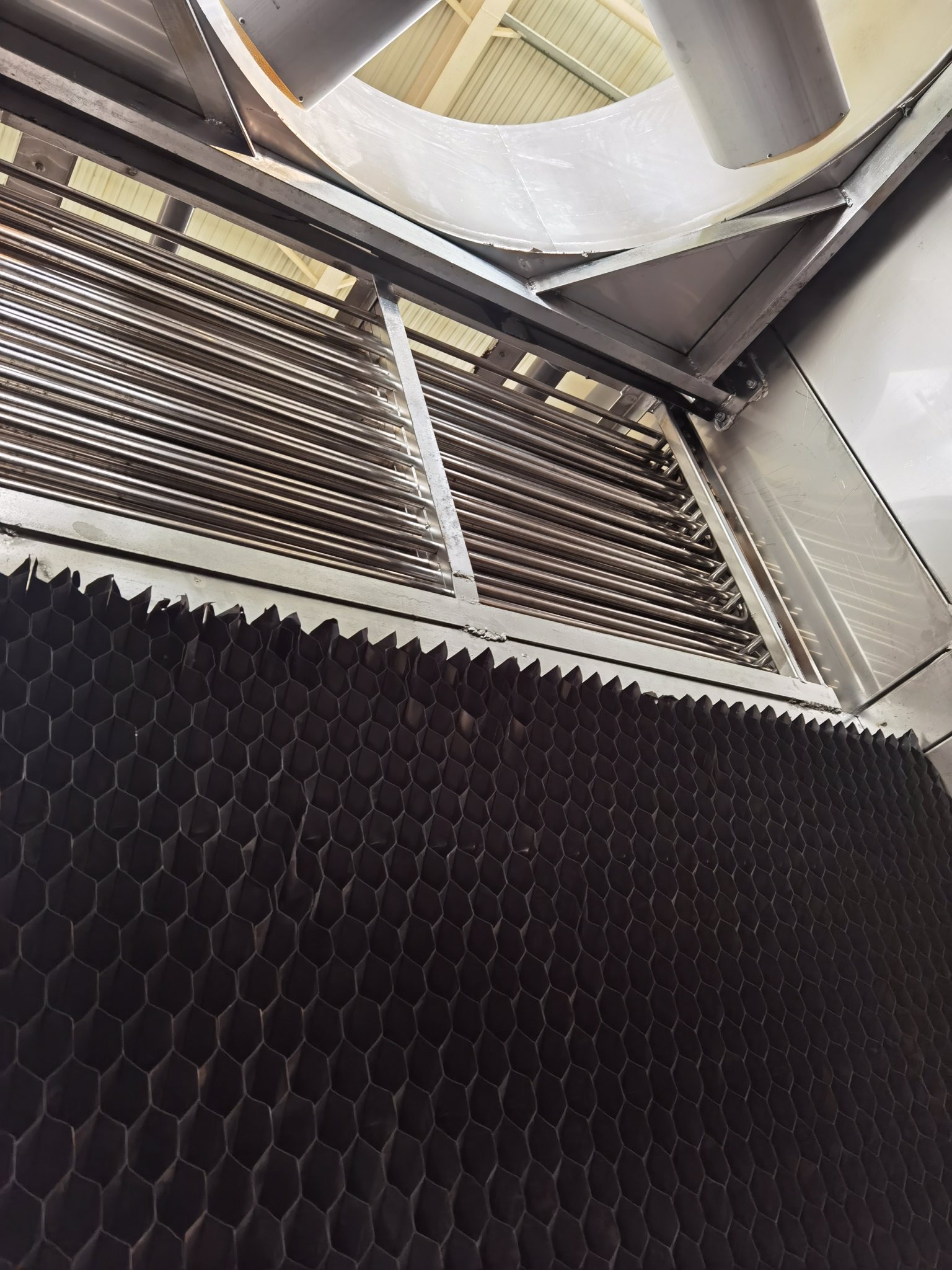
Which to Choose in Closed Circuit cooling tower Types?
Choose FORCED DRAFT (V-Flow) if your priorities are:
- Ease of Maintenance & Reliability: You want to maximize equipment life and minimize difficult, costly maintenance access (e.g., towers on tall buildings, remote sites, or where safety/access is a concern).
- Cold Climate Operation: The tower will operate in freezing conditions. Its inherent design reduces the risk of coil freeze-up.
- Ground-Level Noise Sensitivity: The tower is near offices, residences, or hospitals, and you need to minimize perceived noise.
- You can accommodate the larger footprint.
Choose INDUCED DRAFT (Counter-Flow) if your priorities are:
- Highest Thermal Performance in Minimal Space: You need the most cooling capacity in the smallest footprint (e.g., crowded rooftops, urban sites).
- Lower First Cost: Initial budget is a primary constraint.
- Predictable, Even Performance: You need consistent, manufacturer-certified performance with less risk of dry spots on the coil.
- Warm/Mild Climate: Freeze protection is not a major design driver.
Industry Trend & Bottom Line
- Induced Draft has been the traditional, high-volume market standard for decades due to its cost and performance balance.
- Forced Draft is increasingly popular in specific markets (like data centers, high-reliability HVAC, and cold climates) where its maintenance and reliability benefits justify the higher upfront cost.
Final Recommendation:
- For an HVAC application on a hospital or data center where uptime is critical and maintenance access is valued, Forced Draft is often the superior choice.
- For a standard industrial plant or commercial building with standard service cycles and space/cost constraints, Induced Draft remains the default, proven, and most economical choice.
Always: Get detailed submittals and lifecycle cost analyses from manufacturers of both types for your specific duty point, local climate, and site conditions before deciding