

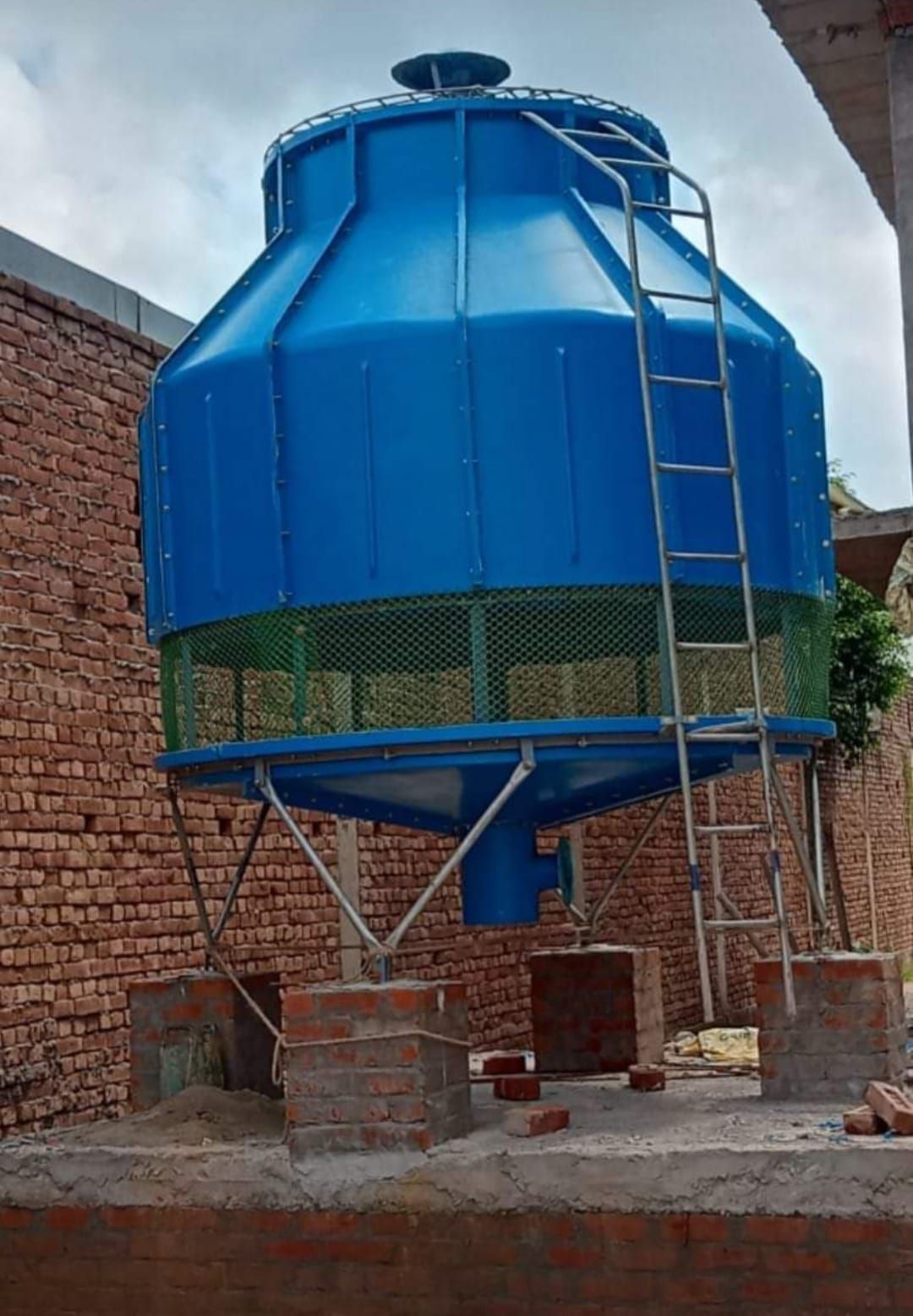
Drift Eliminators are a critical, often under-appreciated component of a cooling tower. They are the final line of defense for water conservation and environmental protection.
Core Function
To capture and return entrained water droplets from the exhaust air stream before they escape the tower. This minimizes water loss and prevents the environmental discharge of chemicals and minerals from the tower’s circulating water.
What is “Drift”?
- Drift: Microscopic to small droplets of circulating water that become mechanically carried by the upward airflow due to the fan’s energy.
- Drift Rate: Expressed as a percentage of the total circulating water flow rate. A poorly equipped tower might have a drift rate of 0.2%. Modern towers with efficient eliminators achieve 0.0005% to 0.005%.
- Why It’s a Problem:
- Water Loss: Pure waste of a valuable resource.
- Chemical Discharge: The droplets contain concentrated treatment chemicals (biocides, corrosion inhibitors, scale inhibitors).
- Environmental & Health Impact: Can create a visible “plume” (though distinct from the steam plume) and deposit chemicals/minerals on surrounding surfaces, vegetation, and equipment. In certain contexts (e.g., industrial process towers), drift may contain trace process contaminants.
- Corrosion & Icing: Drift can cause corrosion on nearby structures, vehicles, and the tower itself. In winter, it leads to dangerous icing on walkways and roofs.
How Drift Eliminators Work
They operate on inertial impaction. As the moist, droplet-laden air makes sharp directional changes through a series of baffles, the heavier water droplets cannot follow the air stream due to their inertia. They impact the eliminator surface, coalesce into larger drops, and drain back into the tower.
Common Problems & Maintenance
| Problem | Cause | Consequence |
| Fouling & Plugging | Poor water treatment (scale, biological growth), high suspended solids, algae. | Dramatically increased fan energy consumption, reduced airflow, poor cooling performance, and can even lead to fan stall or motor overload. |
| Physical Damage | Improper installation, fan reversal without proper bracing, high vibration, or aggressive cleaning methods. | Reduced drift efficiency, broken pieces can fall and damage fill or clog distribution nozzles. |
| Misalignment/Gaps | Panels shrink, warp, or were improperly installed. | Drift bypass – air and droplets find the path of least resistance, nullifying the eliminator’s purpose. |
| Chemical Degradation | Exposure to incompatible chemicals or UV radiation (if located in sun). | Embrittlement, cracking, and failure. |
Maintenance Best Practices:
- Regular Inspection: Visually check for fouling, damage, and gaps during shutdowns.
- Cleaning: Use low-pressure water spray or soft brushing. Never use high-pressure jets close to the PVC, as they can damage the delicate blades.
- Water Treatment: The best maintenance is prevention. Effective biocontrol and scale inhibition keep eliminators clean.
- Pressure Drop Monitoring: A rising trend in static pressure across the tower (fan amps increasing for the same airflow) is a key indicator of fouled fill or eliminators.
Why Drift Eliminators are Non-Negotiable
- Regulatory Compliance: Most environmental regulations (like those from the EPA in the US or local water boards) strictly limit drift emissions. Efficient eliminators are mandatory for permits.
- Water Conservation: In a 10,000 GPM system, reducing drift from 0.01% to 0.001% saves ~13 gallons per minute, or ~7 million gallons per year. This is a massive operational saving.
- Chemical Savings: Reducing drift loss directly reduces the amount of expensive treatment chemicals that are blown out of the system.
- Neighborly Relations: Prevents damage to nearby property (cars, buildings, landscaping) from chemical-laden drift, avoiding complaints and liability.