

Types of Heat Exchanger
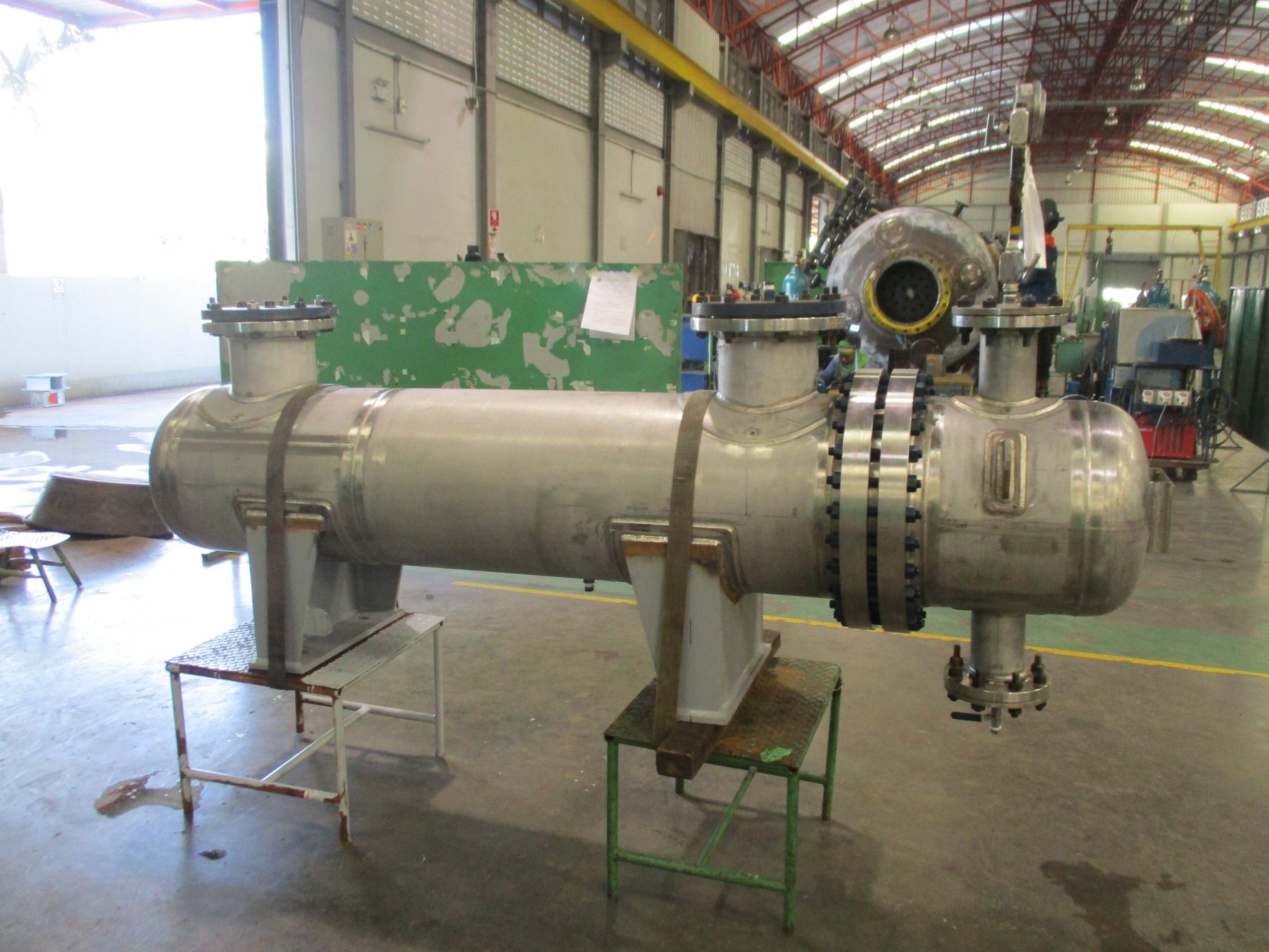
- Shell and Tube: The workhorse of heavy industry. A cylindrical shell contains a bundle of parallel tubes. One fluid flows through the tubes; the other flows over the tubes inside the shell.
- Sub-types: Fixed Tube Sheet (cheapest, but can’t handle big temperature differences), U-Tube (tubes bend in a “U” shape, allowing tubes to expand/contract), and Floating Head (the tube bundle can be pulled out for cleaning—vital for dirty fluids like crude oil).
- Plate and Frame (Gasketed): A stack of corrugated metal plates held together in a frame with gaskets between them. Hot and cold fluids flow through alternating gaps. Highly efficient, but gaskets limit them to moderate temperatures and pressures (usually under 300°F).
- Brazed Plate: Similar to plate-and-frame, but the plates are permanently fused together using copper or nickel brazing at high temperatures. No gaskets means it can handle higher pressures (up to 450 psi) and is very compact. Used in refrigeration and heat pumps.
- Fin Tube (Air-Cooled): Tubes have metal “fins” attached to the outside to dramatically increase surface area. One fluid flows inside the tube, and air (or another gas) flows over the fins. Examples: Car radiators, AC condensers, and heavy machinery oil coolers.
- Double Pipe (or Hairpin): The simplest design—one pipe runs straight inside a larger pipe. One fluid goes through the inner pipe, the other through the outer annulus (the space between them). Cheap, but takes up a lot of floor space for the amount of heat it transfers.
- ondensers: A hot vapor/gas flows in, gives up its latent heat, and turns into a liquid. The cooling fluid absorbs this heat. Examples: The outdoor coil of an AC unit, or the giant units on top of a power plant that turn steam back into water.
- Evaporators (or Boilers): A liquid flows in, absorbs heat from the hot fluid, and boils into a vapor. Examples: The indoor coil of a refrigerator (where the refrigerant evaporates to absorb heat from your food), or a steam generator in a power plant.
- Direct-Contact Heat Exchangers: This is the rare exception where the fluids are allowed to mix. One fluid is sprayed directly into the other. Because there is no metal wall to slow down heat transfer, this is incredibly fast.
- Spiral Heat Exchangers: Made of two long metal sheets rolled into a spiral, creating two long, curved channels. Excellent for handling slurries or thick, dirty fluids because the spiraling path creates high turbulence, which scrubs the walls clean (self-cleaning).
- Scraped Surface Heat Exchangers: These have an internal rotating blade that continuously scrapes the inside wall. Used for highly viscous, sticky, or crystallizing fluids.
- Example: Making peanut butter, chocolate, or ice cream—the blade scrapes the frozen product off the cold wall so it doesn’t clog the machine.
- Regenerative (Rotary Wheel): As mentioned before, this uses a rotating metal or ceramic wheel. Hot exhaust gas heats one half of the wheel; the wheel rotates, and the other half transfers that stored heat to incoming cold fresh air.
- Example: Large factory ventilation systems that recover waste heat to save energy.
Printed Circuit Heat Exchangers (PCHE): These are made using advanced chemical etching (like how computer chips are made) to create microscopic channels in metal plates, which are then diffusion-bonded together. They can handle incredible pressures (up to 5,000 psi) and extreme temperatures.