

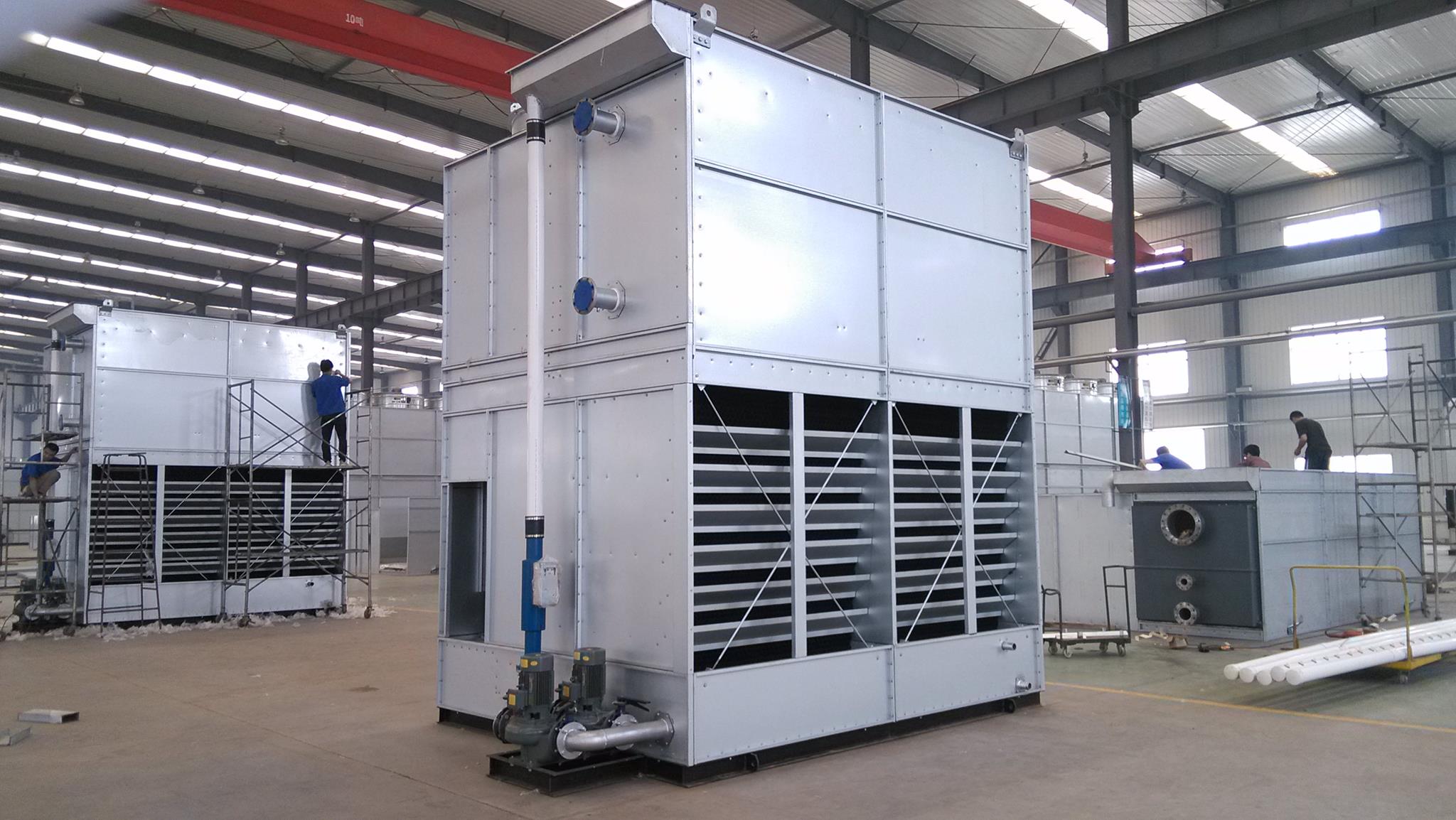
Role of Closed-Circuit Cooling Tower in Automobile industry
In the automobile industry, a closed-circuit cooling tower plays a crucial role in maintaining the precision, quality, and efficiency of various manufacturing processes. Its primary advantage is providing a contaminant-free cooling loop, which is essential for applications where even minor impurities can cause defects or downtime.
Core Role: Protecting Critical Processes from Contamination
Unlike open cooling towers that expose water to the air, a closed-circuit system uses a sealed loop to cool a fluid (like water or glycol). This design is critical because automotive plants have high levels of dust, oil mist, and other airborne particles that can clog systems, corrode equipment, and ruin sensitive processes.
Key Applications in Automobile Manufacturing
Closed-circuit cooling towers are used in several critical areas:
- Paint Shops: Maintaining exact temperature and humidity is vital for flawless paint adhesion and curing. A closed-loop system ensures the cooling water used in these climate-controlled environments is free from contaminants that could ruin a paint finish.
- Plastic Moulding: Manufacturing dashboards, bumpers, and other plastic components requires precise mold temperature control. A clean, closed-loop cooling system prevents mold defects and ensures part consistency.
- Engine and Component Testing: During engine and transmission testing, immense heat is generated. Closed-circuit towers provide reliable cooling to test benches, preventing overheating and ensuring accurate performance data.
- Metal Stamping and Machining: Processes that shape and cut metal generate significant heat. Cooling towers cool the machinery and the parts themselves, ensuring structural integrity and dimensional accuracy.
- Electric Vehicle (EV) Battery Production: The manufacturing of EV batteries often takes place in cleanroom environments. Closed-circuit cooling towers are ideal here as they prevent airborne contaminants from entering and fouling the sensitive production systems.
A Strategic Choice for Efficiency and Sustainability
The choice of a closed-circuit system also offers significant operational benefits:
- Reliability and Uptime: The sealed loop reduces maintenance needs and prevents fouling, which is crucial for meeting “just-in-time” production schedules. High-quality units often feature backup systems like two-speed motors for redundancy.
Water and Energy Savings: Modern systems, particularly hybrid closed-circuit cooling towers, can combine evaporative and dry cooling. This allows for significant water savings (up to 80% compared to traditional towers) by using dry cooling when weather permits, while still achieving the low temperatures needed for manufacturing during hot periods.