

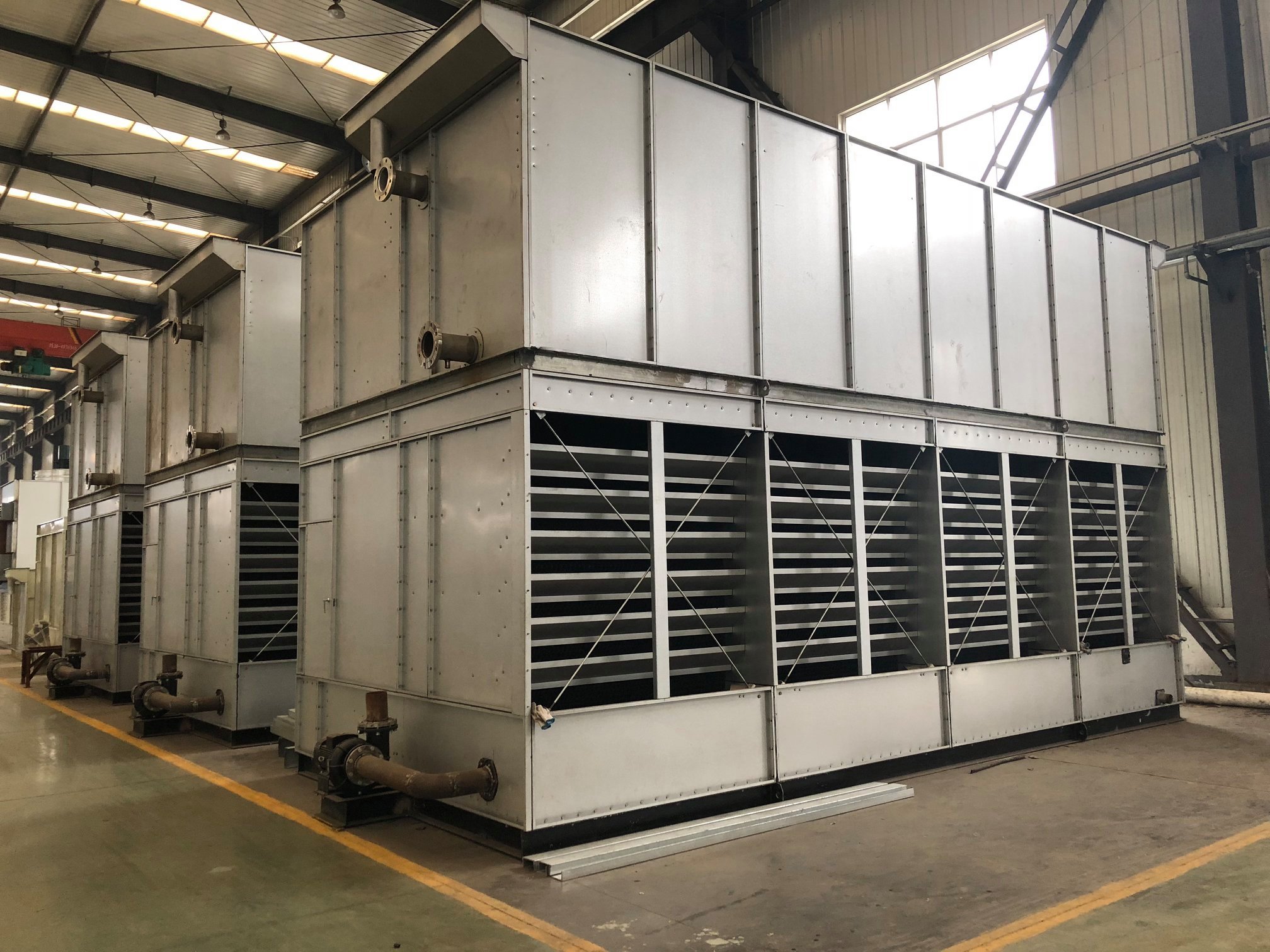
Counter Flow vs. Cross Flow in Closed Circuit Towers
This is a crucial distinction. The following table highlights the differences specific to closed-circuit designs:
| Feature | Counter Flow Closed Circuit Tower | Cross Flow Closed Circuit Tower |
| Air/Spray Water Flow | Vertical, opposite directions. Air up, water down. | Perpendicular. Air moves horizontally across the downward fall of water. |
| Coil Design & Efficiency | Thermodynamically more efficient. The counter-flow arrangement creates a more consistent and favourable temperature difference across the entire coil surface, often allowing for a smaller coil for the same duty. | Efficient, but the temperature profile across the coil is less uniform. May require a larger coil surface area to achieve the same cooling result. |
| Footprint vs. Height | Typically has a smaller footprint but is taller for the same capacity. | Typically has a larger footprint but is shorter for the same capacity. |
| Freeze Protection | Generally better in cold weather. The entire coil is surrounded by the warm, recirculating spray water, and the critical air inlet (coldest point) is at the bottom, away from the water distribution system. | The large, open louvers and water distribution system on the sides can be more exposed and susceptible to icing in freezing conditions. |
| Maintenance Access | Components are more vertical and internal. Access to the coil may require entering the tower. | Often provides easier horizontal access to the coil and distribution system from the sides for inspection and cleaning. |