

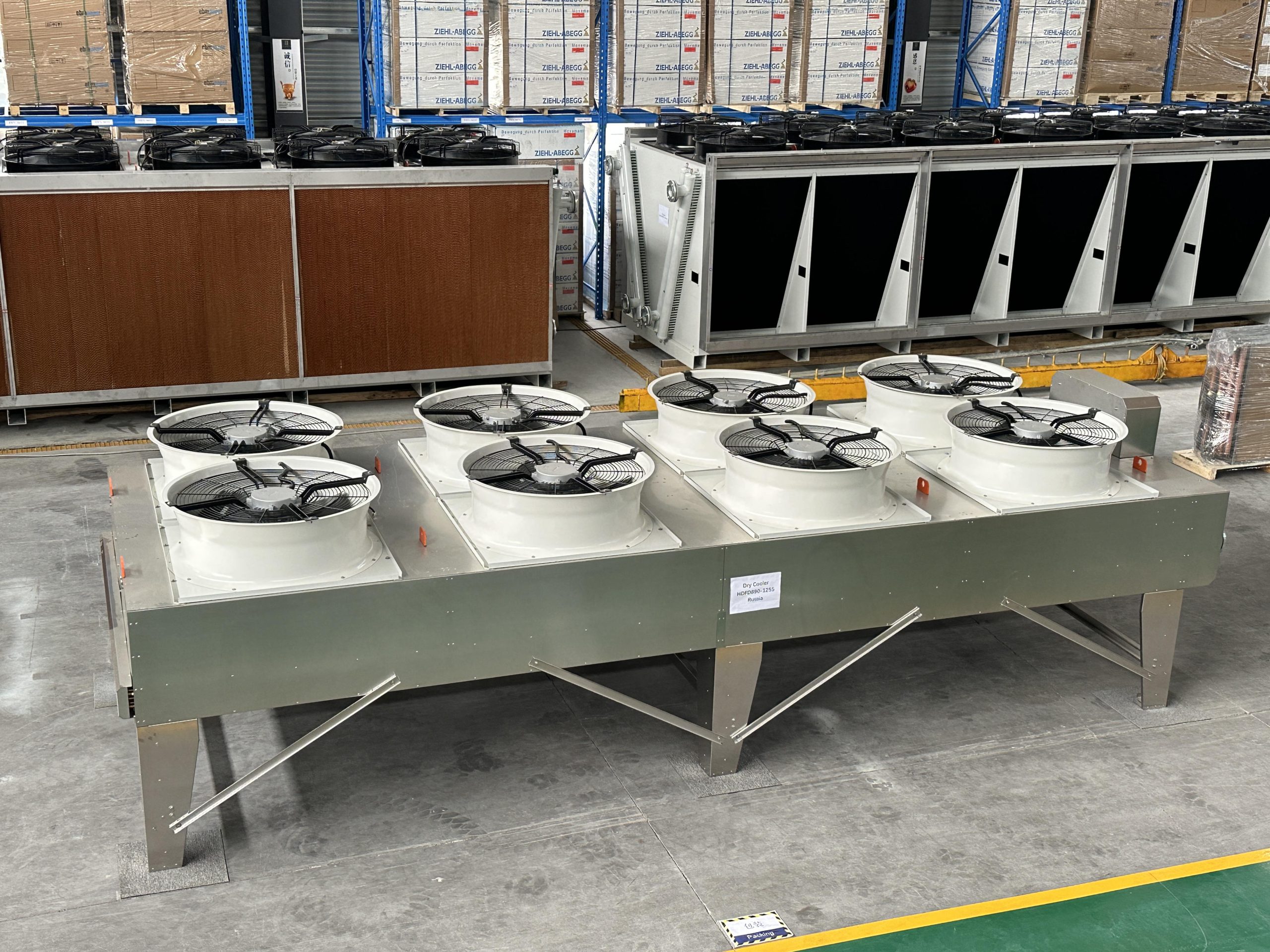
The reason for using a cellulose pad in a dry cooling tower is to create an efficient and controlled adiabatic pre-cooling system, transforming a standard dry cooler into a more powerful and efficient adiabatic hybrid cooler during hot weather.
The cellulose pad is not part of the dry circuit itself; it’s an add-on component that operates on the air before it reaches the primary dry heat exchanger.
The Core Reason: Efficient Evaporative Pre-Cooling
The fundamental problem with a pure dry cooler is that its performance plummets as the ambient air temperature rises. The cellulose pad solves this by cooling the incoming air through evaporation, making the dry cooler think it’s a cooler day than it actually is.
How the Cellulose Pad Works
Here is the step-by-step process:
- Saturation: Water is pumped from a basin and distributed evenly over the top of the vertically mounted cellulose pad, saturating it completely.
- Airflow: The system’s fans pull hot, dry ambient air through the wet pad.
- Evaporation: A small portion of the water evaporates into the air stream. This phase change from liquid to vapor requires a large amount of energy (latent heat of vaporization), which is drawn from the air itself.
- Adiabatic Cooling: This process of evaporation cools the air. The key is that it lowers the air’s dry-bulb temperature while increasing its humidity. The total heat energy (enthalpy) remains roughly the same, but the sensible heat is converted to latent heat.
- Pre-Cooled Air Reaches the Coil: This now-cooler and more humid air is then drawn through the main finned-tube heat exchanger coil of the dry cooler.
- Enhanced Heat Transfer: Because the air entering the coil is 10°F to 30°F (6°C to 17°C) cooler than the outside air, the rate of heat transfer from the coil is dramatically improved. This allows the system to maintain the required cooling capacity even on the hottest days.