

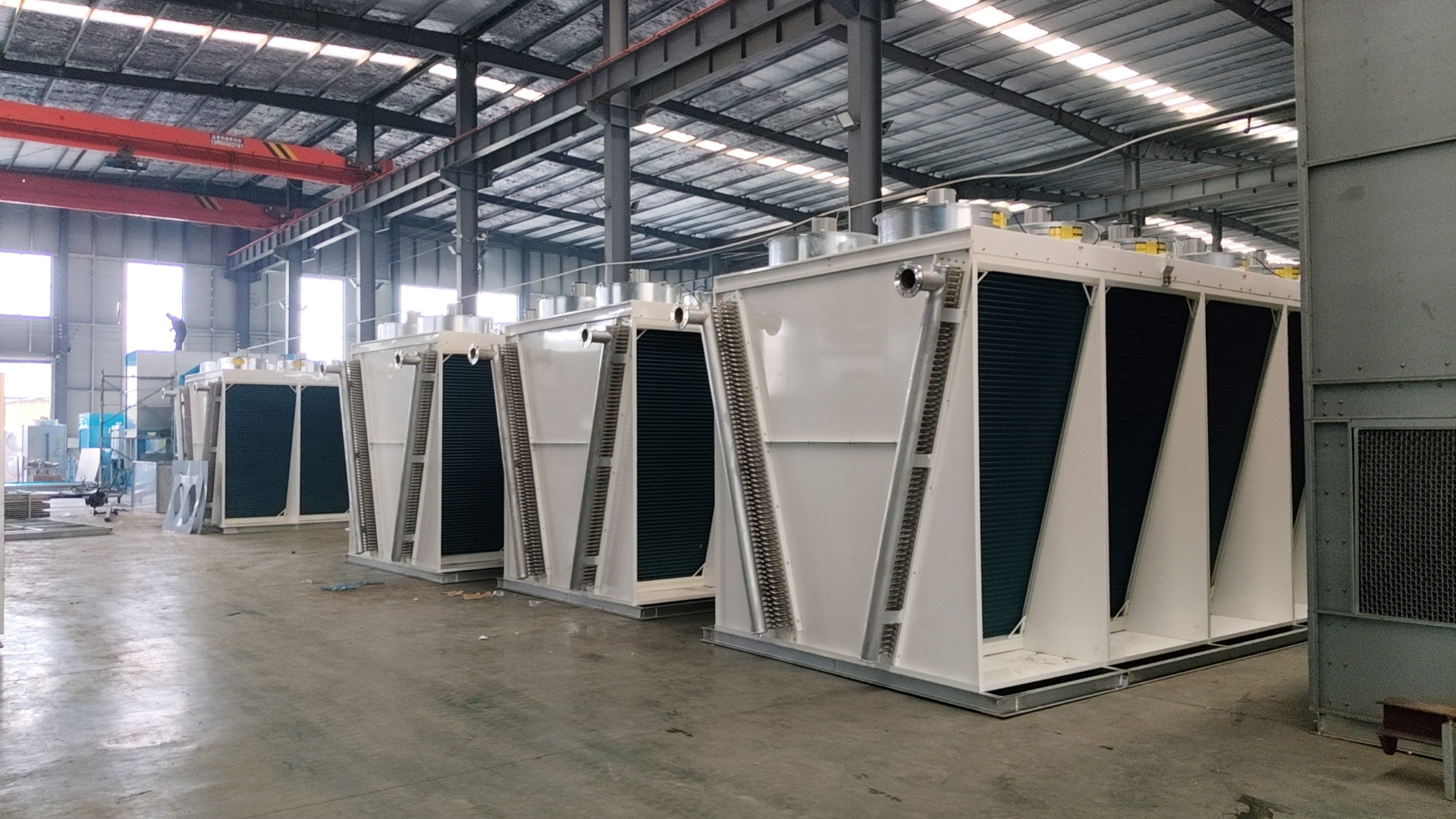
Material of Construction of cooling coil in Dry cooling tower
Their Common Materials
1. Tubes (The Primary Pressure Boundary)
The tubes carry the hot process fluid and must withstand its pressure and temperature.
- Carbon Steel (CS) / Galvanized Steel (GS):
- Pros: Low cost, excellent mechanical strength, readily available.
- Cons: Prone to corrosion from both the internal fluid (if not treated) and the external atmosphere. Galvanizing (coating with zinc) provides good but not perfect protection against atmospheric corrosion.
- Use Case: Very common for industrial applications with non-corrosive cooling fluids and where external conditions are not highly aggressive. Often used in power plant Air-Cooled Condensers (ACCs).
- Stainless Steel (SS), typically SS 304 or SS 316:
- Pros: Excellent corrosion resistance, both internally and externally. Very strong and durable.
- Cons: Significantly more expensive than carbon steel, and has lower thermal conductivity.
- Use Case: Used in corrosive environments (coastal areas with salt air, chemical plants with corrosive atmospheres) or when the cooling fluid is highly purified or treated with chemicals that would corrode carbon steel.
- Copper:
- Pros: Excellent thermal conductivity (about 8-10 times higher than steel), which makes it very efficient for heat transfer. Good inherent corrosion resistance in many environments.
- Cons: High cost, softer and less mechanically robust than steel, can be vulnerable to certain types of corrosion (e.g., ammonia attack).
- Use Case: Less common in large industrial dry cooling towers due to cost and strength, but can be found in smaller HVAC or specialized industrial applications where maximum efficiency is paramount.
2. Fins (The Extended Surface for Heat Transfer)
The fins are attached to the outside of the tubes to dramatically increase the surface area for heat transfer to the air.
- Aluminum:
- Pros: The most common choice. Excellent thermal conductivity, lightweight, low cost, and can be easily formed into complex fin shapes. It develops a protective oxide layer that provides good atmospheric corrosion resistance.
- Cons: Can be susceptible to galvanic corrosion if in direct contact with a more noble metal like copper or steel in a corrosive environment.
- Use Case: The default material for fins in the vast majority of dry cooling towers.
- Copper:
- Pros: Used when the tubes are also copper, creating a homogenous and highly efficient system.
- Cons: Very expensive and heavy.
- Use Case: Limited to specific applications where copper tubes ar