

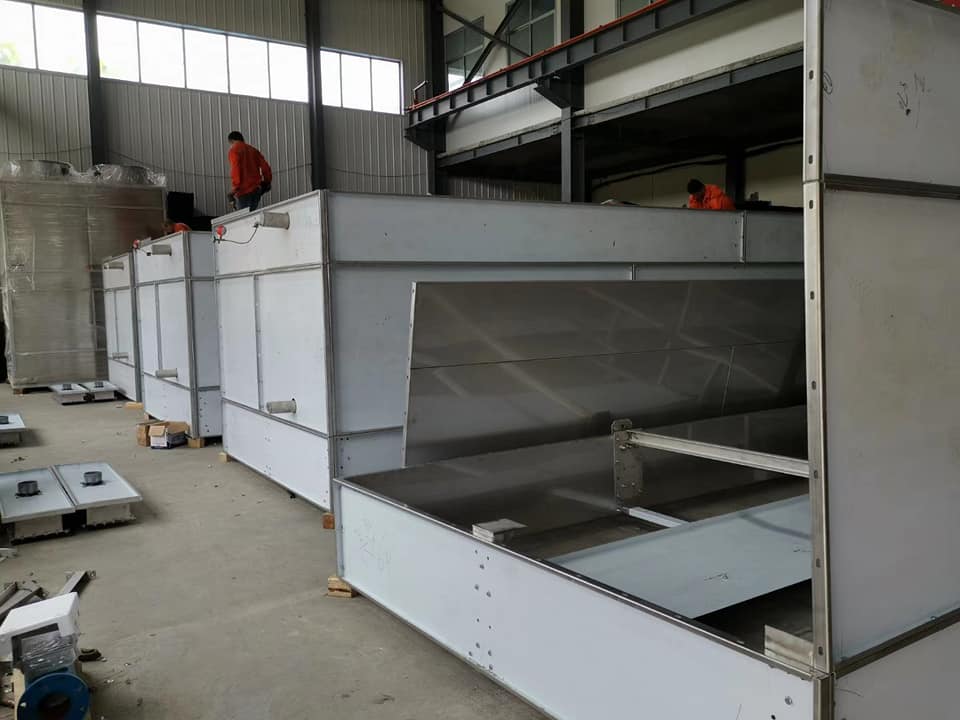
An evaporative condenser is a heat rejection device used primarily in large refrigeration and air-conditioning systems. It works by combining the principles of a cooling tower and a traditional heat exchanger into one unit to efficiently condense refrigerant vapor back into a liquid.
How It Works: Combining Air and Water for Superior Cooling
The core principle is using evaporating water to remove heat from the refrigerant. Here is a step-by-step breakdown of the process:
- Hot Refrigerant Enters: High-pressure, superheated refrigerant vapor from the compressor flows into the condenser’s tube coil.
- Water Spray System: A pump continuously circulates water from a basin at the bottom of the unit, spraying it over the outside of the coil to keep it completely wet.
- Airflow Over the Coil: A fan draws air through the unit, moving it across the wetted coil. The direction of airflow can either be in the same direction as the water spray (parallel flow) or in the opposite direction (counterflow).
- The Evaporative Cooling Effect: As air passes over the wetted coil, a portion of the spray water evaporates. This evaporation process absorbs a significant amount of latent heat from the remaining water and, more importantly, from the refrigerant inside the coil tubes. The science behind this is that for every pound of water that evaporates, it removes approximately 1,000 BTUs of heat from the system.
- Refrigerant Condenses: The heat removed from the refrigerant inside the coil causes it to rapidly cool and condense from a vapor into a liquid state. The condensed liquid then flows out of the condenser to be used in the refrigeration cycle.
- Water Recirculation: Most of the spray water is not evaporated. It falls back into the basin, where it is collected and pumped over the coil again. A float valve adds fresh “makeup” water to replace the small amount that was lost to evaporation.
Key Advantages and Applications
Evaporative condensers are often chosen for their significant efficiency and cost benefits, especially in large-scale applications. The key advantages include:
- Superior Energy Efficiency: Because the process uses the evaporative cooling effect, the system can operate at a lower condensing temperature, which is influenced by the ambient wet-bulb temperature. This can lead to compressor energy savings of 10% to 30% compared to systems that use separate cooling towers and traditional condensers, and more than 30% compared to air-cooled systems. Some sources even report coefficient of performance (COP) improvements of up to 113% and power consumption reductions up to 58%.
- Water Conservation: Evaporative condensers use significantly less water than “once-through” cooling systems that constantly draw and waste fresh water. They save about 95% of the water that would otherwise be required.
- Space and Cost Savings: By combining the heat exchanger and cooling tower into one unit, they require less physical space and reduce the need for extensive water piping systems associated with separate components.
Because of these benefits, you will find evaporative condensers in industrial refrigeration, large commercial HVAC systems for buildings, and various process cooling applications.
Maintenance and Safety Considerations
The use of water and air in the process creates an environment where biological growth, including the bacteria that causes Legionnaires’ disease, can occur. For this reason, evaporative condensers require strict, well-managed maintenance programs, including regular cleaning and disinfection. They should also be positioned away from building air intakes to prevent the spread of contaminated aerosols