

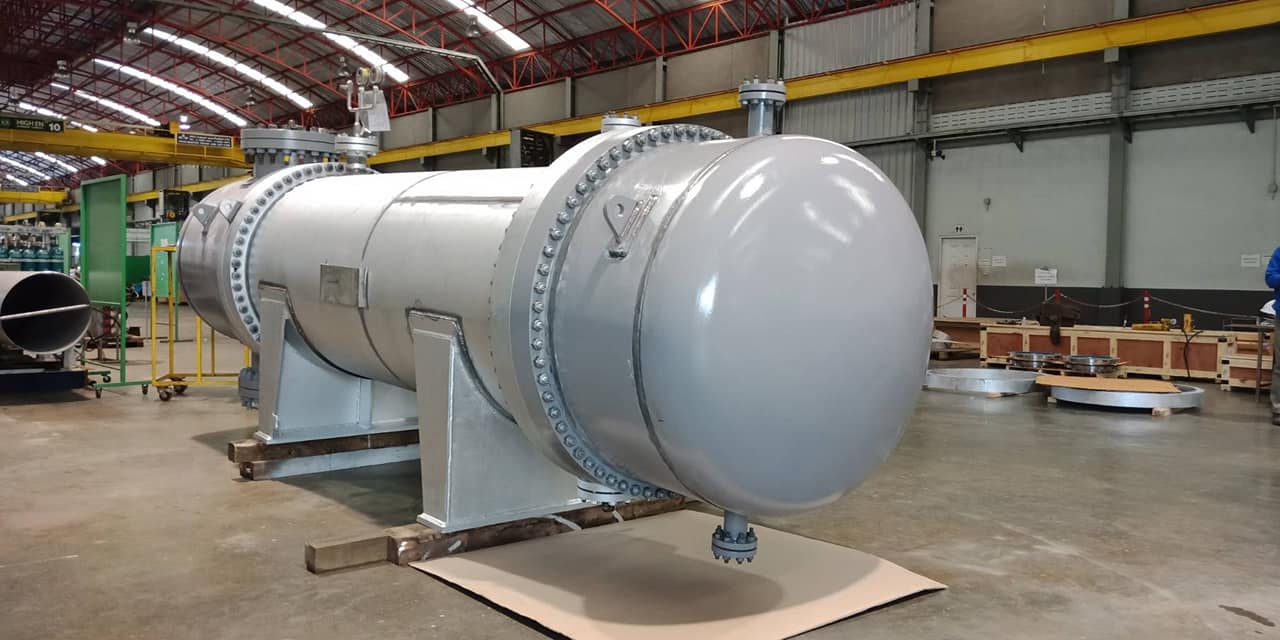
Copper Tubes vs. Stainless Steel Tubes in Heat Exchangers
When selecting between copper and stainless steel (SS) tubes for a shell and tube heat exchanger, key factors include thermal conductivity, corrosion resistance, cost, and application requirements. Below is a detailed comparison:
1. Thermal Conductivity
| Material | Thermal Conductivity (W/m·K) | Implications |
| Copper (Cu) | ~400 (Pure Cu) | Excellent heat transfer; ideal for high-efficiency applications. |
| Copper Alloys | ~50–120 (Brass, Cupronickel) | Still better than SS but lower than pure Cu. |
| Stainless Steel | ~15–30 (SS 304/316) | Lower heat transfer; may require larger surface area. |
Winner: Copper (Best for maximizing heat transfer efficiency).
2. Corrosion Resistance
| Material | Corrosion Resistance | Key Weaknesses |
| Copper (Cu) | Good in freshwater, but corrodes in: | |
| – Ammonia, sulphides, acidic solutions (pH < 6). | ||
| – Saltwater (unless alloyed, e.g., Cupronickel). | ||
| Stainless Steel | Excellent in most environments: | |
| – Resists acids, chlorides (SS 316 better than 304). | ||
| – Handles CIP (Clean-in-Place) chemicals (NaOH, HNO₃). |
Winner: Stainless Steel (Better for harsh, corrosive, or high-pH environments).
Mechanical Strength & Durability
| Material | Strength | Durability |
| Copper | Soft, prone to erosion at high velocities. | Thicker tubes may be needed. |
| Stainless Steel | High strength, resists erosion. | Longer lifespan in abrasive conditions. |
Winner: Stainless Steel (Better for high-pressure/abrasive applications).
4. Cost Comparison
| Material | Relative Cost | Maintenance Cost |
| Copper | Higher raw material cost. | May require frequent replacement in corrosive settings. |
| Stainless Steel | Lower initial cost (SS 304). | Longer lifespan reduces long-term costs. |
Trade-off:
- Copper is more expensive but offers better heat transfer.
- Stainless Steel is cheaper long-term in corrosive environments.
5. Fouling & Cleanability
| Material | Fouling Tendency | Cleanability |
| Copper | Biofouling resistant (natural antimicrobial properties). | Harder to clean if corroded. |
| Stainless Steel | Smooth surface (electropolished SS 316L resists biofilm). | Easier CIP (Clean-in-Place) cleaning. |
Winner: Stainless Steel (Better for food, pharma, and chemical industries).
6. Applications: Where to Use Which?
Best for Copper Tubes:
- HVAC & refrigeration (high thermal efficiency needed).
Low-corrosion freshwater cooling (power plants, chillers).