

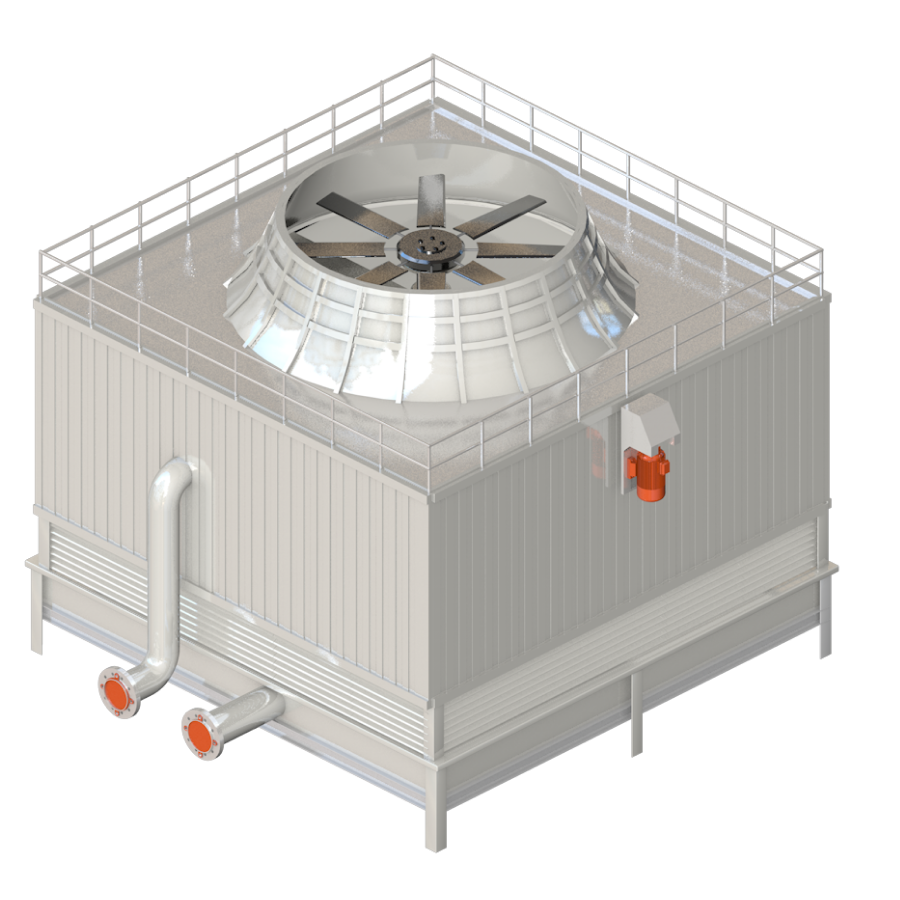
Dry cooling tower for Genset
A dry cooling tower for a genset is a specific type of heat rejection system that offers distinct advantages and disadvantages, especially in water-scarce environments.
Here’s a detailed explanation of how it works, its role with gensets, and its pros and cons.
1. The Core Function: How a Dry Cooling Tower Works
The primary job of any cooling system for a genset is to remove the waste heat generated by the engine. A dry cooling tower does this without directly consuming or evaporating water.
- The Process:
- The hot coolant (a water-glycol mixture) from the genset’s engine jacket and (if present) the charge-air cooler flows through a closed-loop circuit of finned tubes.
- A fan forces ambient air over the outside of these finned tubes.
- Heat transfers from the hot coolant inside the tubes to the cooler air passing over the fins through the process of sensible heat transfer.
- The now-cooled coolant is pumped back to the engine to absorb more heat, and the cycle repeats.
- Key Distinction: The coolant circuit is completely closed. There is no direct contact between the coolant and the air, and no water is lost to evaporation. This is the fundamental difference from a “wet” or “open” cooling tower.