

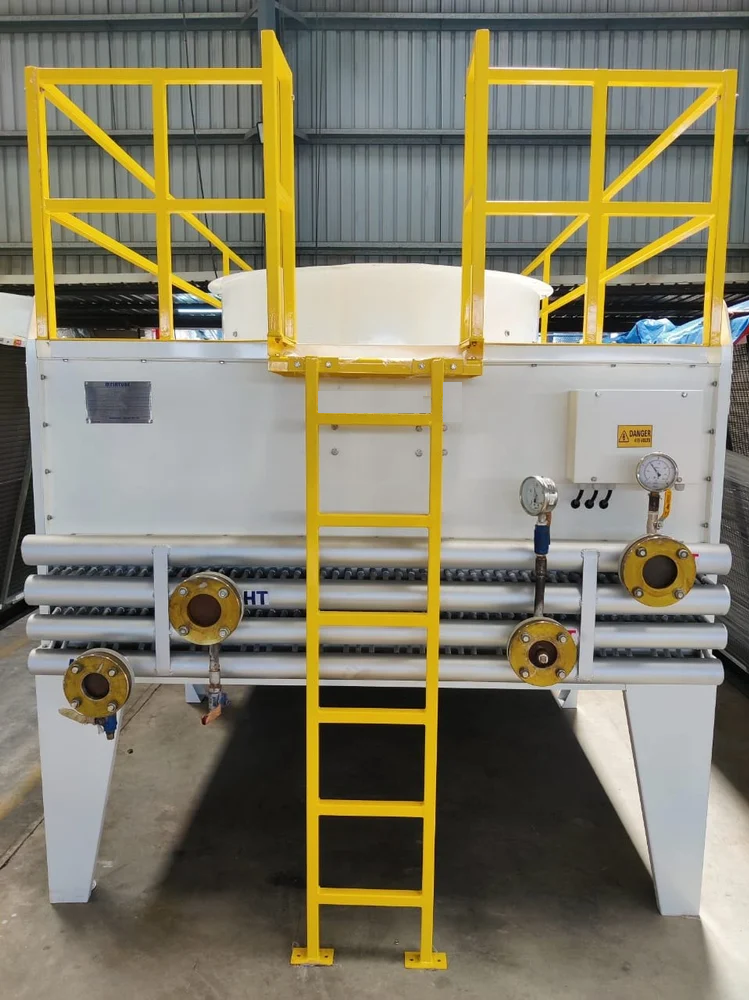
Remoted Radiator vs Genset Radiator
Remote Radiator (as commonly understood in computing and industrial machinery) and a Genset Radiator (used for generator sets).
At a Glance: Core Difference
- Remote Radiator: A separate, add-on cooling component designed to move the heat dissipation function away from the main device for performance, noise, or space benefits.
- Genset Radiator: An integral, dedicated part of the engine cooling system within a generator set, whose primary purpose is to reject the engine’s waste heat directly to the environment. Its “remoteness” is relative to the engine block, not the genset itself.
Detailed Comparison Table
| Feature | Remote Radiator | Genset Radiator |
| Primary Function | To provide superior, flexible, or quiet cooling for a specific heat-generating component (CPU, GPU, laser, etc.) by being physically separated. | To reject waste heat from a generator’s internal combustion engine to prevent overheating and ensure reliable operation. |
| System Relationship | Optional / Aftermarket / Custom Solution. It is not required for the basic function of the device, but enhances it. | OEM / Integral / Mandatory Component. The generator cannot run for more than a few minutes without it. |
| Typical Setup | The radiator is external, connected via long hoses to a cooling loop that includes a pump, water blocks, and coolant. | The radiator is mounted directly onto the generator frame, connected via short hoses to the engine’s water jackets and a coolant pump. |
| Cooling Target | A specific component or a small set of components (e.g., a computer’s CPU and GPU, an industrial laser tube). | The entire internal combustion engine of the generator. |
| Key Drivers | Performance, Noise Reduction, Space Constraints, Thermal Stability. | Reliability, Durability, and Continuous Operation under load. |
| Environment | Often used in controlled environments (offices, data centers, workshops). Can be placed for optimal airflow. | Designed for harsh, often outdoor environments (construction sites, mines, power plants). Must be robust. |
| Redundancy/Failsafes | Rarely has built-in redundancy. Failure typically leads to component throttling or shutdown. | Often part of a system with monitoring and failsafes (high-temperature shutdown, low coolant sensors) to protect the expensive engine. |
| Example Scenario | A PC enthusiast mounts a massive 1080mm radiator on the wall behind their desk to cool their computer silently. | A 2MW diesel generator for a hospital has a large, belt-driven fan pulling air through a radiator mounted on the skid base to cool its V16 engine. |
Deeper Dive into the Genset Radiator
To understand the comparison fully, it’s crucial to see the Genset Radiator in its context.
- It’s Part of a Larger System: A Genset Radiator is a key component in the generator’s Jacket Water Cooling System. This system includes the radiator, a coolant pump (often belt-driven from the engine), a thermostat, and the coolant passages inside the engine block (the “jacket”).
- The “Remote” Misconception: While you might hear the term “remote radiator” used in genset contexts, it usually refers to a Remote Heat Exchanger. This is a different setup where the genset’s primary coolant loop rejects its heat to a secondary loop (often using a heat exchanger), which then goes to a radiator located further away. This is used when:
- The genset is installed indoors (e.g., in a basement).
- The ambient air around the genset is too hot or contaminated.
- Multiple gensets are cooled by a central system.
- Design Priorities:
- Durability: Built from heavy-gauge materials to resist vibration and corrosion.
- Serviceability: Designed for easy cleaning and maintenance in the field.
- Efficiency at High Load: Sized to handle the immense thermal load of a diesel engine running at full capacity for extended periods.
Summary: Key Takeaway
The fundamental difference lies in integration and necessity.
- A Remote Radiator is a performance and customization upgrade. It is a solution to a problem of constraints (noise, space, heat) for a device that could otherwise function with standard cooling.
- A Genset Radiator is a fundamental and non-negotiable safety component. It is as essential to the generator as the engine itself. Without it, the generator would destroy itself in short order.
Think of it this way:
- Remote Radiator is like adding a high-performance, roof-mounted AC unit to a car that already had a functioning factory AC. It’s for extreme performance.
- Genset Radiator is the factory radiator in that car. The car cannot run without it.