

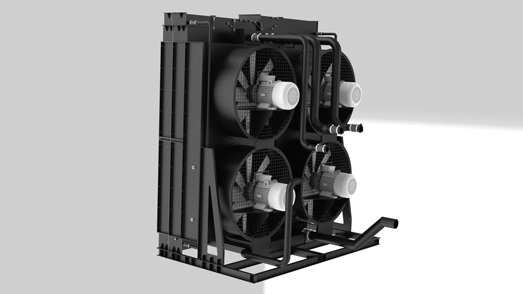
Genset cooler
Types of Genset Cooling Systems
There are three primary methods used to cool generators, each suited for different applications and sizes.
1. Radiator Cooling (Air-Cooled)
This is the most common system for standard, self-contained generators.
- How it Works: A radiator is mounted directly on the generator frame. The engine’s coolant is pumped through the radiator, and a large, belt-driven or electric fan pulls ambient air through the radiator fins to dissipate the heat.
- Analogy: Exactly like the cooling system in your car.
- Best For: Most standby and prime power generators where ample, clean ambient air is available.
- Variation: Remote Radiator: The radiator is separated from the genset and installed outside, connected by hoses. Used when ventilation is poor or the genset is installed indoors.
2. Heat Exchanger Cooling (Liquid-to-Liquid)
This system uses a secondary liquid (usually water from an external source) to cool the engine’s primary coolant.
- How it Works: The engine’s hot coolant passes through a shell and tube heat exchanger. Meanwhile, cool water from an external source (like a city water line or a cooling tower) flows through the tubes, absorbing the heat from the engine coolant without the two fluids ever mixing.
- Best For:
- Large industrial generators and marine applications.
- Installations where clean air is not available (dusty, dirty environments).
- Situations where fan noise from a radiator is undesirable.
. Combined Cooling Systems
Many large gensets use a hybrid approach for maximum efficiency.
- How it Works: The engine jacket water is cooled by a heat exchanger, and the secondary loop from that heat exchanger is then cooled by a remote radiator. This creates two separate loops, protecting the engine from contaminants in the long piping runs to the remote radiator.