

Define Your Application & Duty Cycle
This is the most critical factor.
- Standby/Emergency Power: The genset runs only during power outages for short durations (hours).
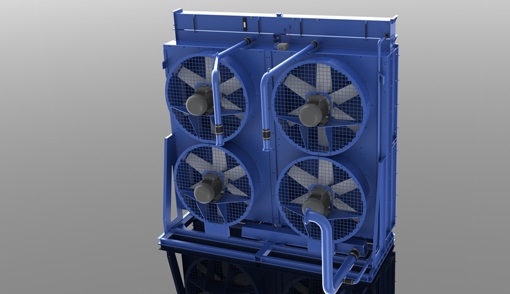
- Recommendation: Integrated ACHE (Radiator). Its simplicity, low maintenance, and instant readiness make it the undisputed best choice. The downside of lower efficiency in peak heat is less critical for short run times.
- Prime/Continuous Power: The genset is the primary source of power, running 24/7.
- Recommendation: Cooling Tower System or Remote Dry Cooler. For large units (>1.5 MW) or in hot climates, the efficiency of a cooling tower often justifies its cost and complexity. If water is scarce or maintenance is a concern, a large remote dry cooler is the alternative.
Load Curtailment / Peak Shaving: The genset runs for extended periods daily or weekly
- Recommendation: A detailed analysis is needed. Remote Dry Cooler is often a good compromise, but Cooling Tower may be better for very high hours and high ambient temperatures.
Step 3: Analyse Your Site-Specific Conditions
Create a checklist for your specific location:
| Factor | Question to Ask | Implications for Cooler Selection |
| Ambient Temperature | What is the maximum and average temperature? | High Temp (>40°C/104°F): ACHE/Dry Cooler performance drops; genset may need derating. Cooling Tower efficiency is superior. |
| Water Availability & Cost | Is there a reliable, cheap water source? | Scarce/Expensive Water: Cooling tower is not feasible. ACHE/Dry Cooler is the only choice. |
| Space & Location | Where will the genset be installed? (Roof, ground, enclosed room) | Space Constrained: Integrated ACHE is compact. Remote coolers (Dry Cooler/Tower) free up engine room space but need external space. |
| Altitude | What is the site’s altitude above sea level? | High Altitude: Air is thinner, reducing cooling efficiency. All air-based systems (ACHE, Dry Cooler) require significant oversizing. |
| Air Quality | Is the air dusty, sandy, or full of lint? | Dirty Air: ACHE/Dry Cooler fins will clog quickly, requiring frequent cleaning. A cooling tower is also affected but may be easier to clean. |
| Noise Restrictions | Are there local noise ordinances? | Strict Limits: The fan on an integrated ACHE is very loud. A remote dry cooler or cooling tower can be located farther away and equipped with low-noise fans. |
| Freezing Conditions | Does the ambient temperature drop below 0°C (32°F)? | Freezing Climate: Integrated ACHE with glycol is simple and effective. Cooling towers require complex freeze protection systems (heated basins, dry operation). |
Step 4: Evaluate Total Cost of Ownership (TCO)
Don’t just look at the purchase price.
| Cost Type | Air Cooled (ACHE) | Remote Dry Cooler | Cooling Tower |
| Initial Cost | Lowest | Medium | Highest |
| Installation Cost | Lowest (integrated) | Medium (piping, wiring) | High (piping, wiring, structure) |
| Maintenance Cost | Low (clean fins, check belts) | Low (clean coils, fan motor) | Very High (water treatment, pump maintenance, Legionella testing) |
| Operational Cost | Fan Power Only | Fan Power Only | Fan Power + Water + Chemicals |
| Cost of Failure | Low (simple repair) | Medium | High (can shut down entire plant) |