

The “best” cooling system for a genset engine is not a single answer; it depends entirely on the application, location, and operational priorities (cost, water availability, reliability).
Here’s a detailed breakdown of the most common cooling systems, their pros and cons, and a guide to selecting the optimal one.
The Two Fundamental Types: Air-Cooled vs. Liquid-Cooled
First, it’s crucial to understand the primary distinction.
1. Air-Cooled Systems
- How it Works: Ambient air is directly forced by a fan over the engine block and cylinder heads, which have finned surfaces to increase heat dissipation.
- Best For: Small, portable, and standby gensets (typically up to 30 kVA).
| Pros | Cons |
| Simple design, fewer parts | Limited cooling capacity, unsuitable for large engines |
| Lower initial cost | Very noisy due to the high-speed fan |
| No risk of coolant leaks or freezing | Cooling efficiency highly dependent on ambient air temperature |
| Low maintenance (no radiators or pumps to maintain) | Can lead to uneven cooling and hotter spots on the engine |
Verdict: The best choice for small, infrequently used backup power for homes, small businesses, or construction sites. It is not suitable for large, continuous-use industrial gensets.
2. Liquid-Cooled Systems
- How it Works: A coolant mixture (water + glycol) circulates through passages in the engine block and cylinder head, absorbing heat. This hot coolant is then pumped to a heat exchanger where the heat is rejected to the air or another water circuit.
- Best For: Virtually all medium to large gensets (>>50 kVA), including prime power and critical standby applications.
Liquid-cooled systems are the industry standard for serious power generation. The “best” debate is primarily about which type of liquid-cooling system to use.
Types of Liquid Cooling Systems: Finding the “Best”
Radiator Cooling (Closed-Loop with Fan)
This is the most common system, similar to a car.
- How it Works: The hot coolant is pumped through a radiator, where a fan blows air across the fins to reject the heat to the atmosphere.
- Pros: Self-contained, simple installation, cost-effective.
- Cons: Consumes engine power to run the fan, performance drops in high ambient temperatures, can be noisy.
2. Heat Exchanger Cooling (Shell & Tube)
- How it Works: The hot engine coolant passes through a heat exchanger where it is cooled by a separate, external stream of raw water (e.g., from a lake, sea, or cooling tower).
- Pros: Very efficient, stable engine temperature, independent of ambient air temperature.
- Cons: Requires a continuous source of raw water. The raw water side can foul with scale, algae, or marine growth.
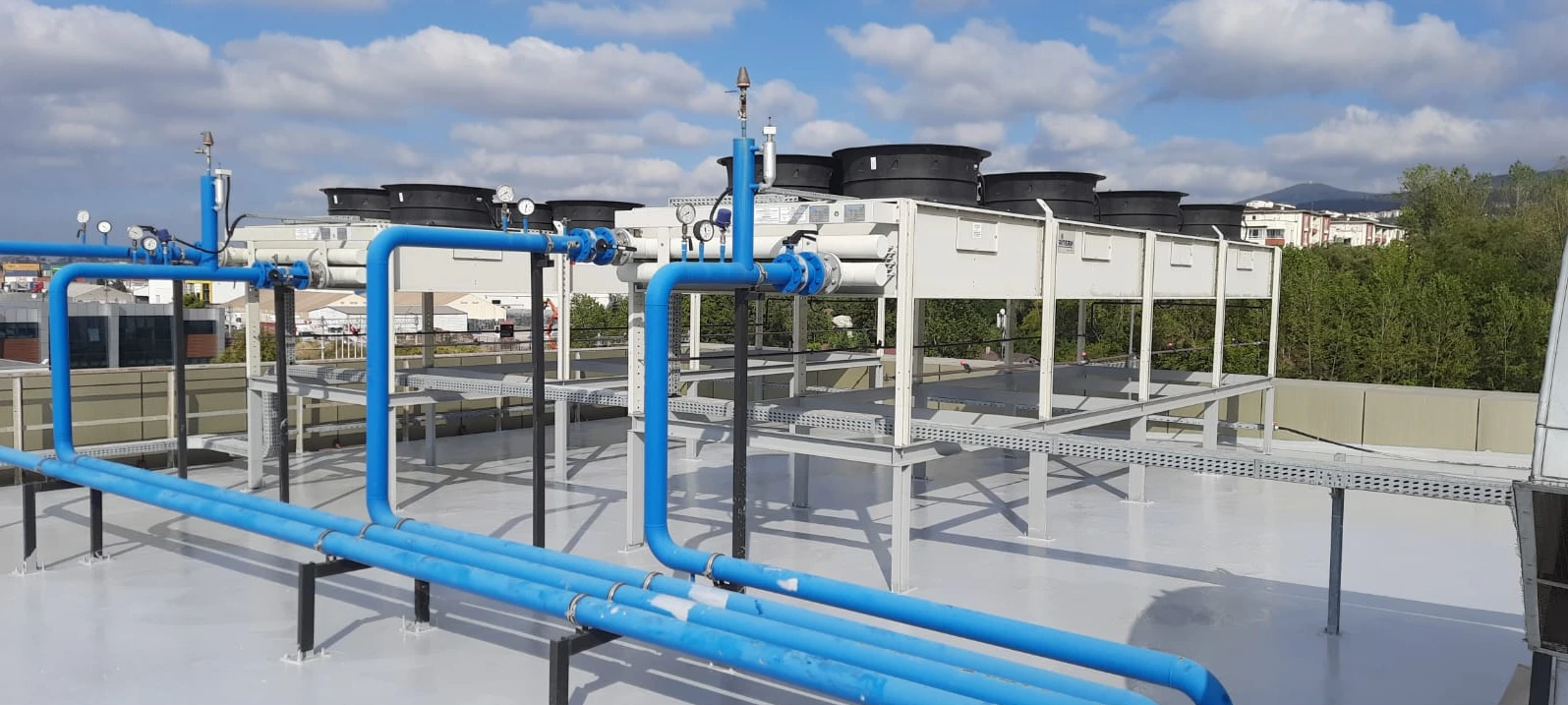
3. Remote Radiator Cooling
- How it Works: The radiator is separated from the genset and installed outside, with coolant piped to and from the engine.
- Pros: Reduces noise in the genset room, allows for optimal radiator placement for airflow.
- Cons: Higher installation cost, requires long pipe runs, needs a more powerful circulation pump.
Final Recommendation
- For Small, Simple Needs (Home Backup, Small Tools): An Air-Cooled genset is the best and most cost-effective choice.
- For Most Standard Standby Applications (Hospitals, Data Centers, Buildings): A Radiator-Cooled system is the default, reliable, and best all-around choice.
- For Water-Scarce or Arid Environments: A Dry Cooling Tower is the best choice to eliminate water consumption, despite the higher initial cost.
- For Large Industrial/Prime Power with Ample Water: A Heat Exchanger with a cooling tower is the most efficient and temperature-stable solution.
- For Marine Applications: A Heat Exchanger with a raw seawater loop or Keel Cooling is the only appropriate and best choice.
Therefore, for the vast majority of critical standby and industrial prime power applications, a liquid-cooled system with a radiator is the standard and best choice. The ultimate “best” system is the one that provides reliable cooling for your specific engine, in your specific environment, at the lowest lifetime cost. Always consult with a genset manufacturer or engineer for your specific application.
- For Small, Simple Needs (Home Backup, Small Tools): An Air-Cooled genset is the best and most cost-effective choice.
- For Most Standard Standby Applications (Hospitals, Data Centers, Buildings): A Radiator-Cooled system is the default, reliable, and best all-around choice.
- For Water-Scarce or Arid Environments: A Dry Cooling Tower is the best choice to eliminate water consumption, despite the higher initial cost.
- For Large Industrial/Prime Power with Ample Water: A Heat Exchanger with a cooling tower is the most efficient and temperature-stable solution.
- For Marine Applications: A Heat Exchanger with a raw seawater loop or Keel Cooling is the only appropriate and best choice.
Therefore, for the vast majority of critical standby and industrial prime power applications, a liquid-cooled system with a radiator is the standard and best choice. The ultimate “best” system is the one that provides reliable cooling for your specific engine, in your specific environment, at the lowest lifetime cost. Always consult with a genset manufacturer or engineer for your specific application.