

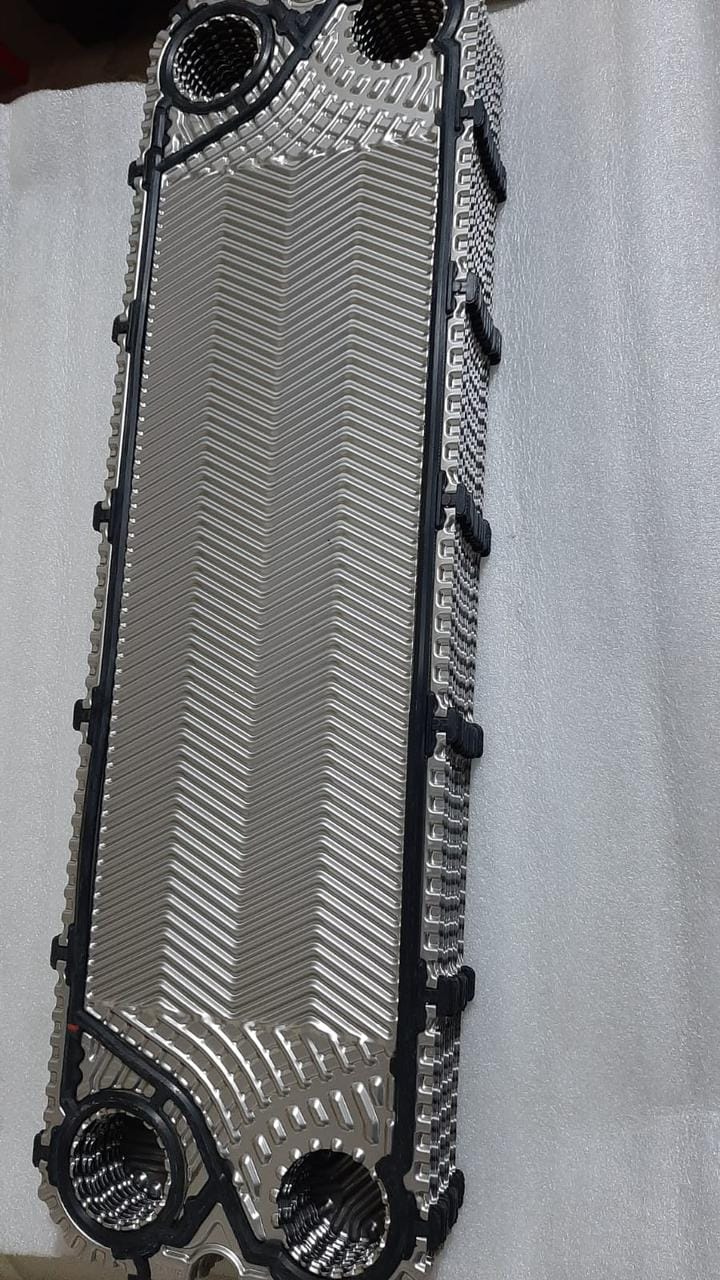
When to Choose NBR Gasket for plate heat exchanger?
hen to choose an NBR (Nitrile) Gasket for a plate heat exchanger.
The decision is primarily driven by the presence of oils, fats, or certain hydrocarbons in the fluid.
The Primary Rule of Thumb
Choose an NBR Gasket when the heat exchanger is used with oil-based fluids, aliphatic hydrocarbons, or water-based fluids that may contain traces of oil.
If you see oil, think NBR.
Specific Criteria for Selection
You should choose an NBR Gasket in the following specific scenarios:
1. When Cooling or Heating Mineral Oils and Fuels
This is the most classic and critical application for NBR. Its chemical structure is highly resistant to swelling and degradation from these fluids.
- Hydraulic Oil Coolers: Standard for cooling hydraulic fluid in presses, injection molding machines, and heavy machinery.
- Engine Lube Oil Coolers: Used in marine engines, power generators, and vehicle systems.
- Fuel Oil Heaters: For heating heavy fuel oil to reduce its viscosity.
- Gearbox Oil Coolers.
2. In Food & Beverage Applications with Fats and Oils
NBR is suitable for certain food-grade applications involving animal or vegetable fats.
- Vegetable Oil Processing: For heating or cooling oils during refining.
- Dairy Processing: Handling milk and cream, which contain fats. (Note: For high-temperature cleaning, EPDM might be used on the service side).
- Rendering Plants: Handling animal fats.
3. For Many Standard Industrial Water-Glycol Mixtures
NBR offers a good balance of properties for common industrial coolants.
- Engine Jacket Water Cooling.
- Industrial Process Cooling where a water-glycol mix is used for freeze protection.
4. With Certain Aliphatic Hydrocarbons and Alcohols
NBR resists a range of chemicals, making it a versatile choice.
- Aliphatic Hydrocarbons like propane, butane.
- Alcohols like ethanol, methanol.
Critical Considerations and Warnings
Before selecting an NBR Gasket, you must ensure your application does NOT fall into these categories, where NBR performs poorly:
- High-Temperature Steam or Water: Avoid NBR if your fluid temperature consistently exceeds 100°C – 110°C (212°F – 230°F). EPDM or other materials are better suited.
- Ozone and Weathering: NBR has poor resistance to ozone and UV light. It is not ideal for units installed outdoors and exposed to sunlight unless specifically protected.
- Aggressive Chemicals: NBR is NOT suitable for:
- Ketones (e.g., acetone)
- Esters
- Chlorinated or Aromatic Hydrocarbons (e.g., brake fluid, trichloroethylene)
- Strong Acids and Oxidizing Agents
- Phosphate Ester Fluids: These are used in some specialized hydraulic systems (e.g., aviation) and require specific gasket materials like EPDM or Viton, not NBR.
Summary: Decision Checklist
Choose an NBR Gasket if you answer “YES” to the following question:
Is the primary fluid an oil, fat, fuel, or aliphatic hydrocarbon, OR is it a water-based fluid that may be contaminated with oil?
And, can you answer “NO” to all the following?
- Is the operating temperature consistently above 110°C (230°F)?
- Is the fluid a ketone, ester, or strong acid?
- Is the fluid a phosphate ester or chlorinated solvent?
- Will the gasket be directly exposed to ozone and sunlight outdoors?
If your application passes this checklist, NBR is likely the correct and most cost-effective gasket material for your plate heat exchanger. When in doubt, always refer to the chemical compatibility charts provided by the heat exchanger manufacturer.