

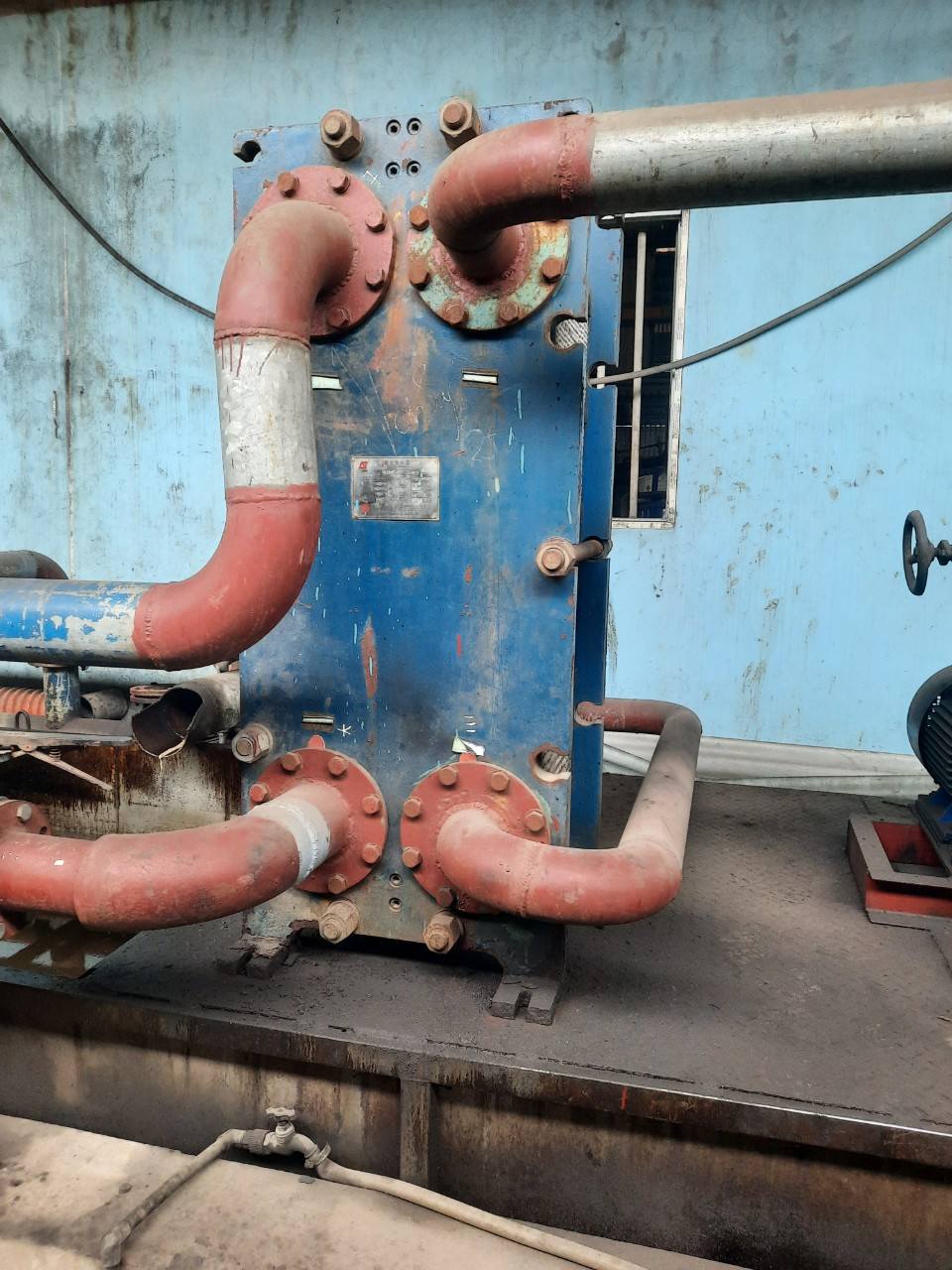
Semi-Welded Plate Heat Exchanger vs Fully Welded Plate Heat Exchanger
The choice between semi-welded and fully welded comes down to a trade-off between serviceability and ultimate robustness.
Here’s a detailed comparison:
Head-to-Head Comparison Table
| Feature | Semi-Welded Plate Heat Exchanger | Fully Welded Plate Heat Exchanger |
| Construction | Plates are laser-welded in pairs to form “cassettes.” These cassettes are then stacked together with gaskets. | The entire plate pack is welded together into a single, solid block. There are no gaskets. |
| Serviceability & Cleaning | Partial. Can be opened to clean the gasketed side. The welded side is not accessible for mechanical cleaning. | None. It is a permanently sealed unit. Cannot be opened. Only chemical cleaning is possible for both sides. |
| Fluid Containment | One fluid is on the welded side (fully contained). The other fluid is on the gasketed side. | Both fluids are completely contained within the welded structure. |
| Leakage Risk | Low risk for the welded-side fluid. If a leak occurs, it will be from the gasketed side to the outside, providing a visible warning. Prevents fluid mixing. | Risk of internal cross-contamination. If a plate or weld fails, the two fluids can mix internally. |
| Ideal Fluid Pairing | One aggressive/expensive fluid + One clean/fouling fluid. • Welded Side: Ammonia, corrosive chemicals, expensive media. • Gasketed Side: Cooling water, river water, or other fluids that may require cleaning. | Two aggressive/High-P&T fluids. • Both sides handle corrosive chemicals, high temperatures, or very high pressures. |
| Pressure & Temperature | High (Higher than gasketed, but generally lower than fully welded due to the gasketed side). | Very High. The all-welded construction can withstand the most extreme pressures and temperatures. |
| Fouling Tolerance | Good for the gasketed side only. The side that is prone to fouling should be placed on the gasketed channel so it can be cleaned. | Poor. Not suitable for fouling fluids on either side, as no mechanical cleaning is possible. |
| Footprint & Weight | Larger and heavier than a fully welded unit of similar capacity due to the frame and pressure plate. | More compact and rigid, as the welded plates often form their own casing. |
| Cost of Ownership | Medium initial cost. Ongoing cost for gasket replacement on one side. | Higher initial cost. Virtually no maintenance costs unless it fails. |