

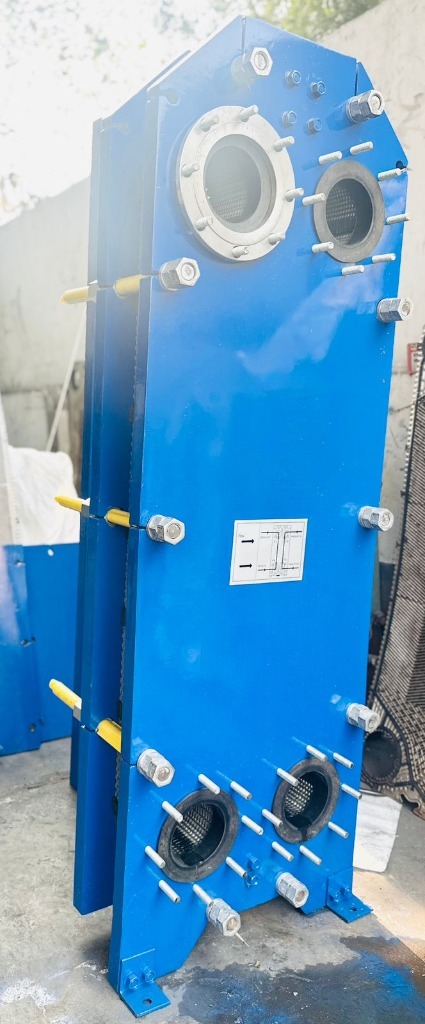
1. Gasketed Plate Heat Exchanger
This is the most common and classic type, described in the previous answer. It consists of plates sealed with gaskets and held together in a frame.
- How it Works: A pack of corrugated plates with peripheral gaskets is compressed between a fixed frame plate and a movable pressure plate using tightening bolts. The gaskets direct the fluids into alternating channels and prevent leakage.
- Key Feature: Serviceability. The unit can be easily opened for cleaning, inspection, or adding/removing plates to change capacity.
- Advantages:
- Easy to maintain and clean.
- Highly flexible (capacity can be adjusted).