

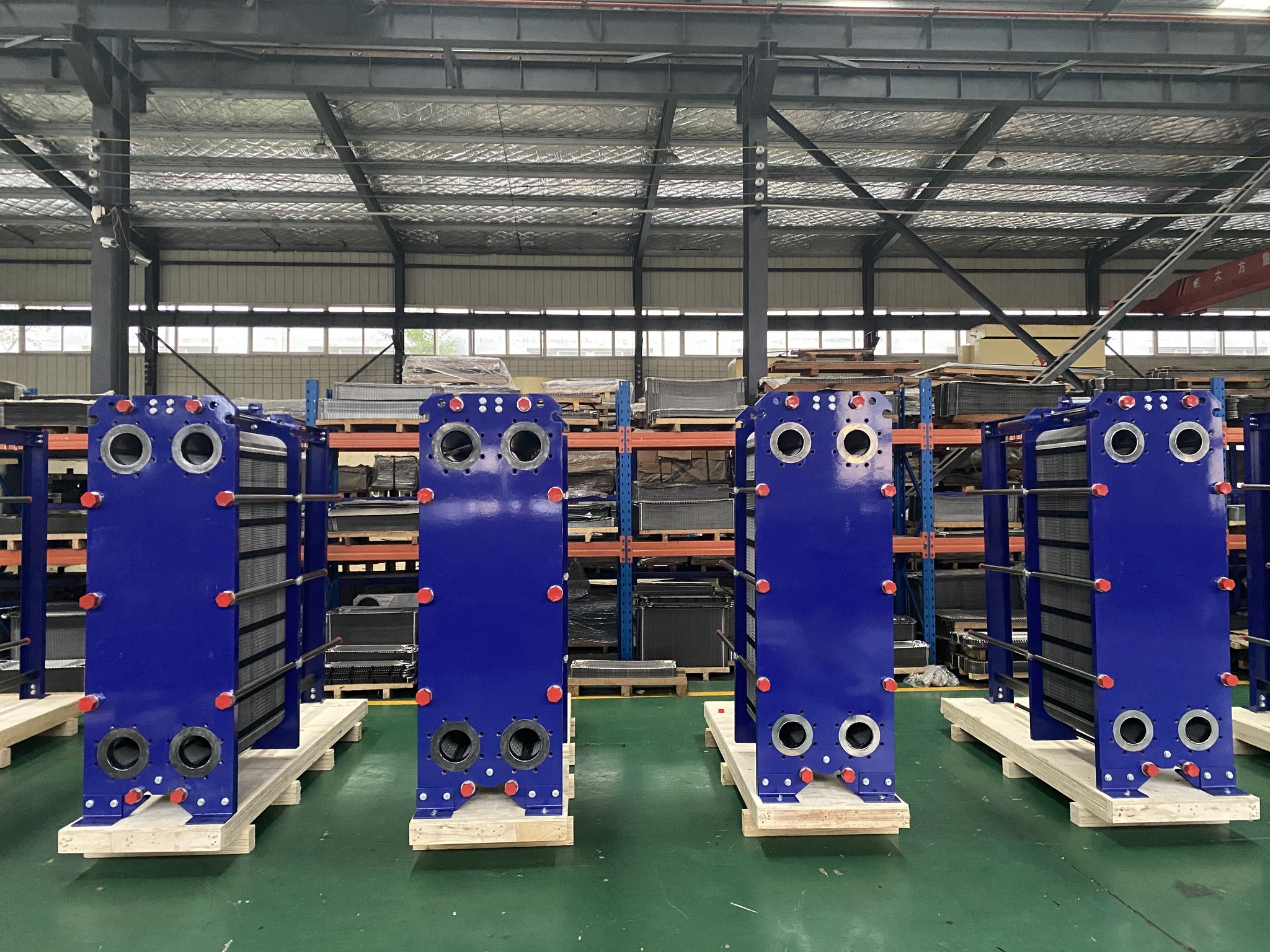
Think of this as a “best of both worlds” hybrid. It’s designed for a specific scenario where you need to protect against one fluid but still need access for maintenance on the other.
Key Advantage: It allows you to safely contain a difficult fluid while maintaining the ability to clean the other side.
- How it Works:
- Two plates are laser-welded together around their ports and perimeter, creating a sealed “cassette.”
- Multiple cassettes are stacked.
- The spaces between the cassettes are sealed with gaskets, creating the flow channels for the second fluid.
- The first fluid flows safely inside the welded cassettes; the second fluid flows in the gasketed spaces between them.
- When to Choose It:
- Ammonia Refrigeration: This is the classic application. The toxic ammonia is contained on the welded side, while the cooling water (which can scale or foul) is on the gasketed side for easy cleaning.
- One Corrosive Fluid: If you have a corrosive chemical on one side and clean water on the other, you put the chemical on the welded side.
- Preventing Cross-Contamination: The design ensures that if the gasketed side leaks, it leaks to the outside, preventing the two process fluids from mixing.