

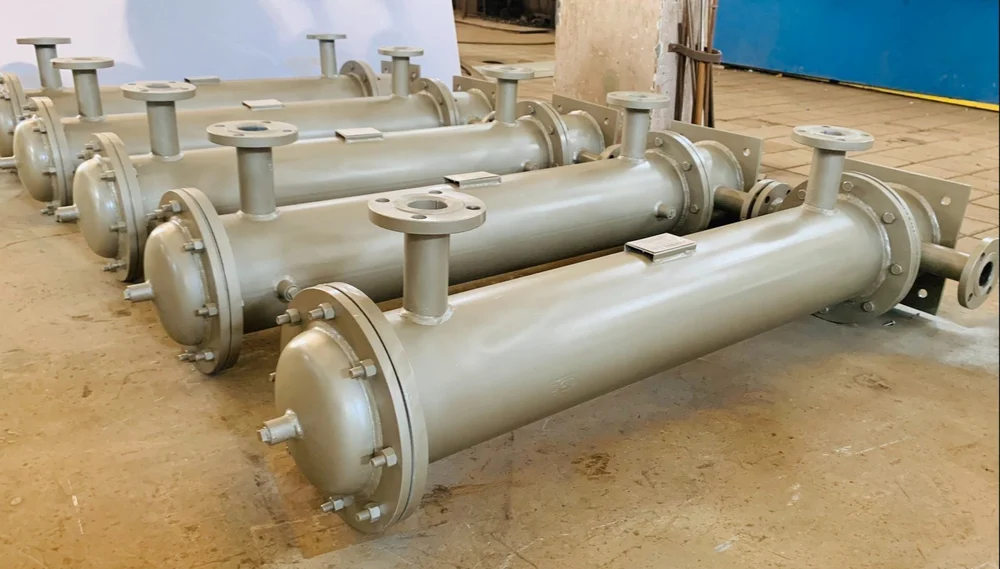
Shell and Tube Oil Coolers vs. Air-Cooled Oil Coolers,
Here’s a detailed comparison of Shell and Tube Oil Coolers vs. Air-Cooled Oil Coolers, highlighting the advantages of shell and tube designs in industrial and marine applications:
Key Advantages of Shell & Tube Oil Coolers Over Air-Cooled Coolers
| Factor | Shell & Tube Oil Cooler | Air-Cooled Oil Cooler |
| Cooling Efficiency | Higher heat transfer (water is 4x more effective than air). | Limited by ambient air temp & airflow. |
| Temperature Control | Stable cooling (less affected by ambient conditions). | Performance drops in hot climates or low airflow. |
| Space Requirements | Compact for high-capacity cooling (ideal for confined spaces like ships). | Needs large fins/fans, increasing footprint. |
| Noise Levels | Quiet operation (no fans). | Fan noise can be significant. |
| Durability | Longer lifespan (no moving parts, robust construction). | Fans/motors wear out; fins prone to damage. |
| Maintenance | Less frequent maintenance (no filters/fans to clean). | Regular cleaning of fins/fans required. |
| Environmental Impact | No air pollution (closed-loop systems possible). | Dust/debris accumulation affects performance. |
| Operating Costs | Lower energy use (water pumps more efficient than fans). | Fans consume more power for equivalent cooling. |
| Adaptability | Handles high-viscosity oils (better heat exchange). | Struggles with thick oils (reduced airflow). |