

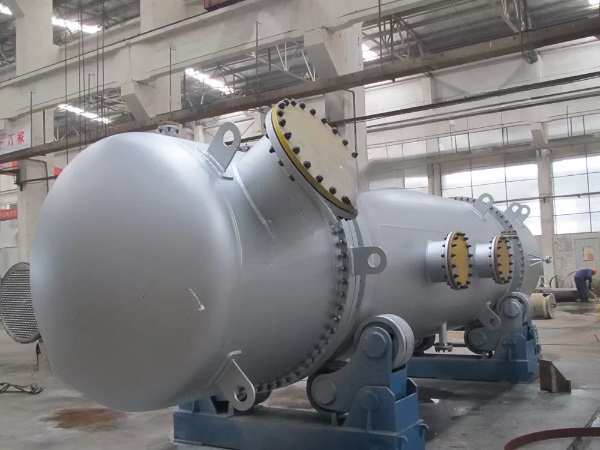
a heat exchanger is a device built to efficiently transfer heat from one fluid (liquid, gas, or steam) to another fluid, without allowing the two fluids to mix or come into direct contact with each other.
Think of the radiator in your car: hot engine coolant flows through it, and air blowing past carries that heat away to cool the engine. The coolant and air never touch, but the heat moves from one to the other. That is a heat exchanger at work.
Here is a breakdown of how they work, why they are used, and the different types.
The Basic Principle (How it works)
Heat exchangers rely on the fundamental laws of thermodynamics:
- Temperature Difference: Heat always flows from a hot substance to a cold substance.
- Conduction: The two fluids are separated by a solid wall (usually made of metal, like copper, steel, or aluminum, because metal conducts heat well).
- Surface Area: The metal wall is often designed with fins, plates, or coils to increase its surface area. The more surface area the hot fluid touches, the more heat can be transferred to the cold fluid.
The Two Main Flow Arrangements
How the fluids move through the exchanger drastically affects its efficiency:
- Parallel Flow: Both fluids enter the exchanger at the same end and flow in the same direction. The temperature difference is largest at the inlet and smallest at the outlet, so it is less efficient.
- Counterflow: The fluids enter from opposite ends and flow toward each other. The temperature difference remains more consistent across the entire length of the exchanger. This is the most efficient design.
Crossflow: The fluids flow at right angles (perpendicular) to each other. This is common in air-conditioning condensers and car radiators.