

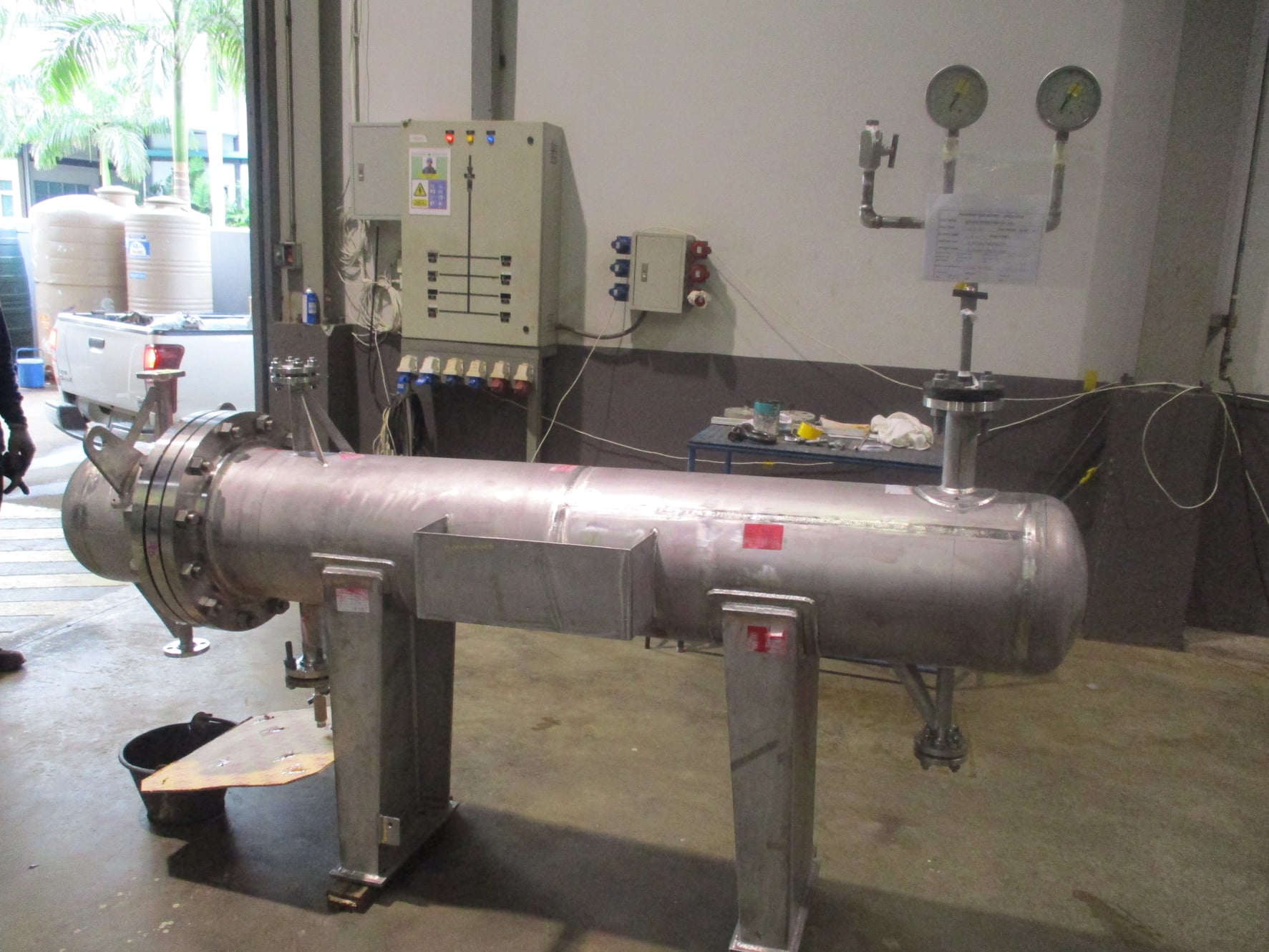
Heat exchangers are the unsung heroes of modern industry. Their primary industrial use is to manage thermal energy—either by recovering waste heat, precisely controlling reaction temperatures, or cooling critical equipment. They are fundamental to the efficiency, safety, and profitability of nearly every major manufacturing and energy sector .
Here is a breakdown of their most critical industrial applications:
Power Generation
The power sector is one of the largest users of heat exchangers . They are essential for the entire energy conversion cycle:
- Thermal Power Plants (Coal, Gas, Nuclear): They act as steam generators (boilers), transferring heat from nuclear fuel or burning fossil fuels to water to create high-pressure steam for turbines. After the steam passes through the turbine, giant condensers cool it back into liquid water so it can be reused .
- Heat Recovery: They capture waste heat from hot exhaust gases (like in a gas turbine) to preheat combustion air or feedwater, drastically improving overall plant efficiency .
Oil, Gas, and Chemical Processing
This is arguably the most demanding environment for heat exchangers. They handle corrosive fluids, high pressures, and aggressive reactions :
- Distillation and Refining: In crude oil distillation, heat exchangers (reboilers and condensers) provide the precise heat needed to separate crude oil into fuels like gasoline, diesel, and kerosene .
- Reaction Control: Many chemical reactions are highly temperature-sensitive. Heat exchangers act as the “thermostat” for reactors, absorbing excess heat to prevent a “runaway” reaction or adding heat to keep a reaction going .
- Corrosive Fluids: Specialized welded plate exchangers made from materials like titanium or Hastelloy are used for handling highly aggressive chemicals, such as acids .
HVAC & Data Center Cooling
The growing demand for climate control and digital infrastructure is a major driver for heat exchangers :
- Commercial & Residential HVAC: They are the core of air conditioning, refrigeration, and district heating/cooling systems, moving heat in and out of buildings .
- Data Centers: As server racks generate immense heat, large-scale cooling heat exchangers are mission-critical to prevent overheating and downtime. The growth of hyperscale data centers is creating a massive new demand for these systems .
Automotive & Transport
Beyond the classic engine radiator, modern vehicles use heat exchangers for high-performance thermal management :
- Turbocharger Cooling: Intercoolers cool the compressed air from a turbocharger. Cooler air is denser, providing more oxygen for combustion and increasing engine power and efficiency.
- EV Battery Thermal Management: Electric vehicles use cooling plates (a type of heat exchanger) to keep lithium-ion batteries within their optimal temperature range during fast charging and high-performance driving.
Food, Beverage & Pharma
Hygiene and precise temperature control are paramount in these industries :
- Pasteurization: Plate heat exchangers rapidly heat milk or juice to kill pathogens and then immediately cool it back down, ensuring safety without cooking the product .
- Viscous Products: For making ice cream, peanut butter, or chocolate, scraped-surface heat exchangers are used. They have rotating blades that continuously scrape the product off the cooling walls, preventing clogging and ensuring uniform texture .
The High-Performance Frontier
In extreme environments, specialized designs push the boundaries of what’s possible :
- Concentrating Solar Power (CSP): These plants use heat exchangers that can withstand temperatures over 500°C to transfer heat from solar particles to supercritical carbon dioxide, which then drives a turbine .
Waste Heat Recovery: In energy-intensive industries like steel, aluminum, and ceramics, European projects like ETEKINA have developed advanced heat pipe heat exchangers. These passively and efficiently recover heat from corrosive exhaust gases to preheat combustion air or dry materials, significantly cutting energy waste