

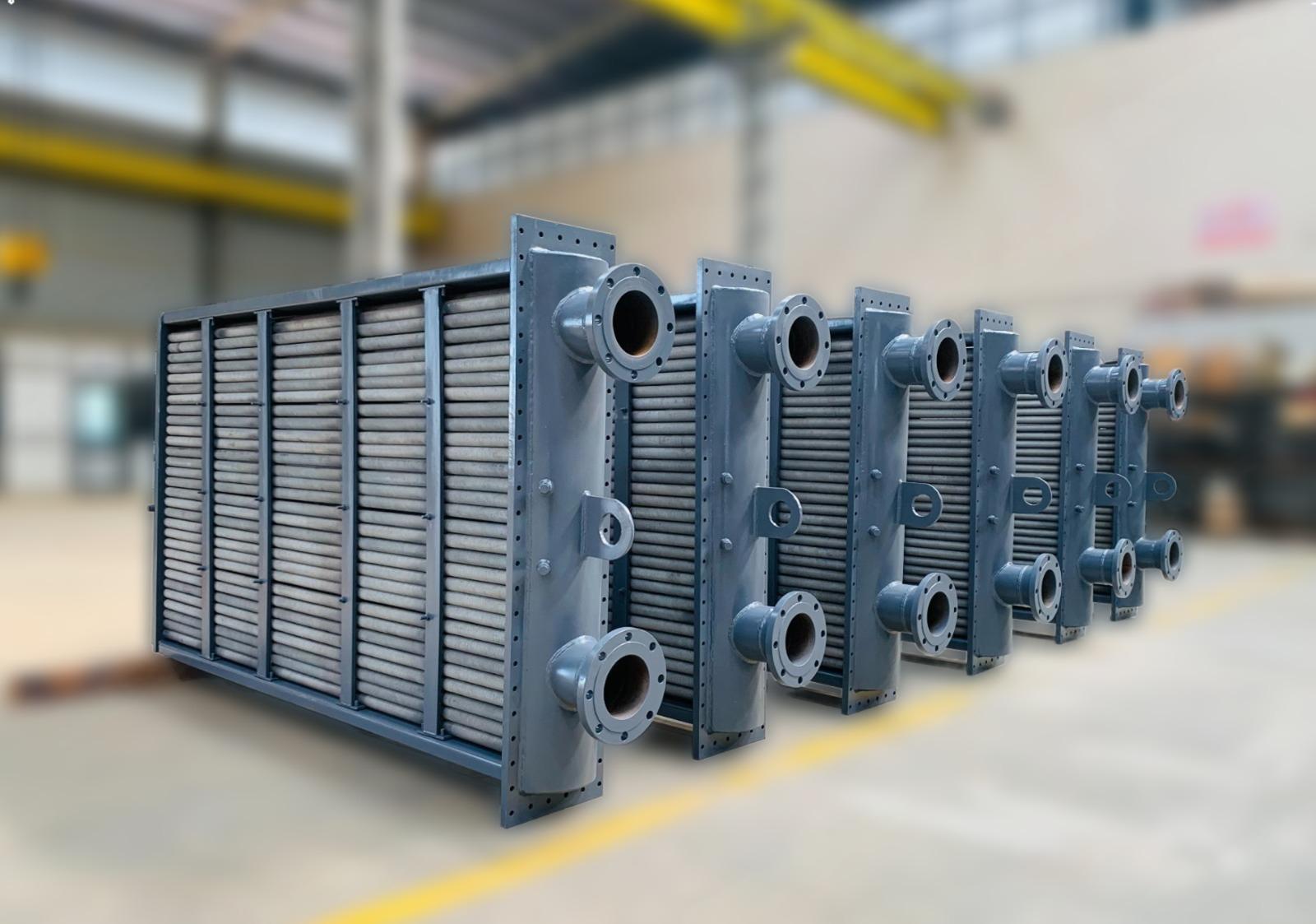
Use of Fin tube heat exchanger in Power Generation?
The use of fin tube heat exchangers in power generation is critical for efficiency, water conservation, and operational reliability. They are employed in several key areas, often handling extreme temperatures and pressures.
The core advantage they bring to power generation is the ability to reject or recover massive amounts of heat using air as the cooling medium, which is free and abundant, rather than water, which is often a limited resource.
Here are the primary applications of fin tube heat exchangers in power generation:
Air-Cooled Condensers (ACC)
This is one of the most significant and visually impressive applications, especially in water-scarce regions.
- Function: To condense the exhaust steam from a steam turbine back into water (condensate) so it can be pumped back to the boiler, completing the Rankine cycle.
- Why Fin Tubes? A traditional power plant uses a wet cooling tower, which consumes vast amounts of water through evaporation. An ACC uses air, not water, for cooling.
- How it Works:
- Steam from the turbine exhaust flows through the inside of the finned tubes.
- Large, forced-draft or induced-draft fans blow ambient air over the outsides of the finned tubes.
- The fins drastically increase the surface area for heat transfer, allowing the air to efficiently remove the latent heat of vaporization from the steam.
- The steam condenses into water inside the tubes.
- Key Advantage: Water Conservation. An ACC can reduce a plant’s water consumption by over 90% compared to a wet-cooled system.
- Fin Tube Type: Typically, extruded aluminum fins on carbon steel tubes or welded steel fins due to the large volume of steam and the need for durability.
2. Heat Recovery Steam Generators (HRSG)
In combined-cycle power plants, fin tube heat exchangers are the heart of the HRSG, which captures waste heat to create additional power.
- Function: To recover heat from the hot exhaust of a gas turbine and use it to generate steam for a secondary steam turbine.
- Why Fin Tubes? The gas turbine exhaust is a large-volume, low-density gas. Fins are essential to create a compact and efficient heat transfer surface between this hot gas and the water/steam inside the tubes.
- How it Works: An HRSG contains several fin tube bundles, each with a specific function:
- Economizer: Pre-heats the feedwater using the leftover heat from the exhaust gas.
- Evaporator: Boils the water to create saturated steam.
- Superheater: Heats the saturated steam further to create dry, superheated steam for the turbine.
- Key Advantage: Increased Plant Efficiency. By recovering waste heat, a combined-cycle plant can achieve efficiencies over 60%, much higher than a simple gas turbine plant (~40%).
- Fin Tube Type: Almost exclusively welded serrated or solid fins (often high-grade stainless steel like 304H, 347) welded to alloy steel tubes. This is due to the very high temperatures (up to 600°C / 1110°F) and corrosive nature of the flue gas.
Radiators for Diesel Generator Sets
Large backup or prime power diesel generators require robust cooling systems.
- Function: To remove waste heat from the engine’s jacket water and the engine lubricating oil.
- Why Fin Tubes? They provide a self-contained, air-cooled system that is reliable and does not depend on an external water source.
- How it Works: Hot coolant from the engine is pumped through the finned tubes. A fan, often mechanically driven from the engine, pulls air through the radiator core, rejecting the heat to the atmosphere.
- Key Advantage: Reliability and Independence. Critical for emergency power systems that must start instantly and run without external utilities.
- Fin Tube Type: Often extruded aluminum fins on copper or brass tubes for the coolant circuit, similar to automotive radiators but on a much larger scale.
4. Gas Turbine Inlet Air Cooling
This is a method to boost power output, especially during hot weather.
- Function: To cool the intake air of a gas turbine before it enters the compressor.
- Why Fin Tubes? Cooler air is denser, meaning the compressor pushes more mass of air into the combustion chamber, resulting in more power output. A fin tube coil acts as the “evaporator” in a refrigeration cycle.
- How it Works: A chilled fluid (often a refrigerant or chilled water) flows through the finned tubes. The hot, ambient inlet air is blown across the cold coils, transferring its heat to the refrigerant and becoming cooler and denser.
- Key Advantage: Power Augmentation. Can increase power output by 10-30% on a hot day, a highly cost-effective way to meet peak demand.
- Fin Tube Type: Typically aluminum fins on copper tubes to maximize heat transfer and resist corrosion from condensed moisture.
. Other Auxiliary Systems
- Generator Hydrogen Coolers: Large power generators are often cooled by hydrogen gas. Fin tube heat exchangers are used to remove the heat from the hydrogen by exchanging it with cooling water.
- Lube Oil Coolers: Cooling the lubricating oil for turbines, generators, and large pumps using air or water as the coolant.
- Closed Cooling Water Systems: Providing a secondary cooling loop to remove heat from various plant components, with the heat ultimately rejected to the atmosphere via a finned tube heat exchanger.