

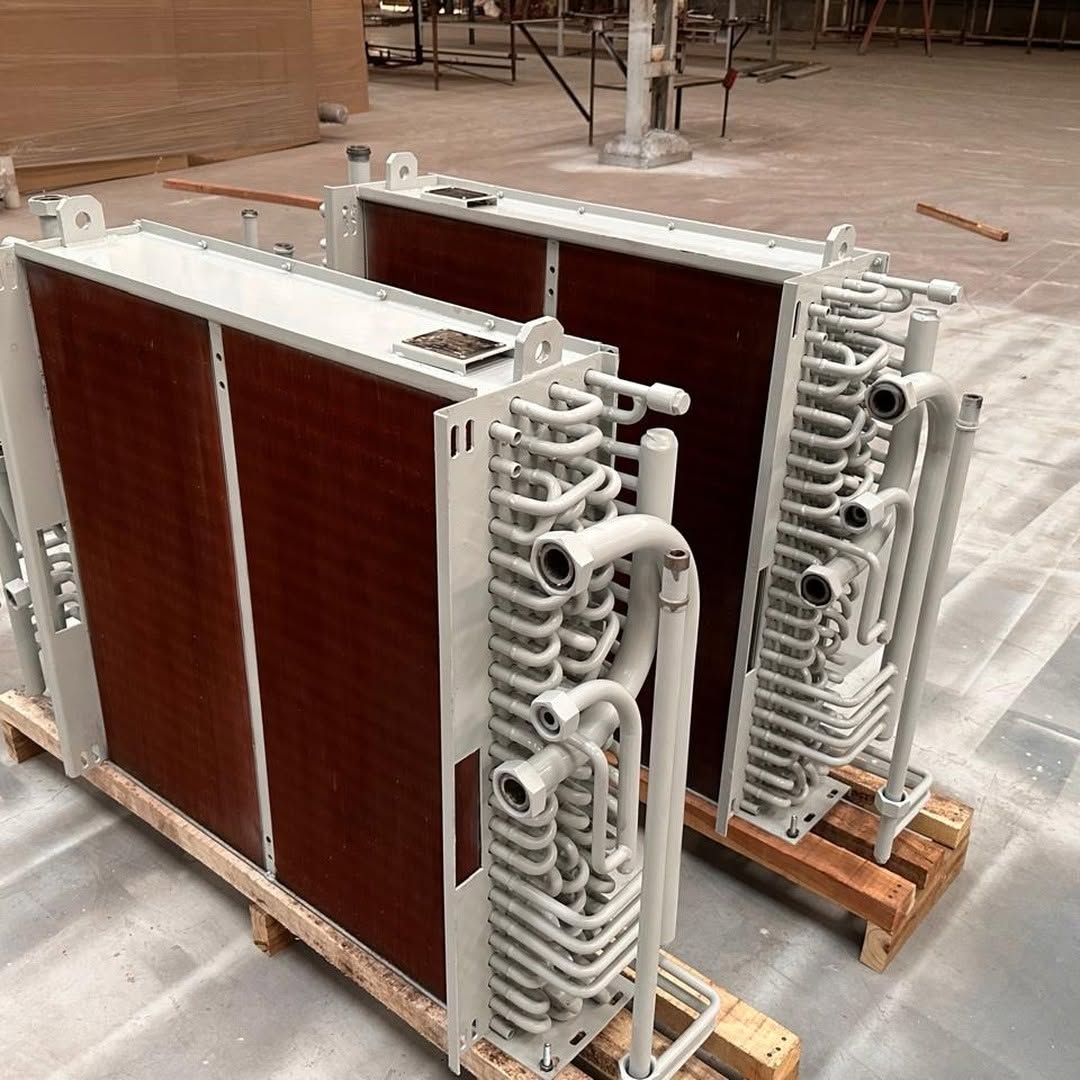
Table of Fin Materials
| Material | Thermal Conductivity (W/m·K) | Key Advantages | Key Disadvantages | Typical Applications |
| Aluminum | ~237 | Best balance: High conductivity, lightweight, low cost, good corrosion resistance. | Poor in acidic/alkaline environments; lower temp limit. | HVAC, AC, Automotive, General Industrial. |
| Copper | ~400 | Best performance: Highest conductivity, biocidal, excellent water corrosion resistance. | High cost, heavy, soft. | High-efficiency cooling, Marine, Hygienic systems. |
| Carbon Steel | ~45 | High temp & strong: Withstands high temperatures, strong, cost-effective for its duty. | Very low conductivity, prone to rust. | High-temperature gas heaters, Economizers. |
| Stainless Steel | ~15-25 | Most durable: Excellent corrosion/heat resistance, hygienic, very strong. | Very low conductivity, highest cost. | Chemical Plants, Food Processing, Exhaust Systems. |