

Primary Applications: Where ultimate heat transfer is critical; marine and coastal applications; industrial processes where water is the external fluid; applications requiring hygienic surfaces (e.g., pharmaceutical, food & beverage).
3. Carbon Steel / Corten Steel
Used for high-temperature and specific corrosive environments.
• Advantages:
o High Temperature Resistance: Can withstand temperatures well above the limits of aluminum and copper (up to 450-500°C / 840-930°F).
o High Strength & Durability: Fins are very robust and resistant to mechanical damage.
o Cost-Effective for High Temp: Cheaper than stainless steel for high-temperature service.
o Weldable: Easily welded to carbon steel tubes, creating a very strong, integral unit.
o Corten Steel: A specific alloy that forms a stable, protective rust layer, making it highly resistant to atmospheric corrosion. Often used in air-cooled condensers.
• Primary Applications: High-temperature gas-to-gas heat recovery, economizers, fired heater convection sections, and applications where strength at high temperature is more important than peak efficiency.
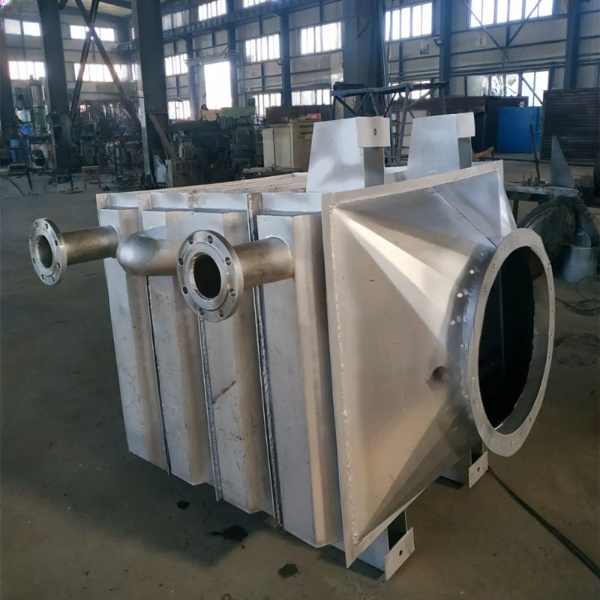
4. Stainless Steel (e.g., 304, 316, 409)
The choice for severe corrosion resistance and high temperatures.
• Advantages:
o Excellent Corrosion Resistance: Highly resistant to oxidation, chemicals, and moisture. Grade 316 offers superior resistance to chlorides (salt).
High Temperature Strength: Maintains strength at high temperatures (up to ~800°C / 1470°F for some grades). o Hygienic and Easy to Clean: The smooth, non-porous surface is ideal for sanitary applications