

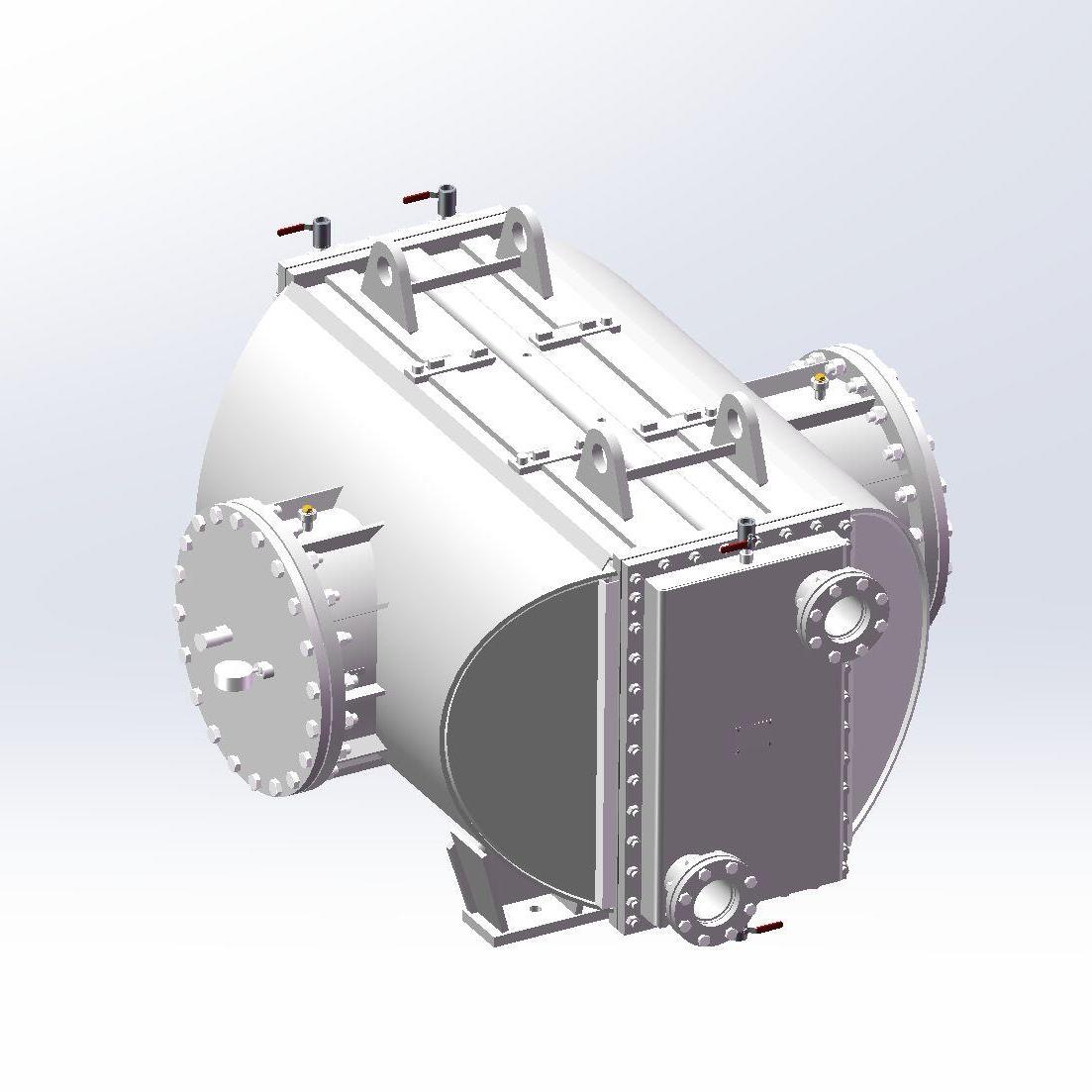
Key Application Areas in Industrial & Process Industries
1. Process Gas Heating and Cooling
This is one of the most common applications. Finned tubes are ideal for adding or removing heat from process gas streams.
- Process Gas Heaters: Used to heat gases like natural gas, hydrogen, nitrogen, or air before they enter a reactor or a processing unit. The tube-side fluid is typically hot oil, steam, or hot water.
- Process Gas Coolers: Used to cool down a hot process gas after a reactor or a compressor. The tube-side fluid is typically cooling water or a specialized coolant.
- Example: In a hydrogen plant, a finned heat exchanger is used to cool the hot hydrogen-rich stream after the reforming reactor.
. Compressor Aftercoolers
- Function: When air or any gas is compressed, its temperature rises significantly. An aftercooler is used immediately after a compressor to cool this hot, compressed gas.
- Why Fin Tubes? Cooling the gas has several benefits:
- Protects Downstream Equipment: Prevents damage to pipes, valves, and tools.
- Condenses Moisture: Removes water vapor from compressed air, preventing corrosion and ice formation.
- Increases Efficiency: Cooler, denser gas takes less energy to move.
- Design: Can be air-cooled (gas in fins, coolant in tubes) or water-cooled (gas in tubes, water on fins).
3. Heat Recovery and Waste Heat Utilization
This is a major area for improving plant efficiency and reducing the carbon footprint.
- Air Pre-heaters: The fin tube exchanger captures waste heat from a hot flue gas exhaust (e.g., from a furnace or boiler) and uses it to preheat the combustion air entering the same furnace. This reduces the amount of fuel needed.
- Feedwater Economizers: Similar to power plants, a finned tube bundle in a flue gas stack preheats the boiler feedwater using waste heat.
- Process-to-Process Heat Recovery: A hot process stream (a gas) is used to preheat a colder process stream (a liquid or another gas) via a finned exchanger, reducing the load on both the heater and the cooler.
4. Solvent Condensers and Vapor Condensers
- Function: In distillation columns, evaporation processes, and solvent recovery systems, vapors need to be condensed back into liquid.
- Why Fin Tubes? They provide a large surface area for the vapor to release its latent heat of condensation to a cooling medium (usually water or air) on the other side.
- Example: Condensing solvent vapors like toluene or methanol in a chemical plant using cooling water.
5. Finned Tube Boilers & Furnaces
- Function: In some boiler and furnace designs, the tubes that carry water/steam in the convection section are finned.
- Why Fin Tubes? The fins increase the heat capture from the hot combustion gases, improving the overall efficiency of the unit beyond what is possible with bare tubes.
6. Industrial Dryers
- Function: Providing hot air for drying solids like lumber, food products, grains, paper, or textiles.
- How it Works: A fin tube “heating coil” is placed in an air stream. Steam or hot thermal fluid inside the tubes transfers heat through the fins to the air, which is then blown over the product to be dried.
7. Hydrocarbon Processing (Oil & Gas, Refining)
This sector uses specialized, robust fin tube exchangers.
- Delayed Cokers: Used in the fractionator and vapor recovery sections to condense heavy gas oils.
- Amine Gas Treating: Coolers are used to control the temperature of the amine solvent that absorbs sour gases (H₂S and CO₂) from natural gas.
- Gas Processing: Cooling natural gas from a wellhead or after compression. Often uses Kettle Type Reboilers which have internal finned tube bundles.