

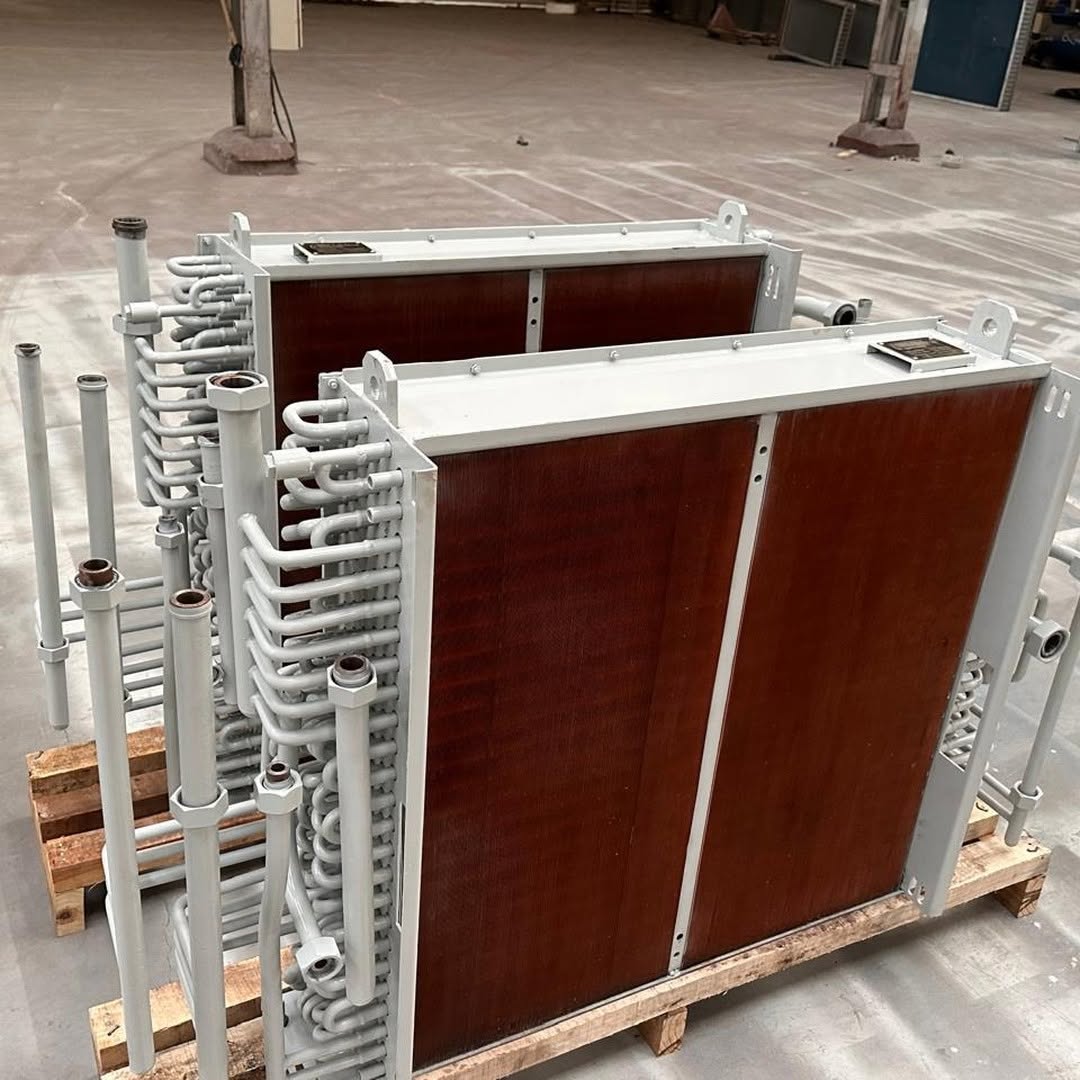
1. Heating, Ventilation, and Air Conditioning (HVAC & R)
This is the most common everyday application.
- Air Conditioner Evaporator Coils: Located inside your home/office. Cold refrigerant flows through the tubes, and warm room air is blown over the finned tubes. The fins absorb heat from the air, cooling it and causing moisture to condense (dehumidification).
- Air Conditioner Condenser Coils: Located outside your home/office. Hot, high-pressure refrigerant from the compressor flows through the tubes. A fan blows outside air over the finned coils, rejecting the heat from the refrigerant to the atmosphere, causing it to condense back into a liquid.
- Forced-Air Furnaces: The “heat exchanger” in a gas furnace is often a fin tube. Hot combustion gases from the burner pass through the tubes, and the fins absorb the heat. Air from your home is then blown over the finned exterior, is heated, and is circulated through the ducts.
- Fan Coil Units (FCUs) & Air Handling Units (AHUs): These use fin tube coils with hot water (for heating) or chilled water (for cooling) flowing inside the tubes to condition the air in commercial buildings.
Automotive and Aerospace
Vehicles rely heavily on compact and lightweight heat exchangers.
- Automotive Radiators: The classic example. Hot engine coolant flows through the tubes, and the fins dissipate the heat to air forced through by the fan and the car’s motion.
- Charge Air Coolers (Intercoolers): Cools the hot, compressed air from a turbocharger or supercharger before it enters the engine. Cooler air is denser, resulting in more power and efficiency.
- Air Conditioning Condensers & Evaporators: Function identically to building HVAC systems but are designed for the harsh, vibrating environment of a vehicle.
- Oil Coolers: For engine oil, transmission fluid, or power steering fluid. Maintains optimal oil viscosity and performance.
- Aircraft Oil Coolers and Air Cycle Machine Coolers: Critical for managing temperatures in aircraft systems, where weight and reliability are paramount.
3. Power Generation
Power plants, both conventional and renewable, use them on a massive scale.
- Air-Cooled Condensers (ACC): In water-scarce regions, instead of using a cooling tower with water, steam from the turbine’s exhaust is condensed back into water inside giant arrays of finned tubes. Massive fans force air over them, rejecting the heat to the atmosphere. This conserves millions of gallons of water.
- Radiators for Diesel Generator Sets: Large standby generators use fin tube radiators to cool the engine jacket water.
- Heat Recovery Steam Generators (HRSG): In combined-cycle power plants, finned tubes (often welded) are used in the economizer and evaporator sections to capture waste heat from gas turbine exhaust to produce steam.
. Industrial and Process Industries
This is where the designs become highly specialized for harsh conditions.
- Process Gas Heaters/Coolers: Heating or cooling process streams (e.g., natural gas, hydrogen, nitrogen) using steam, hot oil, or coolant.
- Compressor Aftercoolers: Cooling air after it has been compressed in an industrial air compressor. This condenses out moisture and increases efficiency.
- Heat Recovery Units: Capturing waste heat from industrial furnace exhausts, ovens, or dryer stacks to preheat combustion air or process water. This significantly improves plant efficiency.
- Solvent Condensers: In chemical processing, condensing solvent vapors back into liquid by using cooling water in a fin tube exchanger.
- Finned Tube Boilers: The fire-tubes in some boiler designs have fins to increase the heat transfer surface from the hot flue gas to the water.
5. Oil & Gas and Petrochemical
These applications often involve high pressures, temperatures, and corrosive environments.
- Production Gas Coolers: Cooling hot natural gas coming from a wellhead.
- Amine Gas Coolers: In gas sweetening units, cooling the amine solvent that has absorbed CO₂ and H₂S from the natural gas.
- Delayed Cokers: Used in the fractionating column and vapor recovery sections.
- LNG (Liquefied Natural Gas) Plants: Used in various cooling and condensation stages in the liquefaction process.
Other Applications
- Electronic Cooling: Cooling high-power electronics, servers, and transformers by circulating a coolant through finned tubes, where the fins dissipate the heat to air.
- Industrial Dryers: Using finned tubes with steam or hot water inside to heat air for drying processes (e.g., lumber, food, textiles).
- Unit Heaters & Radiators: Hang from the ceiling in warehouses and workshops, using steam or hot water to heat the space.