

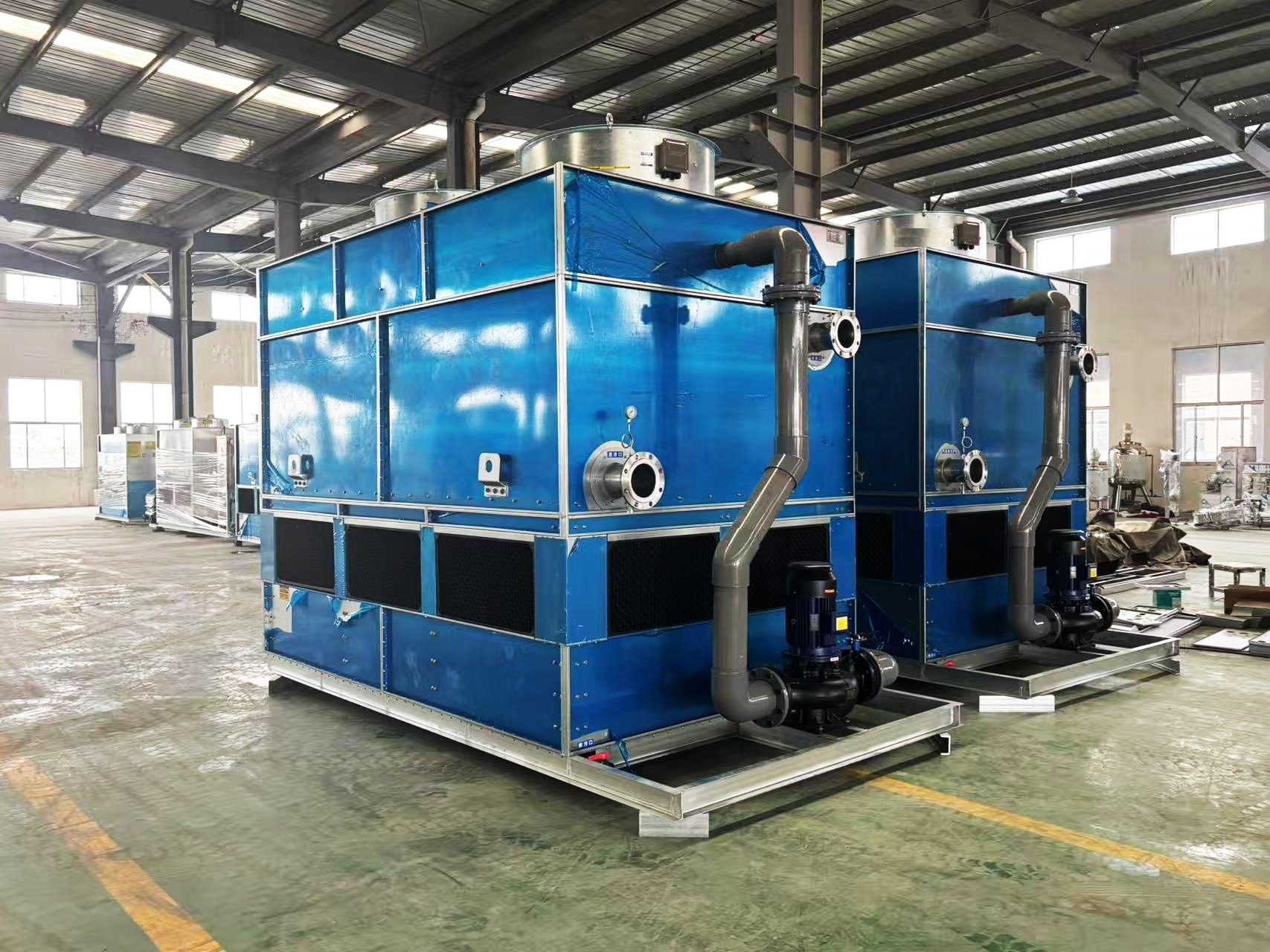
The material of the heat exchange coil is the most important decision when purchasing a closed circuit cooling tower. It determines the unit’s lifespan, cooling efficiency, and maintenance requirements.
There are three primary materials used for these coils:
1. Galvanized Steel (HDG)
This is the industry standard and most common choice due to its balance of performance and cost.
- Process: Carbon steel tubes are “Hot-Dip Galvanized” (HDG) in a vat of molten zinc after the coil is assembled. This creates a thick protective layer.
- Pros: Most cost-effective; high structural strength; protected inside and out.
- Cons: Susceptible to “white rust” if water chemistry isn’t managed; shorter lifespan (10–20 years) compared to other metals.
- Best For: Standard HVAC applications and industrial processes with neutral water quality.
2. Stainless Steel (304 or 316)
Stainless steel is the “premium” choice for longevity and harsh environments.
- Types: * 304 SS: Excellent for general corrosion resistance.
- 316 SS: Contains molybdenum, making it superior for high-chloride environments (like coastal areas).
- Pros: Virtually immune to rust; can handle aggressive water treatment chemicals; very long lifespan (30+ years).
- Cons: Expensive (often 2–3x the cost of galvanized); slightly lower thermal conductivity than copper.
- Best For: Coastal regions, food processing (where hygiene is key), and chemical plants.
3. Copper
Copper is the “performance” material, chosen when efficiency or space is the priority.
- Pros: Highest thermal conductivity (nearly 7x better than steel), which allows for a smaller tower footprint. It is naturally antimicrobial (resists algae/biofilm) and highly recyclable.
Cons: Expensive; soft metal (vulnerable to high-pressure cleaning); can cause galvanic corrosion if it comes into contact with other steel parts in the tower
Best For: Compact installations, data centers, and “Free Cooling” systems where maximizing temperature approach is critical.