

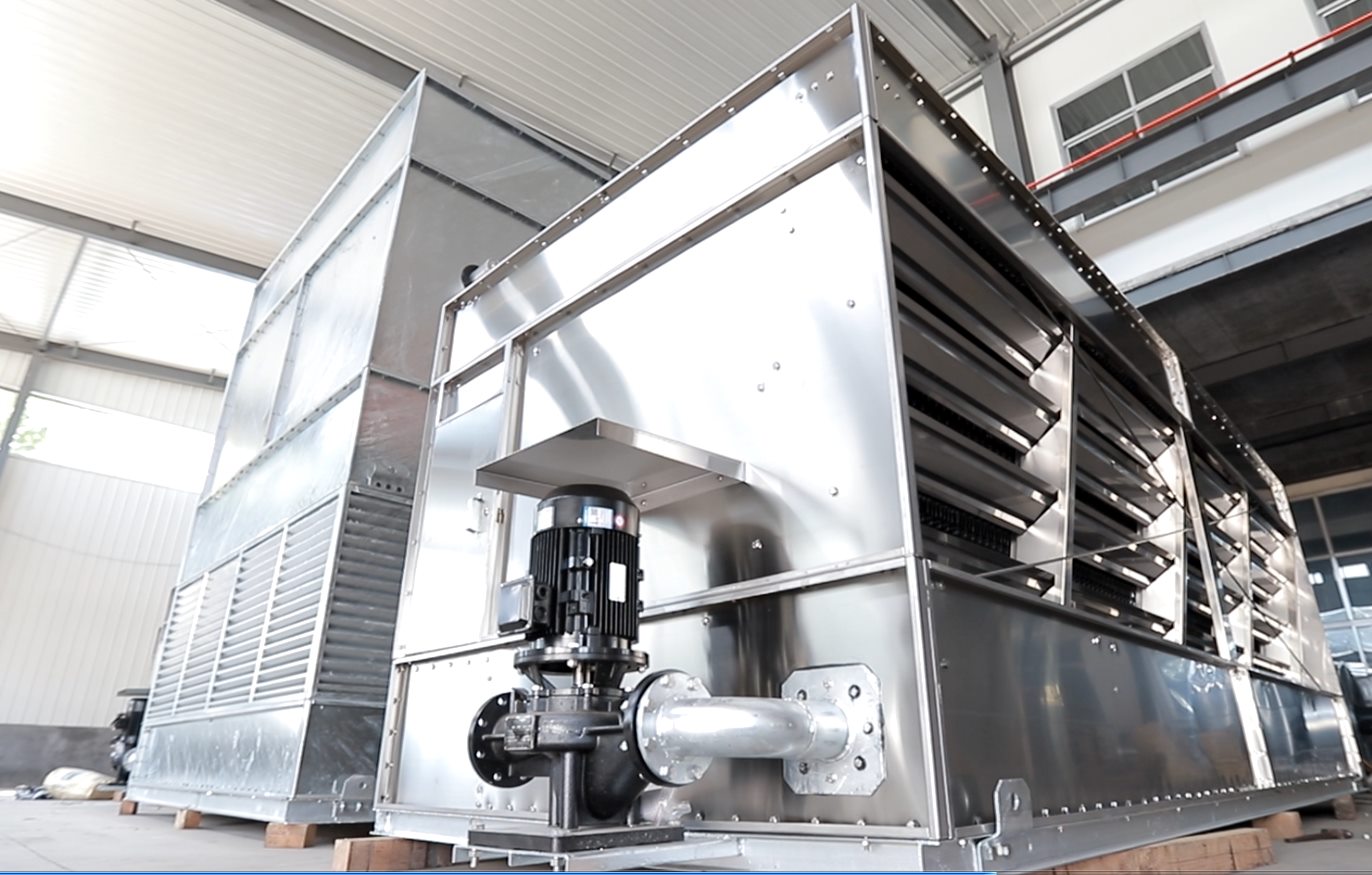
Use of Closed-Circuit Cooling Tower in Power Generation?
In power generation, closed circuit cooling towers are primarily used to provide reliable, contaminant-free cooling for critical plant systems. Their key role is to condense turbine exhaust steam and cool auxiliary equipment, all while protecting the cooling water from the environment and helping plants meet environmental regulations.
Key Applications in Power Plants
Closed circuit cooling towers support power plant operations in several core areas:
- Condenser Cooling: This is the primary application. The tower cools the water that circulates through the surface condenser. The condenser is where low-pressure steam from the turbine is condensed back into water after it has passed through the turbine. Maintaining a proper vacuum in the condenser is critical for turbine efficiency and overall plant “heat rate” (fuel efficiency).
- Auxiliary and Balance-of-Plant Cooling: Many other systems in a power plant generate heat and require cooling to operate reliably. This includes cooling for critical equipment like compressors, generator bearings, lubricating oil, and various balance-of-plant (BOP) systems.
- Supporting Various Technologies: These cooling solutions are suitable for a wide array of power generation methods, including fossil fuel, combined cycle, nuclear, and biomass plants.
Why Choose a Closed Circuit Design?
The decision to use a closed circuit design is driven by several operational and environmental benefits:
- Protecting the Process Fluid: By keeping the cooling water in a sealed loop, the system prevents contamination from airborne dust, dirt, and other debris. This is crucial for maintaining the efficiency and longevity of sensitive equipment like condensers.
- Reducing Environmental Impact: Closed circuit systems drastically reduce the amount of water withdrawn from natural sources (like rivers or the sea) compared to “once-through” systems. They can also help mitigate issues like thermal pollution and the release of chemical by-products, as the water in the loop is reused rather than discharged after a single pass.
- Economic and Performance Considerations: While closed circuit systems can be more expensive and reduce plant efficiency slightly compared to simpler open systems, they offer a long-term economic advantage. For example, a techno-economic analysis of a CO₂-based geothermal power plant found that over a 30-year period, the closed-circuit cooling tower achieved the lowest cost of energy ($145.7/MWh) and produced the highest total energy (425 GWh) compared to open, hybrid, dry-spray, and air-cooled condensers. This is largely due to its ability to maintain lower, more stable condensing pressures over time, limiting performance degradation. This benefit is sometimes achieved by combining the closed circuit with an evaporative cooling tower, which uses the ambient air to reject heat.
In summary, closed circuit cooling towers are a strategic choice for power plants that prioritize process purity, environmental compliance, and stable long-term performance.