

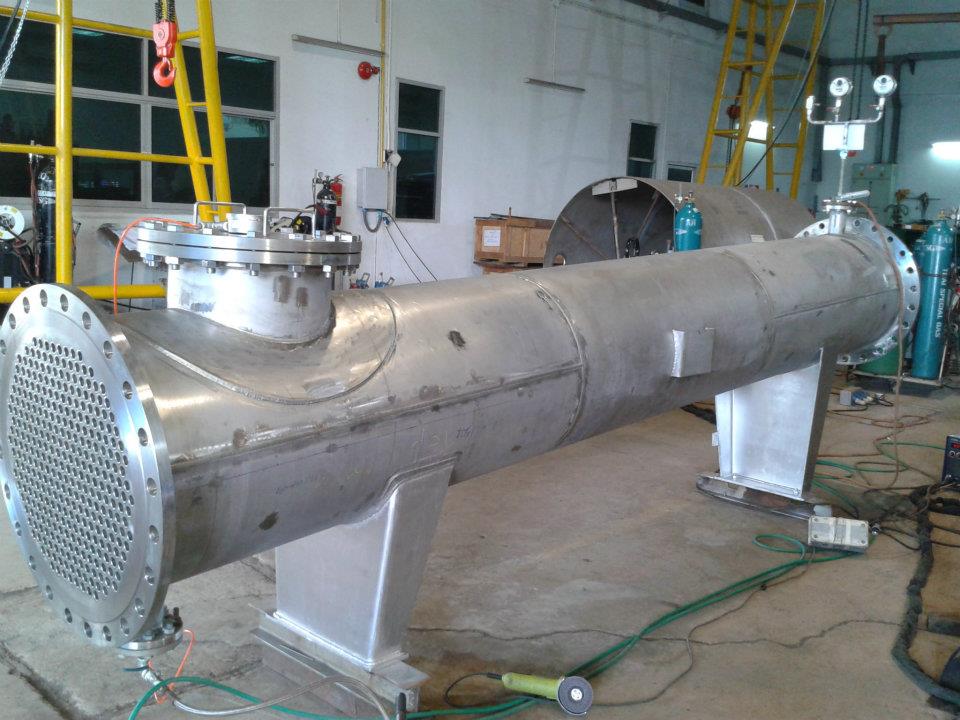
In the power generation industry, heat exchangers are not just auxiliary equipment—they are the core thermodynamic engine that makes electricity production possible. Without them, you couldn’t boil water, condense steam, or achieve the thermal efficiencies required to turn a profit.
Simply put: A power plant is essentially a giant heat exchanger that converts thermal energy (from nuclear fission, burning coal/gas, or concentrated sunlight) into mechanical energy (spinning a turbine) and then into electrical energy.
Here is an advanced, engineering-level breakdown of their role across all types of power generation.
1. The “Big Three” Critical Roles
Every thermal power plant (nuclear, coal, gas, and concentrated solar) relies on these three primary heat exchanger duties:
| Heat Exchanger Role | Function | Why It’s Critical |
| Steam Generator (Boiler / Nuclear Steam Supply System) | Transfers immense heat from the primary source (reactor core, burning fuel, or molten salt) to a secondary loop of water, turning it into superheated, high-pressure steam (typically 540°C to 600°C at over 150 bar). | This is where thermal energy is first transferred to the working fluid. In nuclear plants, this heat exchanger has an extra safety job: isolating the radioactive primary coolant from the clean secondary steam loop. |
| Main Condenser | A gigantic shell-and-tube exchanger located after the steam turbine. It cools the exhaust steam back into liquid water (condensate) using a massive flow of cooling water (from a river, lake, or cooling tower). | This creates a deep vacuum at the turbine exhaust, dramatically increasing the pressure drop across the turbine, which boosts efficiency. One unit can handle up to 1.5 million pounds of steam per hour. |
| Feedwater Heaters (Regenerative) | A series of shell-and-tube exchangers located before the boiler. They capture waste heat from the steam turbine’s mid-stages to pre-heat the incoming water heading back to the boiler. | This is the single most important role for efficiency. By pre-heating the water, you reduce the fuel needed to turn it into steam, cutting coal/gas consumption by 5% to 15% . |
2. Role in Gas Turbines (Combined Cycle Power Plants)
Modern natural gas plants use a “combined cycle”—a gas turbine (jet engine) plus a steam turbine. Heat exchangers have two unique roles here:
- Turbine Inlet Air Cooling (TIAC): On hot days, air is less dense, and gas turbines lose up to 30% of their power. Heat exchangers are used to chill the incoming combustion air using chilled water or absorption chillers, restoring that lost capacity.
- Heat Recovery Steam Generator (HRSG): The gas turbine exhaust is still 600°C. An HRSG is a massive finned-tube heat exchanger that captures this waste heat to boil water for the secondary steam turbine. This pushes plant efficiency over 60% (compared to 33% for a simple coal plant).
3. The Nuclear Exception: Decay Heat Removal
In nuclear power, heat exchangers have a safety-critical role that doesn’t exist in fossil plants: Residual Heat Removal (RHR).
- Even after a nuclear reactor is shut down, the fuel rods continue generating decay heat (about 5-10% of their operating power).
- Specialized “Residual Heat Removal” heat exchangers must continuously pump water through the reactor core to remove this heat until the fuel cools down.
- These are designed with extreme redundancy (multiple trains, backup diesels) and often use seawater or massive air-cooled radiators as the ultimate heat sink, because they must work even during a complete station blackout.
4. Role in “Exotic” Power Generation
- Concentrated Solar Power (CSP): These plants use a heat exchanger to transfer heat from molten salt (at 560°C) to water to make steam. But critically, they also use a hot-salt heat exchanger to take the heat out of the salt during winter nights to prevent the salt from freezing solid inside the pipes.
- Geothermal: Steam from underground is often contaminated with corrosive gases like H₂S and CO₂. Heat exchangers made of Titanium are used to isolate the corrosive geothermal fluid from the clean water loop that actually spins the turbine.
5. The Ongoing Battle: Fouling & Performance
The biggest operational headache in power plant heat exchangers is fouling.
- On the fire side (coal/gas): Fly ash and soot coat the boiler tubes, acting like a blanket that prevents heat transfer. Soot blowers (superheated steam or air jets) are used to constantly blast the tubes clean.
- On the water side (cooling): Microorganisms, algae, and mineral scale grow inside condenser tubes, reducing their ability to condense steam. Plants use online tube cleaning systems (spongy balls shot through the tubes) and chemical anti-scalants to maintain peak performance.
6. Advanced Materials for Extreme Conditions
Because power plant heat exchangers face the highest pressures and temperatures in the industry, materials science is crucial:
- Superheater tubes: Made of austenitic stainless steels (TP347H) or nickel-based superalloys (Inconel 625) to withstand creep and oxidation at 650°C.
- Condenser tubes: Traditionally Admiralty brass or copper-nickel, but increasingly Titanium is used in seawater-cooled plants due to its absolute resistance to chloride pitting and erosion.
The “Efficiency” Bottom Line
For every 1°C increase in feedwater temperature (via feedwater heaters), your boiler fuel consumption drops by roughly 1%. For a 1,000 MW coal plant, that translates to saving tens of thousands of tons of coal per year.In short: The heat exchanger is the plant’s metabolic system. The steam generator makes the power; the condenser enables it; and the feedwater heaters make it affordable.