

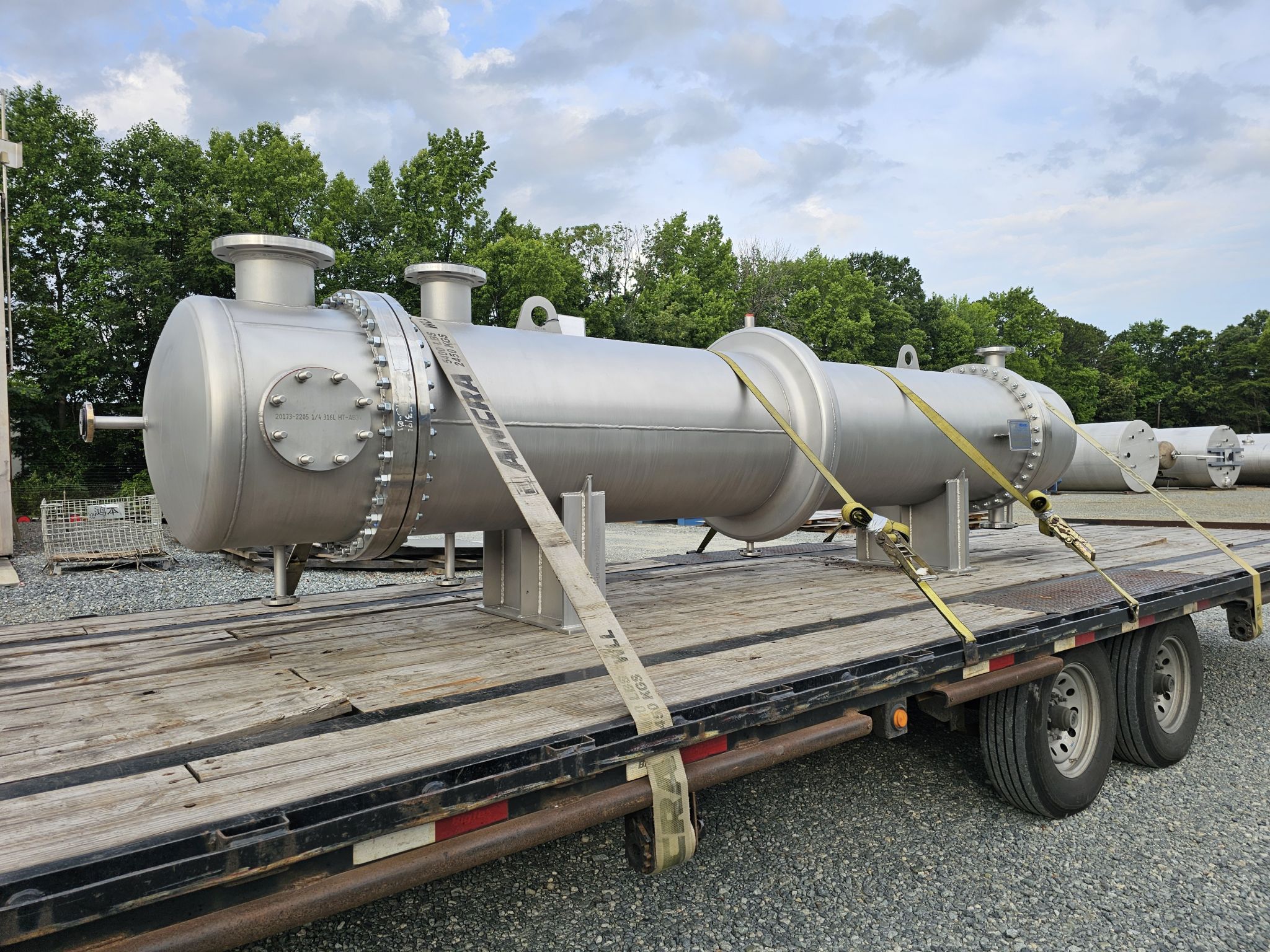
Application of Heat Exchanger?
1. Power Generation (Making Electricity)
Power plants (nuclear, coal, natural gas, and even solar thermal) are essentially giant heat engines. Heat exchangers are the backbone of these facilities:Steam Generators (Boilers): In nuclear and coal plants, primary heat exchangers transfer heat from the reactor core or burning fuel to water, turning it into high-pressure steam
- to spin massive turbines.
- Condensers: After the steam passes through the turbine, it must be cooled back into liquid water so it can be reused. Gigantic shell-and-tube heat exchangers use river water, lake water, or cooling towers to condense this steam back into water.
- Feedwater Heaters: Before water enters the boiler, it is pre-heated by capturing waste heat from the turbine’s exhaust. This drastically increases the overall thermal efficiency of the plant.
2. The Oil, Gas, and Chemical Industry (Processing & Reactions)
This is the largest user of heat exchangers in the world. In these plants, heat exchangers don’t just cool; they are used to control chemical reactions:
- Distillation and Fractionation: Crude oil is a mixture of different hydrocarbons. To separate it into gasoline, diesel, and kerosene, it must be heated to specific temperatures in distillation columns. Reboilers (a type of heat exchanger) provide the heat at the bottom of the column, while condensers cool the vapors at the top.
- Catalytic Reactions: Many chemical reactions require extremely precise temperatures to work. If the reaction gets too hot, it can “run away” and explode; if it’s too cold, it stops. Heat exchangers actively remove or add heat to chemical reactors to keep them in a safe “sweet spot.”
- Waste Heat Recovery: In refineries, exhaust gases from furnaces are still incredibly hot (over 500°F). Heat exchangers capture this heat to pre-heat the incoming crude oil, saving millions of dollars in fuel costs.
3. HVAC and Building Climate Control (Keeping us comfortable)
Beyond just heating a room, heat exchangers play a critical role in ventilation and energy savings:
- Air Handling Units (AHUs): In large office buildings, fresh outdoor air must be brought in, but if it’s 100°F outside and 72°F inside, bringing that hot air in would cost a fortune to cool. Heat exchangers (specifically enthalpy wheels or plate exchangers) pre-cool the incoming fresh air using the outgoing stale air.
- Chillers: Large commercial buildings use massive heat exchangers to produce chilled water, which is then pumped through the building to cool individual offices via fan-coil units.
- Geothermal Heat Pumps: These use underground heat exchangers (buried loops of pipe) to transfer heat to or from the ground, which stays a constant 55°F year-round.
4. The Automotive and Transportation Sector
Beyond the engine radiator, modern vehicles are packed with specialized heat exchangers:
- Turbocharger Intercoolers: When a turbo compresses air, the air gets very hot and less dense. An “air-to-air” or “air-to-water” heat exchanger cools this compressed air before it enters the engine. Cooler air is denser, meaning more oxygen enters the cylinders, resulting in more horsepower and better fuel economy.
- Transmission and Power Steering Coolers: Automatic transmission fluid can overheat and degrade quickly. Small, dedicated heat exchangers (often located inside the main radiator) keep these fluids at optimal temperatures.
- Battery Thermal Management (EVs): In electric vehicles, lithium-ion batteries perform best between 60°F and 80°F. Heat exchangers circulate cooling liquid through specialized cold plates under the battery pack to keep it from overheating during fast charging, or to warm it up in freezing winter weather.
5. Food, Beverage, and Pharmaceutical Production (Hygiene)
In these industries, heat exchangers (almost always the “plate and frame” type) are used to kill bacteria without cooking the product:
- Pasteurization: Milk and fruit juices are rapidly heated to 161°F for 15 seconds to kill pathogens, and then immediately cooled back down using a heat exchanger. The beauty of this is that the incoming cold milk is used to cool the outgoing hot milk (and vice versa), saving massive amounts of energy while ensuring safety.
- Sterilization: In pharmaceutical manufacturing, equipment and vials are sterilized using high-temperature steam, and heat exchangers are used to safely condense that steam afterward without contaminating the clean room environment.
6. Marine and Shipping (Ships and Submarines)
Ships float in an infinite supply of seawater, which makes a perfect cooling medium:
- Central Cooling Systems: Ships use a closed-loop system of fresh water to cool the main engine. This fresh water then passes through a large heat exchanger that uses seawater to carry the heat away. This prevents saltwater corrosion from destroying the engine itself.
- Submarines: Nuclear submarines use massive heat exchangers to transfer heat from their nuclear reactors to the surrounding ocean water to generate steam for propulsion—all while keeping the radioactive primary water completely isolated from the ocean.