

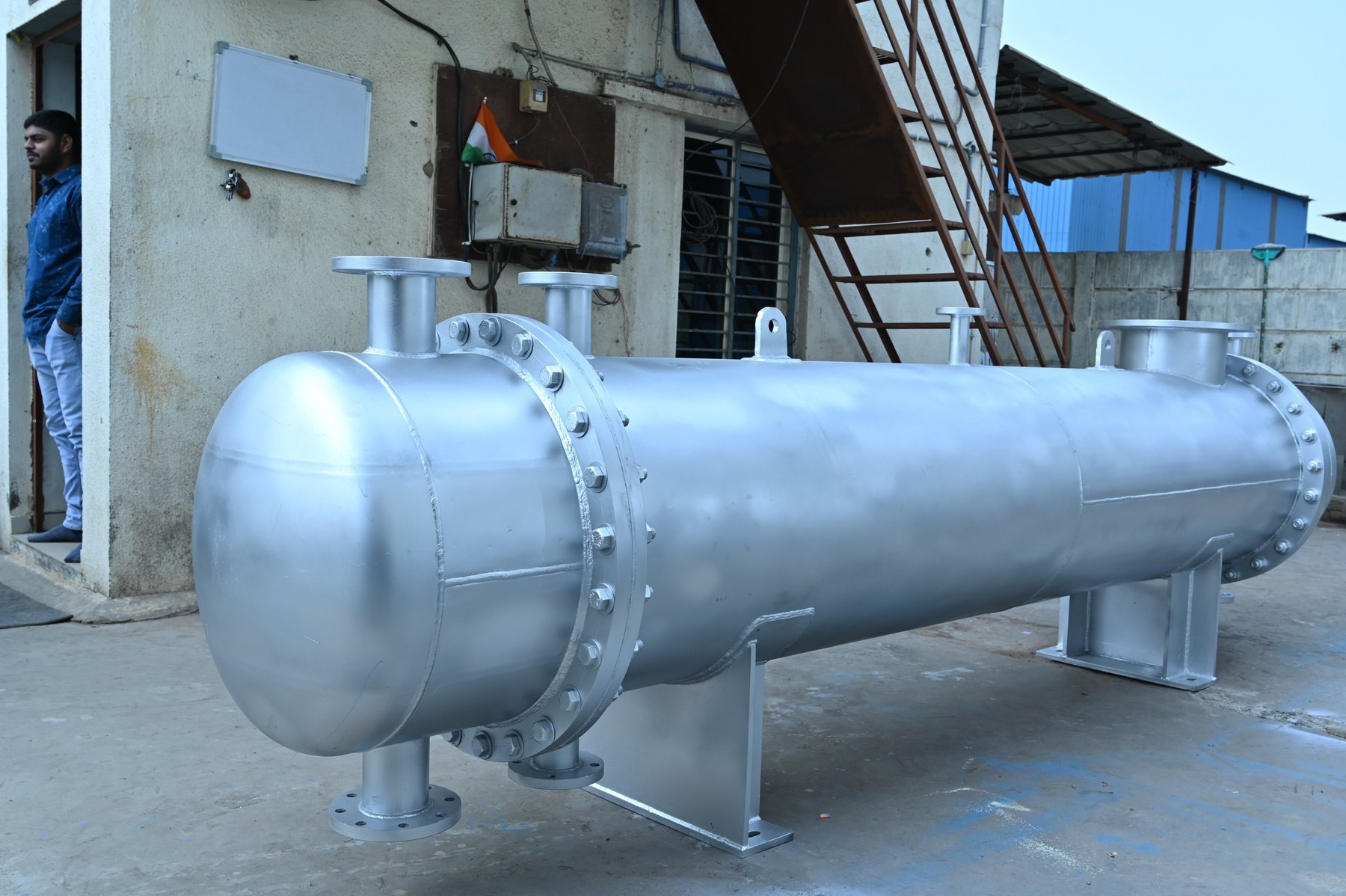
Copper Tube vs. Stainless Steel Tube Oil Coolers:
When choosing between copper and stainless steel (SS) tubes for an oil cooler, factors like thermal efficiency, corrosion resistance, durability, and cost play a crucial role. Below is a detailed comparison:
1. Thermal Conductivity & Heat Transfer Efficiency
| Material | Thermal Conductivity (W/m·K) | Heat Transfer Performance |
| Copper | ~385 (Excellent) | Best – Ideal for high-efficiency cooling. |
| Stainless Steel | ~15–20 (Low) | Poorer – Requires larger surface area for similar cooling. |
✅ Winner: Copper (Superior heat transfer, better for compact coolers.)
2. Corrosion Resistance
| Material | Resistance to Corrosion | Best For |
| Copper | Good in freshwater, but corrodes in saltwater, ammonia, acids, and sulphides. | Clean oil systems, industrial hydraulics. |
| Stainless Steel (316L) | Excellent in saltwater, chemicals, and acidic environments. | Marine, chemical processing, harsh conditions. |
✅ Winner: Stainless Steel (Better for corrosive or marine applications.)
3. Strength & Durability
| Material | Mechanical Strength | Pressure/Temp Resistance |
| Copper | Soft, prone to erosion & mechanical damage. | Limited to low-pressure systems. |
| Stainless Steel | High strength, resists wear & pressure. | Handles high-pressure, high-temperature (HPHT) systems. |
✅ Winner: Stainless Steel (More durable for heavy-duty use.)
4. Cost Comparison
| Material | Relative Cost | Maintenance Cost |
| Copper | Moderate (but prices fluctuate). | Higher if corrosion occurs. |
| Stainless Steel | More expensive upfront. | Lower long-term (less corrosion-related failures). |
✅ Winner: Copper (Cheaper initially, but SS may be cost-effective long-term.)
5. Common Applications
| Material | Best Uses |
| Copper | – Automotive oil coolers – Industrial hydraulic systems (non-corrosive) – HVAC cooling systems |
| Stainless Steel | – Marine & offshore oil coolers – Chemical processing plants – High-pressure hydraulic systems |
Summary: Which One to Choose?
| Factor | Copper | Stainless Steel |
| Heat Transfer | ✔ Best | ❌ Poorer |
| Corrosion Resistance | ❌ Weak | ✔ Best |
| Durability | ❌ Soft | ✔ Strong |
| Cost | ✔ Lower | ❌ Higher |
Final Recommendation:
- Choose Copper if:
- You need maximum cooling efficiency.
- The environment is non-corrosive (clean oil, freshwater).
- Cost is a priority.
- Choose Stainless Steel if:
- The system operates in saltwater, chemicals, or high-pressure conditions.
- Long-term durability is critical.
You can afford the higher initial cost.