

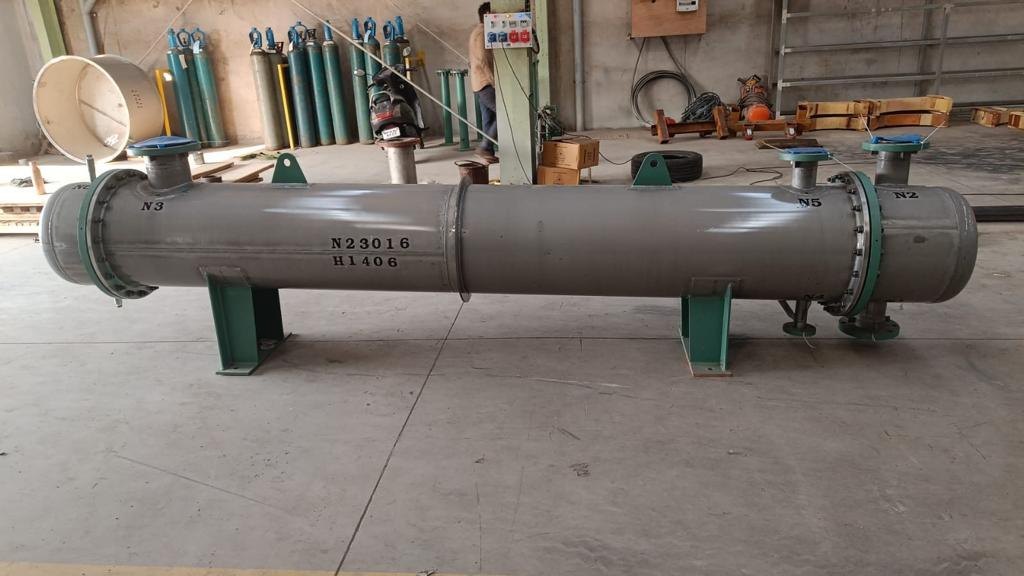
Materials Used in Shell & Tube Oil Cooler Tubes
The tubes in a shell and tube oil cooler are critical for heat transfer efficiency, corrosion resistance, and durability. The choice of material depends on factors like fluid compatibility, temperature, pressure, and cost. Below are the most common materials used:
1. Copper & Copper Alloys
- Common Types:
- Copper (Pure) – Good thermal conductivity, but soft and prone to erosion.
- Admiralty Brass (Cu-Zn-Sn) – Resists corrosion in freshwater and mild chemicals.
- Aluminum Brass (Cu-Zn-Al) – Better for seawater cooling (resists biofouling).
- Advantages:
- Excellent heat transfer (high thermal conductivity).
- Good corrosion resistance in clean water/oil systems.
- Disadvantages:
- Vulnerable to ammonia, sulphides, and acidic fluids.
- Not suitable for high-pressure/high-temperature (HPHT) applications.
2. Stainless Steel (SS)
- Common Grades:
- 304 SS – General-purpose, good for most oils and water.
- 316/316L SS – Superior corrosion resistance (chlorides, seawater).
- Duplex SS (2205) – High strength, excellent for aggressive fluids.
- Advantages:
- High corrosion resistance (ideal for harsh environments).
- Stronger than copper, suitable for HPHT applications.
- Disadvantages:
- Lower thermal conductivity than copper.
- More expensive.
3. Titanium
- Used in:
- Seawater cooling (offshore, marine, desalination plants).
- Highly corrosive chemical processing.
- Advantages:
- Extreme corrosion resistance (even in chlorides, acids).
- Lightweight yet strong.
- Disadvantages:
- Very expensive (only used where essential).
- Lower thermal conductivity than copper.
4. Nickel Alloys
- Common Types:
- Inconel (625, 718) – Resists extreme temps & corrosive fluids.
- Monel (400, K500) – Excellent in seawater, acids.
- Advantages:
- Handles high-temperature, high-pressure (HTHP) conditions.
- Resists sulphides, chlorides, and acidic media.
- Disadvantages:
- Very high cost (used in aerospace, chemical plants).
5. Carbon Steel
- Used in:
- Low-cost industrial coolers (non-corrosive oil systems).
- Advantages:
- Cheap and strong.
- Disadvantages:
- Prone to rust (requires protective coatings or inhibitors).
- Poor for water cooling unless treated.
6. Aluminum
- Used in:
- Lightweight applications (automotive, aviation).
- Advantages:
- Good heat transfer, lightweight.
- Disadvantages:
- Poor corrosion resistance unless anodized/coated.
- Weak compared to steel/titanium.
Material Selection Factors
| Factor | Best Material Choices |
| High Thermal Conductivity | Copper, Aluminum Brass |
| Corrosion Resistance | Titanium, 316L SS, Nickel Alloys |
| Seawater Applications | Titanium, Cu-Ni (90/10, 70/30), Duplex SS |
| High-Temperature Use | Inconel, Stainless Steel |
| Cost-Effective | Carbon Steel (with treatment), Copper |
- Copper alloys are best for efficient heat transfer in non-corrosive environments.
- Stainless steel (316L) is a balanced choice for most industrial oil coolers.
- Titanium & Nickel alloys are for extreme conditions (marine, chemical plants).
- Carbon steel is used where cost is critical (with corrosion inhibitors).