

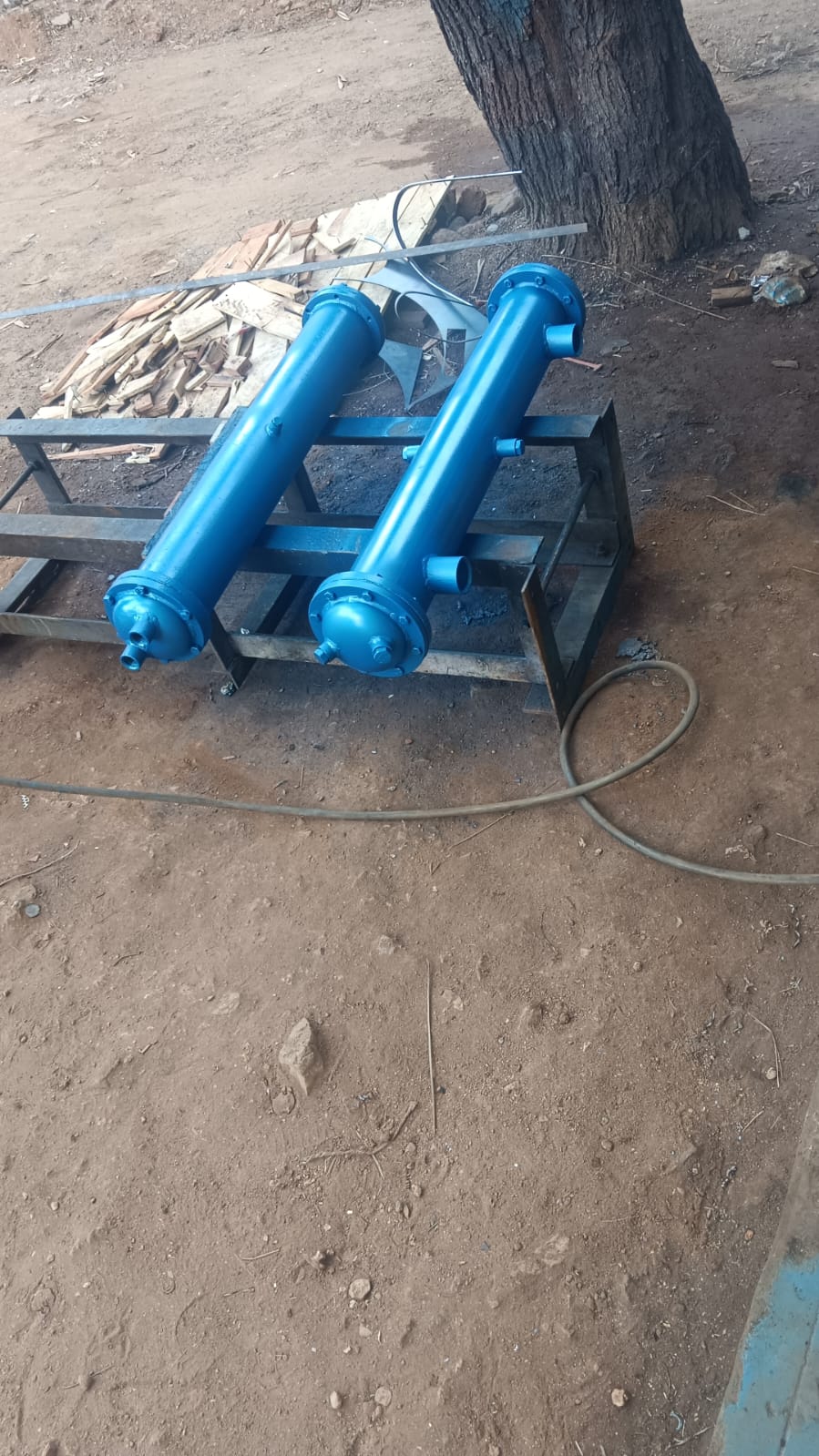
Parts of A shell and tube oil cooler A shell and tube oil cooler consists of several key components, each playing a critical role in heat transfer, structural integrity, and fluid flow. Below is a detailed breakdownof its major parts, their functions, and common materials used in marine/industrial applications.
1. Shell (Pressure Vessel)
- Function:
- Houses the tube bundle and directs oil flow around the tubes.
- Material:
- Carbon steel (CS) with protective coatings (epoxy/rubber-lined) for cost efficiency.
- Stainless steel (SS 316/316L) or duplex steel (SAF 2205) for corrosive environments (e.g., marine).
2. Tube Bundle
A. Tubes
- Function:
- Transfer heat between oil (shell side) and coolant (tube side).
- Material:
- Titanium (Grade 2) – Best for seawater (corrosion-proof).
- Copper-Nickel (Cu-Ni 90/10 or 70/30) – Anti-fouling, good for brackish water.
- Stainless Steel (SS 316L) – For freshwater cooling (avoid in seawater).
B. Tube Sheets
- Function:
- Secures tubes in place and separates oil/coolant.
- Material:
- Titanium-clad steel (for Ti tubes).
- Naval brass (for Cu-Ni tubes).
- SS 316L (with cathodic protection if paired with CS shell).
C. Baffles
- Function:
- Support tubes, prevent vibration, and direct oil flow for turbulence (improves heat transfer).
- Material:
- SS 304/316 or coated carbon steel.
3. End Caps (Headers)
Design Types:
Function:
Seal the tube side and distribute coolant flow.
- Removable covers (for cleaning) or fixed end caps.
- Material:
- Cast iron (coated), bronze, or SS 316.
4. Nozzles (Inlet/Outlet Connections)
- Oil Nozzles:
- Typically, larger to handle viscous oil flow.
- Coolant Nozzles:
- Smaller, often threaded/flanged for pipe connections.
- Material:
- Carbon steel or matching shell material (SS 316 for marine).
5. Gaskets & Seals
- Function:
- Prevent leaks between shell, tube sheets, and end caps.
- Material:
- Nitrile (NBR) – For oil resistance.
- EPDM – For high-temperature water.
- Graphite – For extreme temps/pressures.
6. Supports & Mounting Brackets
- Function:
- Secure the cooler to the engine/base; absorb vibrations.
- Material:
- Carbon steel (painted/galvanized) or SS 304.
7. Sacrificial Anodes (Marine Applications)
- Function:
- Protect against galvanic corrosion in seawater-cooled units.
- Material:
- Zinc (most common) or aluminum.
8. Vent & Drain Plugs
- Function:
- Remove air pockets (vent) or drain fluids during maintenance.
Optional Components
- Thermowells:
- For temperature sensors.
- Pressure Relief Valves:
- Protect against overpressure.
- Insulation Jackets:
- Reduce heat loss in cold environments.
Material Selection Guide (Marine vs. Industrial)
| Part | Marine (Seawater) | Industrial (Freshwater) |
| Tubes | Titanium / Cu-Ni 90/10 | SS 304 / Admiralty Brass |
| Shell | SS 316L / Duplex 2205 | Coated Carbon Steel |
| Tube Sheets | Titanium-clad / Naval Brass | CS with SS cladding |
Key Maintenance Parts to Monitor
- Tubes – Prone to fouling/erosion (clean annually).
- Gaskets – Replace during overhauls to prevent leaks.
- Anodes – Inspect/replace yearly in seawater systems.
- Baffles – Check for erosion-induced vibration.
Schematic Flow of Fluids
- Oil Flow: Enters shell inlet → circulates around tubes (baffled path) → exits shell outlet.
- Coolant Flow: Enters tube inlet → passes through tubes → exits tube outlet (counterflow improves efficiency).
Why These Parts Matter?
- Leak Prevention: Proper gaskets/tube sheets avoid oil-water mixing.
- Efficiency: Baffles and clean tubes maximize heat transfer.
Durability: Material choice dictates lifespan (e.g., titanium lasts 20+ years in seawater).