

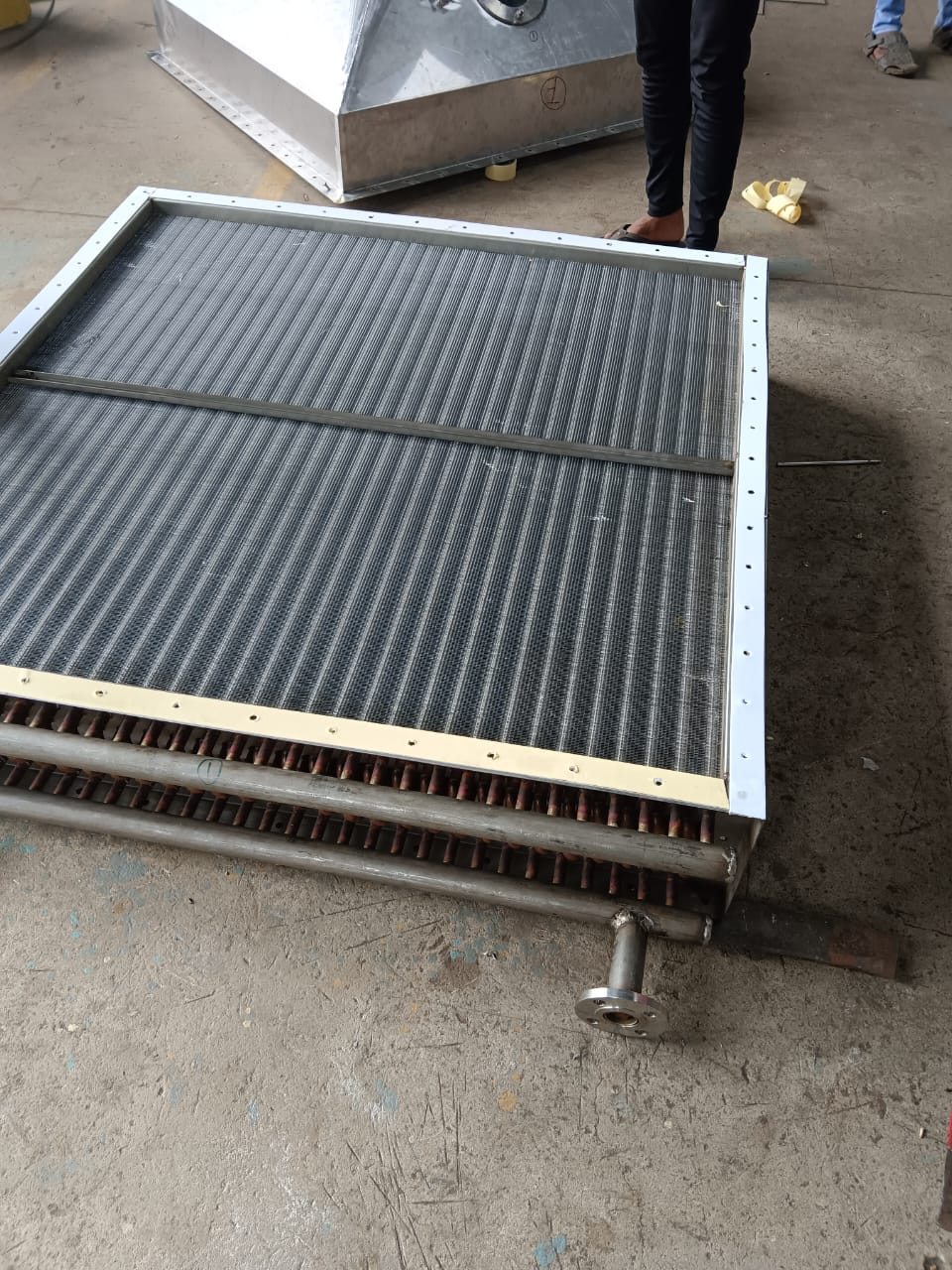
Design Considerations and Challenges
Using a fin tube exchanger for this duty comes with specific challenges that must be addressed in the design:
- Corrosion (The Biggest Challenge): Flue gases can contain sulfur and moisture, which can combine to form sulfuric acid. If the tube wall temperature drops below the Acid Dew Point, this acid will condense and cause severe corrosion.
- Solution: Use corrosion-resistant materials (e.g., Corten steel, 316L stainless steel) for the tubes and fins on the cold end of the APH, where temperatures are lowest. Careful thermal design is crucial to keep metal surfaces above the dew point.
- Fouling: Flue gas can carry soot, dust, and other particulates that can build up on the fins, reducing efficiency and increasing pressure drop.
- Solution: Use a lower fin density, wider fin spacing, or special fin types (like “H” fins or stud fins) that are less prone to plugging and are easier to clean. Soot blowers are often installed.
- Thermal Expansion: The large temperature differences between the hot and cold sides can cause significant thermal expansion of the tube bundle.
- Solution: The tube sheet and housing must be designed to accommodate this expansion, often using floating heads or expansion bellows.
- High-Temperature Capability: The hot inlet section must withstand very high flue gas temperatures.
- Solution: Use carbon steel or alloy steel tubes with welded or high-frequency welded fins to ensure integrity.