

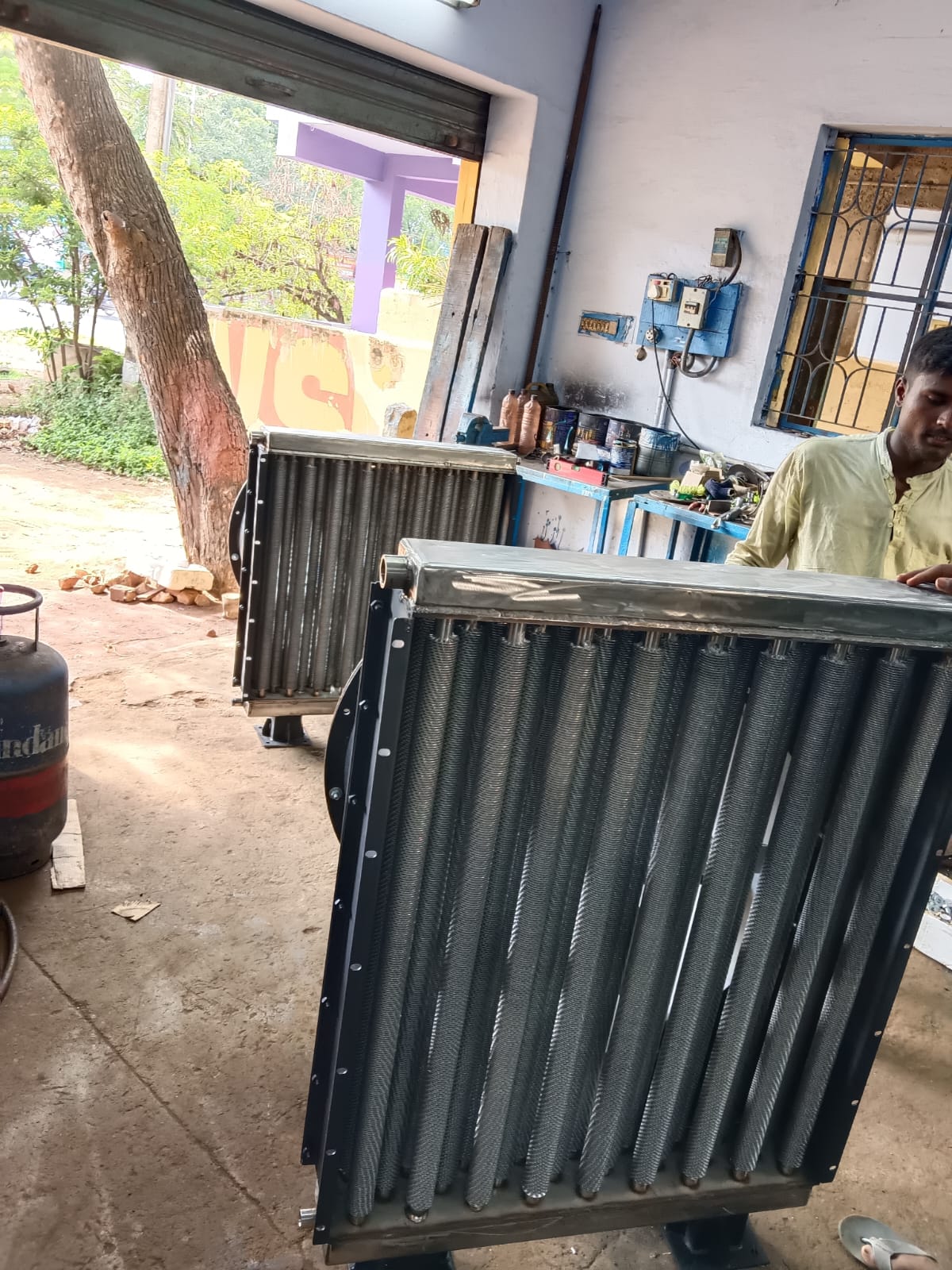
How a Fin Tube Heat Exchanger Works as an Air Preheater
In this configuration, the fin tube exchanger creates a physical barrier between the two air streams while allowing heat to transfer between them.
- Hot Stream: The hot flue gas (e.g., at 600°F / 315°C) exits the furnace and is ducted to one side of the fin tube bundle. This stream gives up its heat to the fins and tubes.
- Cold Stream: Fresh, ambient combustion air (e.g., at 60°F / 15°C) is blown by a fan to the other side of the fin tube bundle. This stream absorbs the heat from the tubes and fins.
- The Result:
- The combustion air is preheated (e.g., to 400°F / 204°C) before it enters the burner.
- The flue gases are cooled (e.g., to 260°F / 127°C) before being exhausted up the stack.
- The burner now has hot air to work with, significantly reducing the amount of fuel needed to achieve the desired furnace temperature.
Key Advantages of Using a Fin Tube APH
- Substantial Fuel Savings: This is the primary benefit. Preheating the combustion air reduces the fuel energy required. A common rule of thumb is that a 40°F (22°C) rise in combustion air temperature can yield approximately 1% fuel savings. Preheats of several hundred degrees are common, leading to savings of 10% or more.
- Improved Combustion Efficiency: Hotter combustion air leads to more stable and efficient burning of fuel, resulting in lower unburnt hydrocarbons and cleaner operation.
- Higher Flame Temperature: Preheated air raises the adiabatic flame temperature, which can be beneficial for certain high-temperature industrial processes.
- Condensation Prevention (on the gas side): By cooling the flue gases, the fin tube APH can help keep the exhaust temperature above the acid dew point, preventing corrosive acids (like sulfuric acid) from condensing on the downstream ductwork and stack. (This requires careful design).
- Compact Design: The finned tube bundle provides a large heat transfer surface in a relatively compact unit, saving space compared to a bare tube design.