

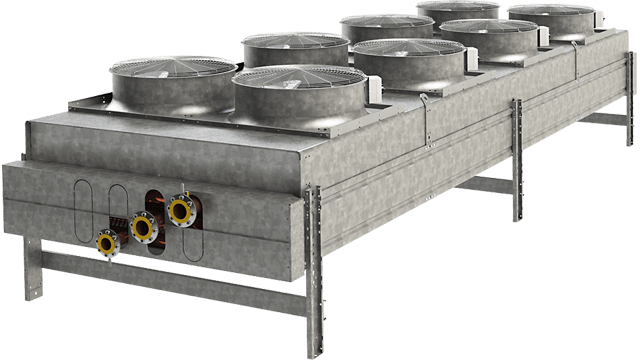
The role of a Dry Cooling Tower in a Genset system is to reject the waste heat from the engine to the atmosphere without using water evaporation.
It is a crucial component for maintaining the genset’s operating temperature, ensuring efficiency, and preventing engine damage, especially in locations where water is scarce or expensive.
Here’s a detailed breakdown of its role, how it works, and why it’s chosen.
The Primary Role: Efficient Heat Rejection Without Water Consumption
A genset (engine + alternator) converts fuel into electricity, and a significant portion of the energy is lost as heat. This heat must be removed continuously. The dry cooling tower’s role is to manage this heat rejection in a closed loop.
Its core functions are:
- Maintain Optimal Engine Temperature: To keep the engine within its ideal operating temperature range (typically 80-95°C or 176-203°F) for efficiency and to prevent overheating.
- Cool Engine Jacket Water: This is the primary coolant that circulates through the engine block, absorbing heat from the cylinders.
- Cool Charge-Air (After-Cooler): In turbocharged gensets, the air compressed by the turbocharger becomes very hot. It must be cooled before entering the cylinders to increase its density and engine efficiency. This “charge-air” cooler is often integrated into the same cooling circuit.
- Provide a Closed-Loop System: It creates a sealed circuit, protecting the coolant from contamination and evaporation.