

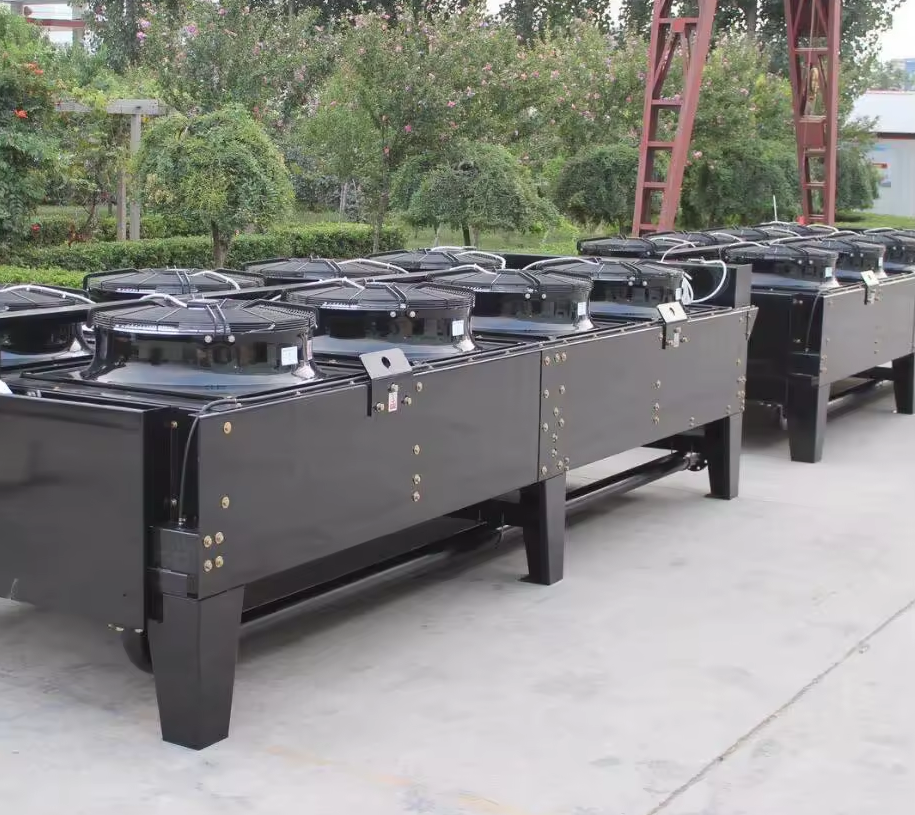
Why Cooling is required for Genset engine
Cooling is not just beneficial for a genset engine; it is absolutely critical for its survival, efficiency, and longevity.
At its core, a genset engine is an internal combustion engine, and it is inherently inefficient. Only about 30-40% of the energy from diesel or gas fuel is converted into useful mechanical power (which the generator then converts to electricity). The rest of the energy becomes waste heat.
If this waste heat is not managed, it will quickly destroy the engine. Here’s a detailed breakdown of why cooling is required:
1. To Prevent Mechanical Failure from Overheating
This is the most immediate and severe reason.
- Metal Expansion: Engine components (pistons, cylinders, valves) are made of different metals that expand at different rates when heated. Without cooling, they would expand beyond their design tolerances.
- Seizure: The piston, which fits very tightly inside the cylinder, would expand so much that it would weld itself to the cylinder walls—a phenomenon known as piston seizure. This causes catastrophic, immediate engine failure.
- Loss of Lubrication: The clearances between moving parts (e.g., crankshaft journals) are designed for a specific operating temperature. Extreme heat can close these clearances, squeezing out the oil film and causing metal-to-metal contact, leading to rapid wear or seizure.
2. To Protect the Engine Lubricating Oil
Engine oil is the lifeblood of the engine, and heat is its greatest enemy.
- Viscosity Breakdown: High temperatures cause engine oil to thin out (lose viscosity). Thin oil cannot form a proper lubricating film, leading to increased friction, wear, and potential seizure.
- Oxidation and Sludge Formation: When oil overheats, it oxidizes and chemically breaks down. It forms varnish, sludge, and acidic compounds.
- Sludge can clog oil passages, starving critical components of lubrication.
- Acids cause corrosion inside the engine.
A cooling system keeps the oil at a stable temperature (typically 80-110°C / 176-230°F) where it can perform its job effectively.
3. To Maintain Engine Efficiency and Power Output
An engine is designed to operate most efficiently within a specific temperature range.
- Combustion Efficiency: If the combustion chamber and cylinder walls become too hot, they can cause “pre-ignition” or “knocking” in gasoline engines, where the fuel-air mixture explodes prematurely. In diesel engines, it can cause rough operation. Both scenarios reduce power and can damage the engine.
- Air Density: The cooling system also manages the temperature of the air entering the engine (or the charge air after the turbocharger). Cooler air is denser, meaning more oxygen molecules per volume, which allows for more fuel to be burned completely, resulting in more power and cleaner emissions.
4. To Control Emissions
Modern gensets must comply with stringent emission regulations (like EPA Tier 4 or EU Stage V).
- NOx Formation: The primary pollutant from diesel engines is Nitrogen Oxides (NOx). NOx is formed when nitrogen and oxygen in the intake air combine under extremely high temperatures and pressures within the cylinder. An efficient cooling system, especially for the charge air, helps lower combustion temperatures, significantly reducing NOx formation.
5. To Ensure Structural Integrity
Prolonged and repeated overheating causes thermal stress and fatigue.
- Cylinder Head Cracking: The cylinder head is under immense pressure and heat. It contains intricate passages for coolant and air. Uneven or insufficient cooling can cause it to warp or crack.
- Gasket Failure: The head gasket, which seals the cylinder head to the engine block, will quickly fail under excessive heat, leading to coolant leaks, oil leaks, and loss of compression.