

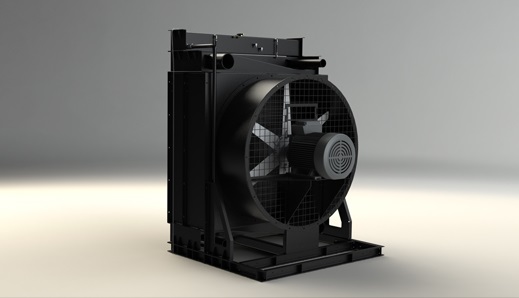
Key Components of a Genset Cooler System
Regardless of the type, a complete genset cooling system includes:
- Radiator or Heat Exchanger: The core component where heat is transferred to air or water.
- Coolant Pump: Circulates the engine coolant through the block and the cooler.
- Fan: Pulls air through the radiator (in air-cooled systems). Can be belt-driven (on the engine) or electric.
- Thermostat: Regulates coolant flow to ensure the engine quickly reaches and maintains its optimal operating temperature.
- Hoses & Pipes: Transport the coolant throughout the system.
- Charge Air Cooler: A specific heat exchanger that cools the turbocharged air.
- Shutters/Vanes: (On some large radiators) Adjustable louvers that control airflow to maintain optimal temperature in cold weather.
Why the Right Genset Cooler is Critical
- Prevents Overheating & Engine Failure: This is the primary purpose. Overheating can warp cylinder heads, blow head gaskets, and cause piston seizure.
- Maintains Efficiency: An engine running at its designed temperature burns fuel more completely and produces more consistent power.
- Reduces Emissions: Incomplete combustion due to incorrect temperatures leads to higher emissions of pollutants like NOx and particulate matter.
- Extends Engine Life: Consistent, proper cooling prevents thermal stress and wear on all engine components.
- Ensures Reliability: For a backup generator, the cooling system must work instantly and flawlessly during a power outage. A failure of the cooler is a failure of the entire generator.
A Genset Cooler is not a single part but a vital system. Choosing the right type—whether it’s a simple frame-mounted radiator, a complex heat exchanger, or a remote setup—is one of the most important decisions in genset application engineering, directly impacting the generator’s performance, lifespan, and reliability.