

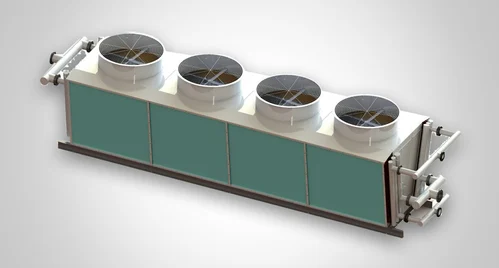
A Remote Radiator is used in a generator set (genset) when the standard, frame-mounted radiator is not sufficient or practical for the installation environment. It’s a solution to specific site challenges that prevent effective heat rejection.
Here’s a breakdown of the key reasons why a remote radiator becomes necessary for a genset.
The Core Problem: Getting Rid of Immense Heat
A genset’s engine converts fuel into mechanical energy, and a significant portion of that energy is lost as waste heat. The cooling system’s job is to reject this heat. A standard genset has a frame-mounted radiator with a fan that pulls air through the core to cool the engine coolant.
A remote radiator is used when this standard setup cannot be used or is highly inefficient.
Key Reasons for Using a Remote Radiator on a Genset
- Limited or Poor Ventilation (Most Common Reason)
• Scenario: The genset is installed indoors (e.g., in a basement, a dedicated plant room, or a crowded warehouse).
• Problem: A frame-mounted radiator would simply recirculate hot air within the room, leading to rapidly rising ambient temperatures. This causes the engine to overheat and shut down, as the radiator needs a constant supply of cool air to function.
• Solution: A remote radiator is installed outside the building or in a location with ample fresh air. Hoses connect the engine’s coolant system to this external radiator. This ensures the heat is ejected directly to the atmosphere, keeping the engine room cool and the genset running reliably.
. High Ambient Temperatures or Dirty/Dusty Environments
- Scenario: The genset is in an environment where the surrounding air is already very hot (e.g., a desert climate, next to other heat-producing equipment) or contaminated with dust, lint, or corrosive fumes.
- Problem:
- Hot Air: Hot ambient air is less effective at cooling, reducing radiator efficiency and causing high engine temperatures.
- Dirty Air: Dust and debris quickly clog the radiator fins, blocking airflow and requiring constant, hazardous cleaning.
- Solution: The remote radiator is placed in a cleaner, cooler location where it can access higher-quality air, ensuring consistent cooling performance and reducing maintenance.
3. Space Constraints and Acoustic Requirements
- Scenario: The physical space for the genset is extremely tight, or there are strict noise regulations (e.g., in a hospital, residential area, or office building).
- Problem:
- Space: A large, frame-mounted radiator and the required clearance for airflow might not fit in the allocated space.
- Noise: The radiator fan is a major source of noise from a genset.
- Solution: A remote radiator can be mounted on a roof or wall, saving critical floor space. Moving the radiator and its fan away from the genset also significantly reduces noise at the source location.
4. Centralized Cooling for Multiple Gensets
- Scenario: A facility has several generator sets, such as in a large data center or industrial plant.
- Problem: Providing adequate airflow and maintenance access for multiple large, frame-mounted radiators can be a complex and space-consuming challenge.
- Solution: A single, large remote radiator or cooling tower can be used to cool all the gensets. Each genset’s coolant loop is connected to this central heat rejection system, which is more efficient and easier to manage.
How It Works in a Genset Context
The system is more complex than a standard setup:
- Coolant Loop: The genset’s engine has a primary coolant loop with a pump.
- Heat Exchanger: Instead of going to a frame-mounted radiator, the hot coolant is piped to a plate heat exchanger located near the genset.
- Secondary Loop: A separate, closed-loop plumbing system filled with a coolant/water mixture connects this heat exchanger to the remote radiator.
- Pump and Control: A secondary circulation pump is used to move the coolant through the long pipes to the remote radiator and back.
- Heat Rejection: The remote radiator, with its own fan(s), finally rejects the heat from the secondary loop to the outside air.
This two-loop system protects the engine from any potential issues in the long pipe runs to the remote radiator.